Research reveals that the jumping spider uses its three-dimensional vision to calculate distances with millimeter precision while hunting. This natural mechanism, based on the superposition of images from its main eyes, could serve as a model for creating more efficient and cheaper 3D cameras, mimicking the arachnid's biology.
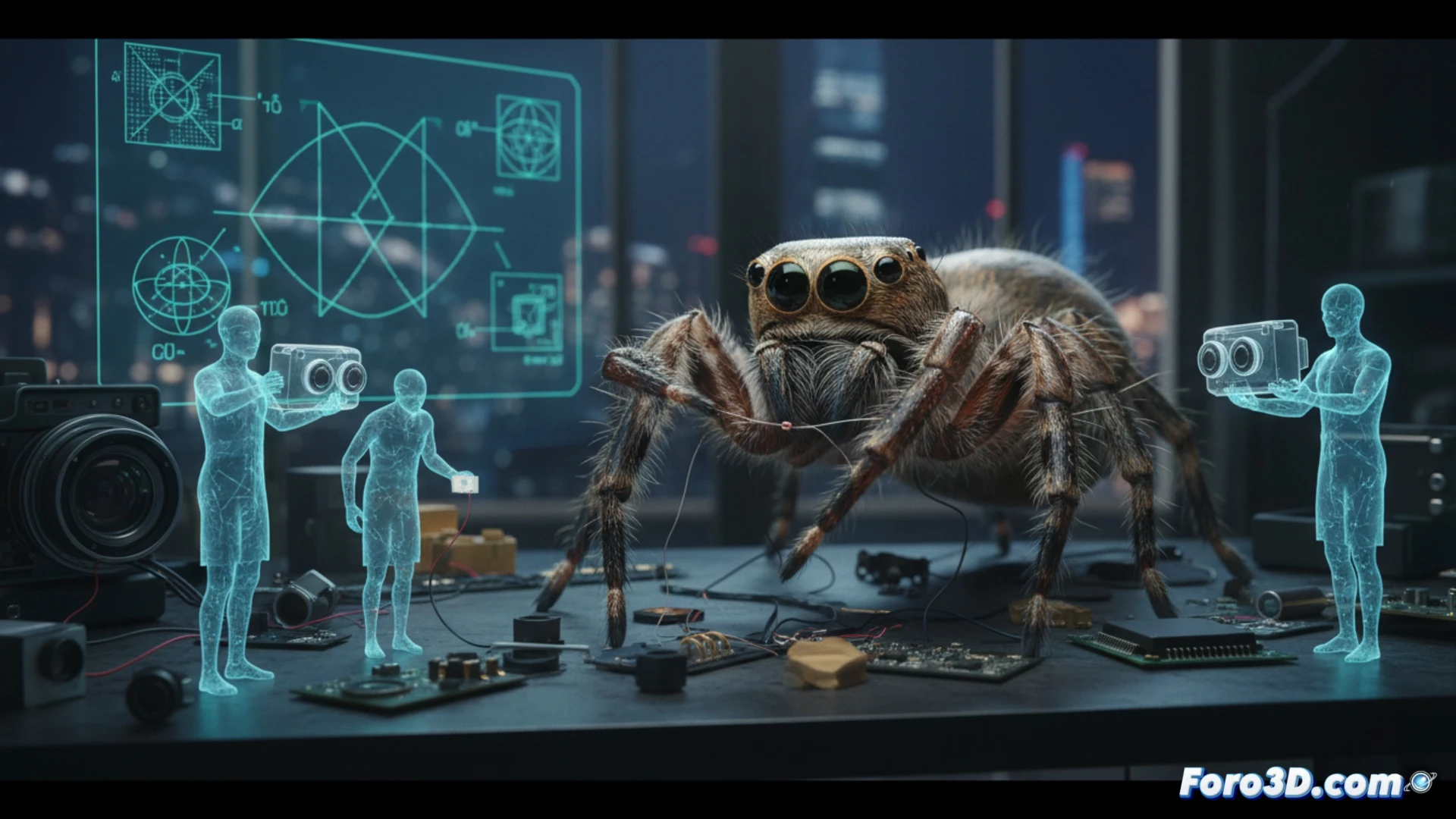
How the arachnid's vision inspires depth sensors 🕷️
The visual system of the jumping spider uses two large eyes that generate images with different focus. The animal's brain compares both signals to calculate distances without needing movement. Researchers propose replicating this process with low-cost sensors and simple algorithms, reducing the hardware required in current systems such as LIDAR or traditional stereo cameras.
The day a spider outdid us in optical design 🧠
While we spend fortunes on laser sensors and powerful processors, a spider just a few millimeters long solves the problem with two fixed eyes and a brain the size of a pinhead. Perhaps we should ask it for advice before investing in the next prototype. Or at least invite it to the budget meeting.