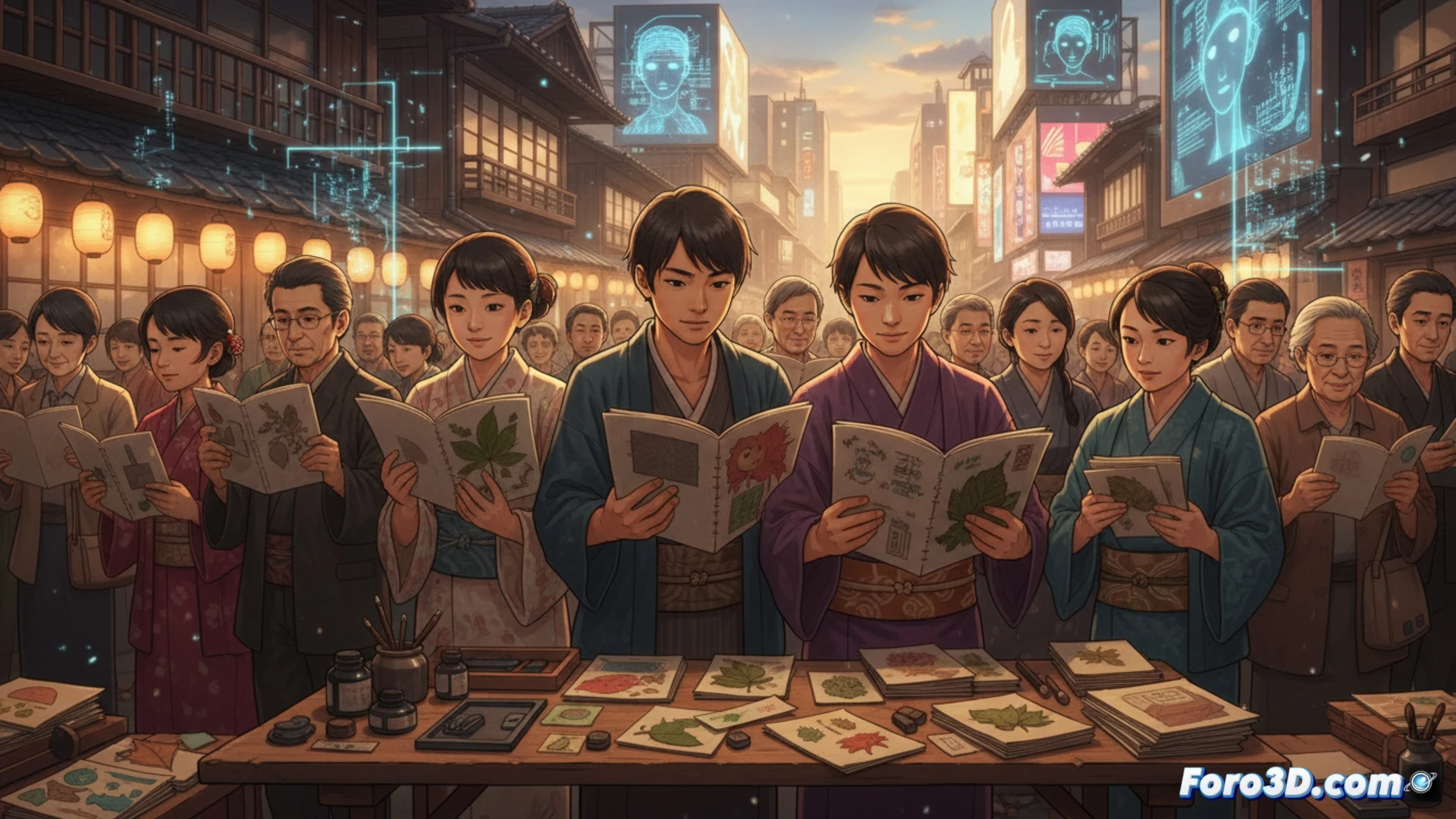
In a country where technology permeates every aspect of life, a quiet movement is gaining ground. Independent Japanese artists and writers are driving the trend of fanzines, handmade or self-published publications. For them, it is a way to resist digital dominance. For the public, paper remains an object of authenticity and creativity, a tangible alternative to virtual consumption. This trend shows that craftsmanship maintains its relevance in the midst of the technological era.
From pixel to fold: the technical process behind the fanzine 📄
Producing a fanzine is not simple nostalgia. It involves a hybrid workflow: it is designed in software like InDesign or Affinity Publisher, but printing is done on risographs or second-hand photocopiers. Assembly includes manual folding, stapling, and home binding. Many authors use high-weight recycled paper or eco-friendly inks. The print run is usually limited, from 50 to 200 copies, allowing full control over the finish. Each copy may have slight variations, turning the publication into an almost unique object.
The return of paper: when your screen runs out of battery 🔋
While the rest of the world struggles to charge their phones, the Japanese are passing fanzines around on trains like they were Showa-era trading cards. It is paper's revenge: it doesn't need WiFi, it doesn't notify you at 3 AM, and you can underline it with a pen without fear of breaking the screen. Some artists confess they do it to have an excuse not to reply to emails. After all, a fanzine has no reply all button.