The Japanese government has decided that the best way to sell its products abroad is by setting up its own factories there. The strategy aims for Japanese companies to receive state support to open plants or purchase businesses outside the country. The idea is that a local factory builds trust, reduces logistics costs, and, in turn, boosts the export of components and technology from Japan.
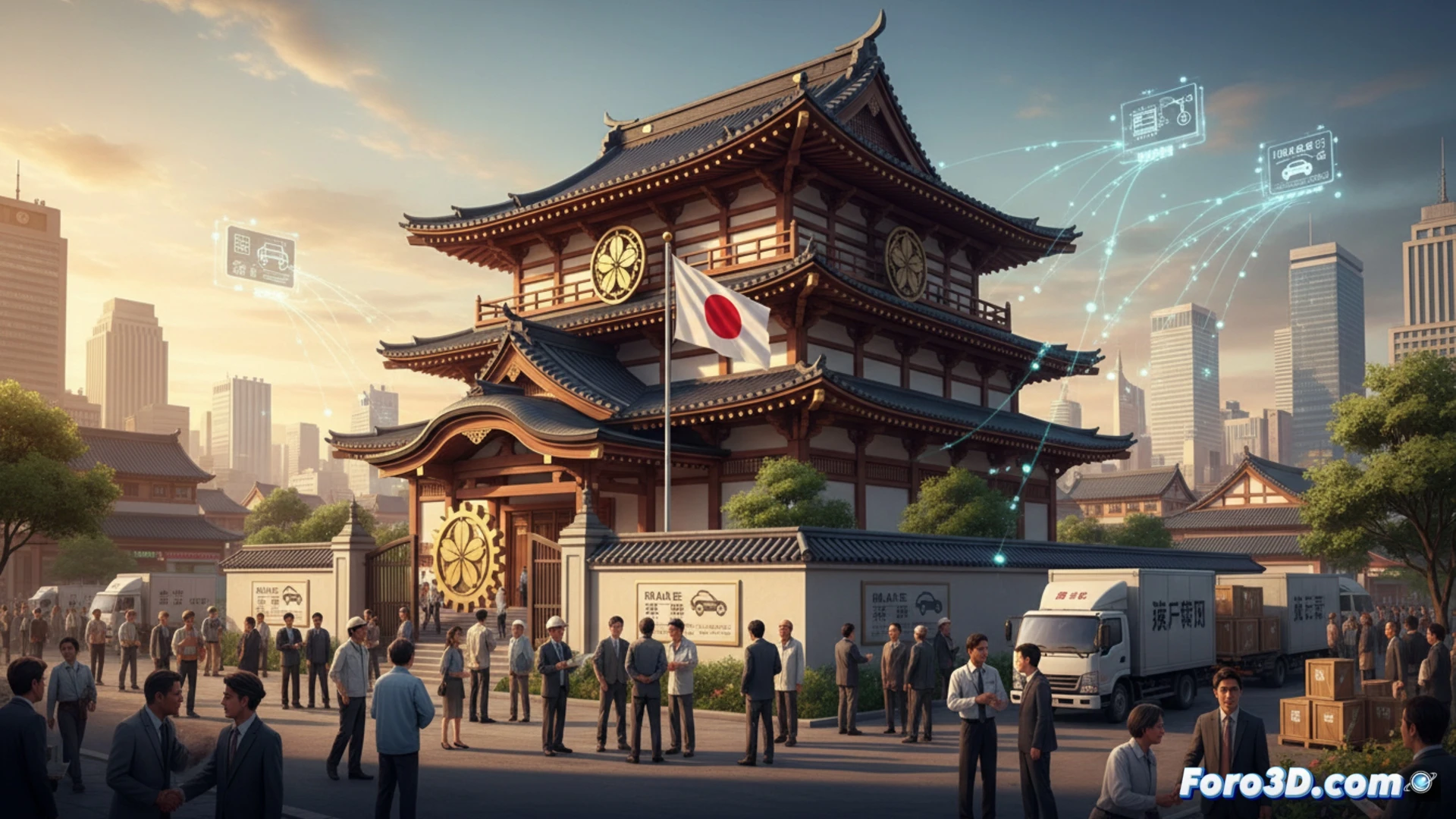
The technical plan: robots, sensors, and logistics abroad 🏭
The strategy relies on automation and remote control. Japanese companies plan to deploy modular factories with collaborative robots and IoT sensors that report real-time data to headquarters. This allows maintaining Japanese quality without needing to send engineers to each site. The supply chain is also reinforced with smart warehouses that synchronize inventories using AI, reducing delivery times and international transport costs.
The masterstroke: selling from abroad to avoid customs duties 🎯
The move has its charm: if you set up the factory in the destination country, you save on tariffs and, in the process, dress up as a local. It's like going on a date wearing a costume of your father-in-law to win him over. Japanese companies will no longer just sell cars or appliances; they will manufacture them there, with the logo clearly visible and Japanese pride intact. Of course, the instruction manual will still be illegible, but that's already tradition.