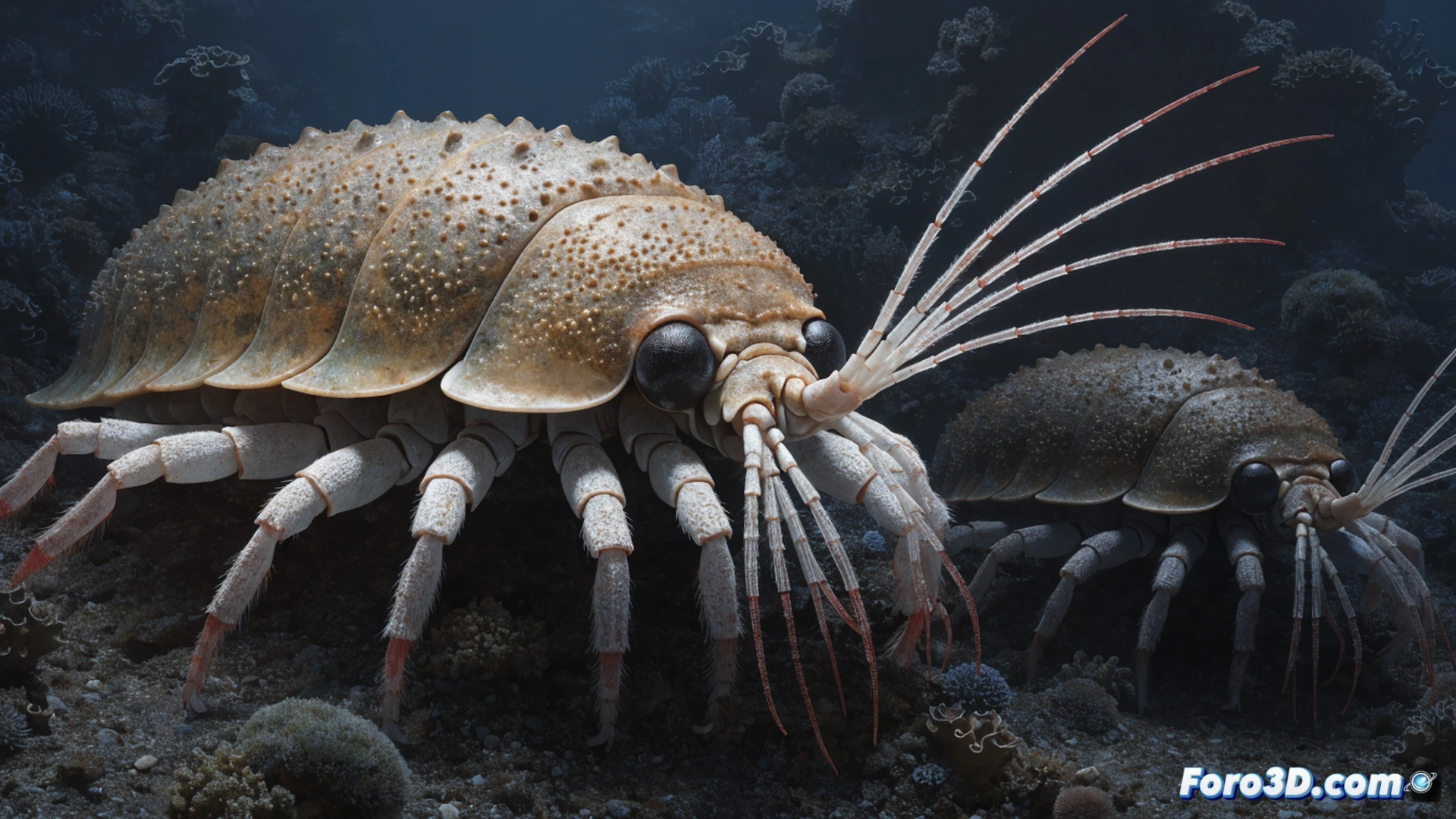
A team of scientists has discovered that giant deep-sea isopods, those creatures that look like they came out of a B-movie, incorporated a gene from a bacterium 16 million years ago. This gene allows them to slow down their metabolism and survive long periods of famine on the ocean floor, proving that nature is an expert in extreme solutions.
Horizontal transfer: the open source of evolution 🧬
The finding is based on horizontal gene transfer, a mechanism where an organism acquires genetic material from another without being its descendant. In this case, the stolen gene codes for an enzyme that drastically reduces cellular energy consumption. The isopods go from having a normal metabolism to one that is almost paused, allowing them to survive in an ecosystem where food arrives in drips, like remains of dead whales.
The sea snail's trick for saving on groceries 🐌
While we go on diets or order delivery every two days, these crustaceans took saving very seriously. With a stomach that can be empty for more than five years, they are the kings of intermittent fasting. If we applied their technique, we could forget about the fridge and only go out to dinner when a sunken ship falls. Evolution, once again, gives us a lesson in austerity.