The conflict between the United States and Iran exposes an uncomfortable reality: global powers prefer to fund missiles rather than dialogue tables. While bombings cost billions, the international community watches as a passive spectator. The solution is not complex: an immediate ceasefire and a binding mediation mechanism under the UN that forces negotiation. But of course, war sells more than peace.
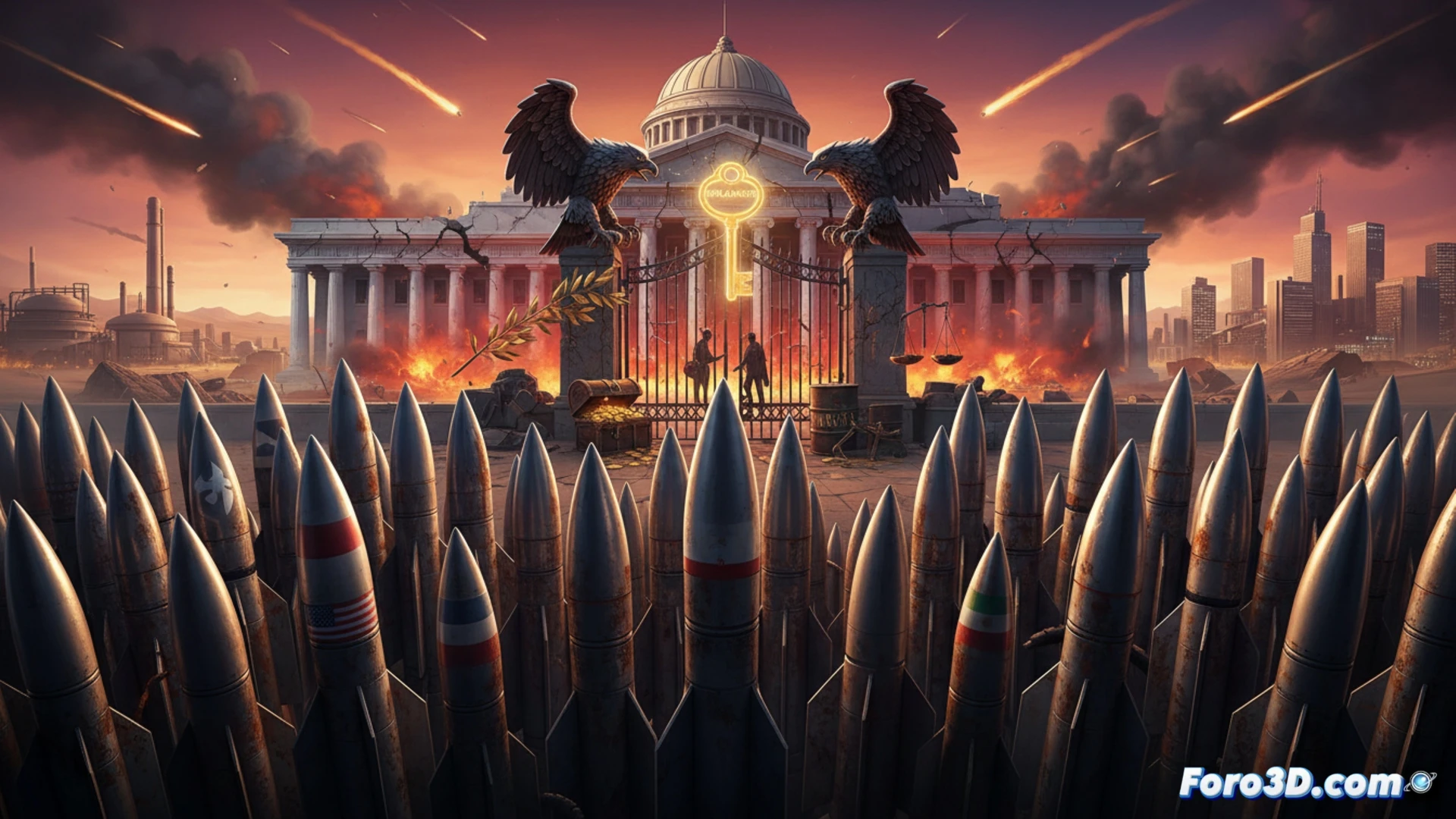
Military technology: the algorithm of mass destruction 💥
While missile defense systems like THAAD or Shahed drones are perfected with artificial intelligence, civilian infrastructure becomes a testing ground. The millimeter precision of a surgical strike contrasts with the imprecision of its humanitarian consequences. Satellites spy, missiles fly, and algorithms decide targets. But no computer code can calculate the value of a life. Technological development is used to escalate the conflict, not to resolve it.
The UN: the referee who always arrives late ⏳
The international community calls for calm while passing out popcorn. The UN, that eternal debate club, meets to condemn, lament, and then call for more meetings. Meanwhile, generals calculate how many missiles fit into the humanitarian aid budget. The solution is simple: a binding mechanism that forces negotiation. But that would mean stopping arms sales, and we already know that business is sacred. At least, someone should start the clock.