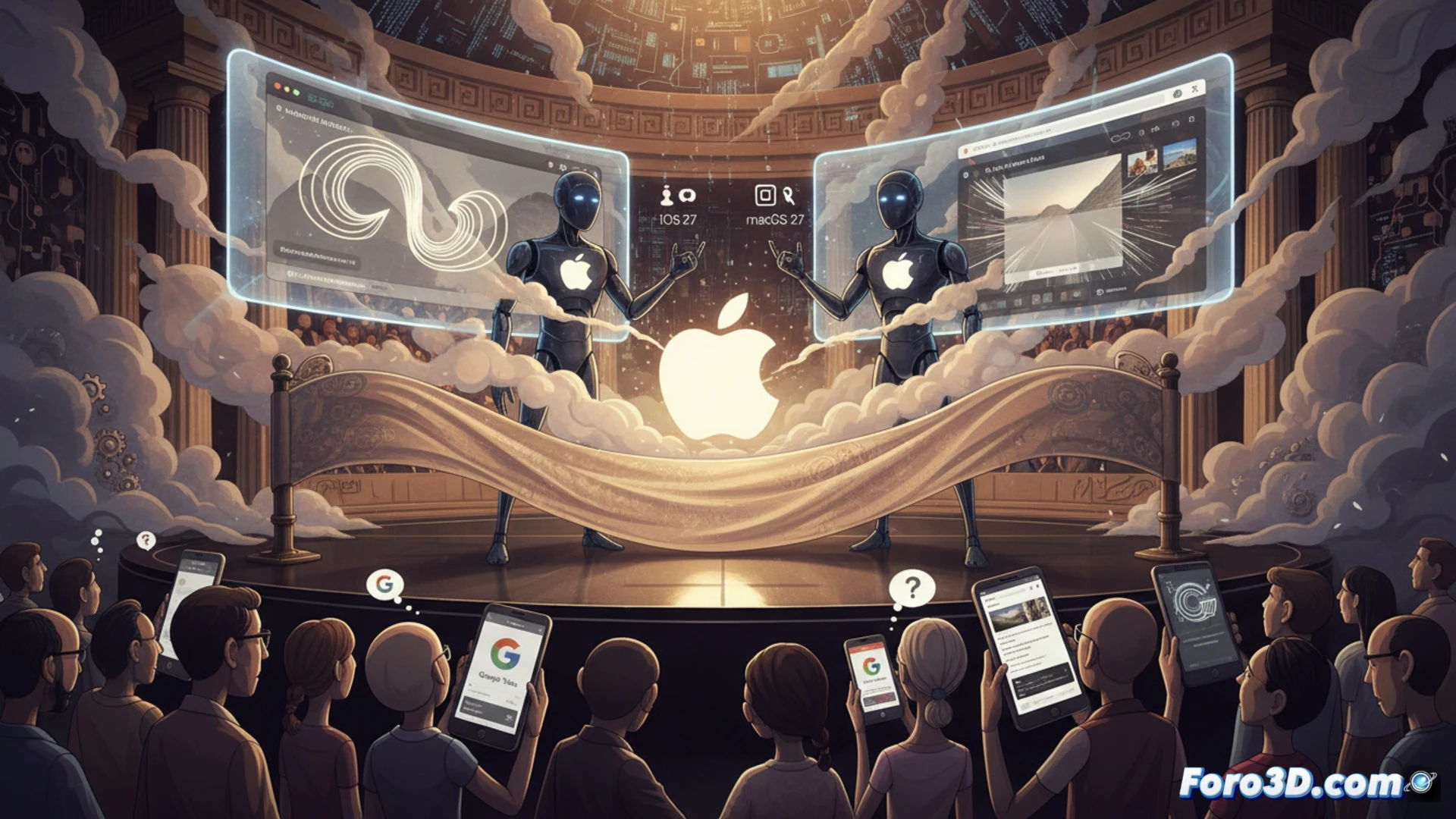
Apple has unveiled its flagship new updates, iOS 27 and macOS 27, promising a revolution in Safari tab organization and AI-powered photo editing. However, a quick analysis reveals that these features have been available for years in Chrome, Firefox, or Google Photos. The Cupertino company dresses up the copy as progress to make its user base believe it leads the industry.
AI in the cloud: the real business of your photos ☁️
AI-powered editing is not processed on the user's device, but on Apple's remote servers. The official excuse is to improve the learning model, but the real effect is that the company analyzes users' images without explicit consent. Meanwhile, Safari's tab organization replicates features that Chrome implemented in 2020. There is no innovation, just an effort to catch up with the competition while securing valuable data.
Tim Cook and the art of selling trinkets 🎭
The presentation was a festival of applause for features that any Android user has been using for years. Apple has perfected the art of calling innovation what others have already done. Next, they will announce the home button as a revolutionary accessibility feature. Meanwhile, fans celebrate being able to group tabs as if they had discovered fire. Tech smoke has never smelled so sweet for market share.