Instability in liquid crystals is a critical phenomenon where the ordered molecular orientation collapses under external stimuli. This behavior, far from being a defect, reveals fundamental properties of these materials. Understanding it is essential for optimizing technologies such as LCD screens and advanced sensors, where precise control of the liquid-crystalline phase determines device performance.
Physical Causes and Instability Mechanisms 🔬
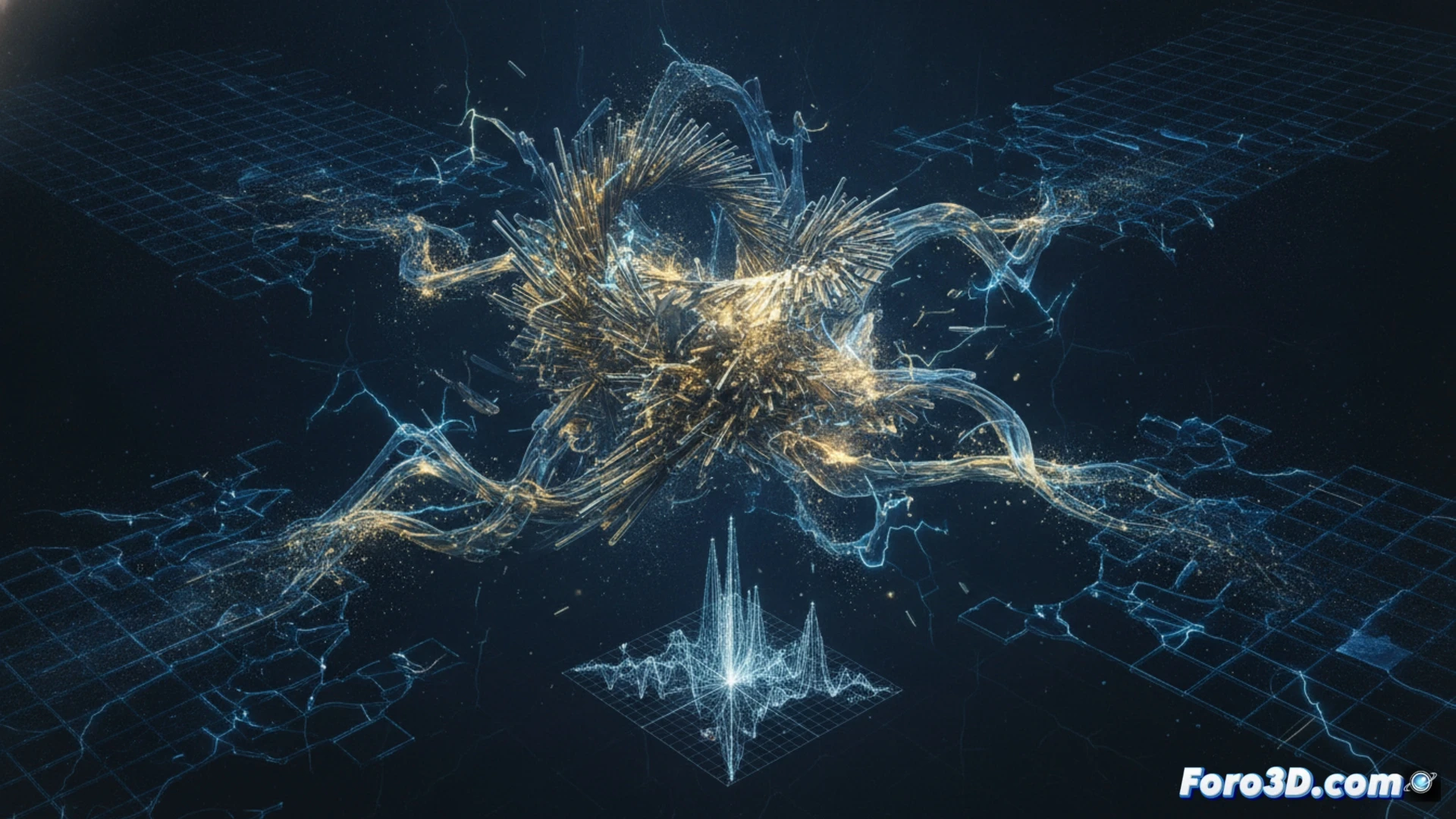
Instabilities arise mainly from three factors. First, external electric fields can induce Freedericksz transitions, where molecules are forcibly reoriented, generating chaotic textures. Second, thermal gradients cause fluctuations in the order parameter, creating domains with conflicting orientations. Third, mechanical stresses such as shear or compression deform the layer structure (in smectics) or helices (in cholesterics). To visualize these processes, 3D molecular dynamics simulations are used, modeling each molecule as a rigid ellipsoid. Tools like LAMMPS or COMSOL allow recreating bullseye patterns or Schlieren textures, facilitating the study of topological defects and their temporal evolution under controlled conditions.
Applications and Future in Materials Science 🧪
Far from being a problem, instability is exploited in pressure and temperature sensors, where changes in birefringence detect external stimuli. In LCD screens, controlling these transitions avoids visual artifacts such as flicker. Current 3D models accurately predict instability thresholds, enabling the design of materials with programmable responses. Future research seeks to harness these instabilities to create adaptive liquid crystals, capable of self-regulation in intelligent optical devices.
Since 3D modeling allows visualizing the transition between nematic and cholesteric phases, which computational simulation techniques are most effective for predicting the critical point of instability induced by electric fields in liquid crystals.
(PS: Visualizing materials at the molecular level is like looking at a sandstorm with a magnifying glass.)