Saturn's largest moon, Titan, hides a dynamic and extreme geological landscape. Its water ice crust and liquid mantle generate unique instability phenomena. Here we analyze how 3D simulations allow us to visualize massive fracture and terrain sliding processes on this alien world, offering key parallels with terrestrial catastrophes.
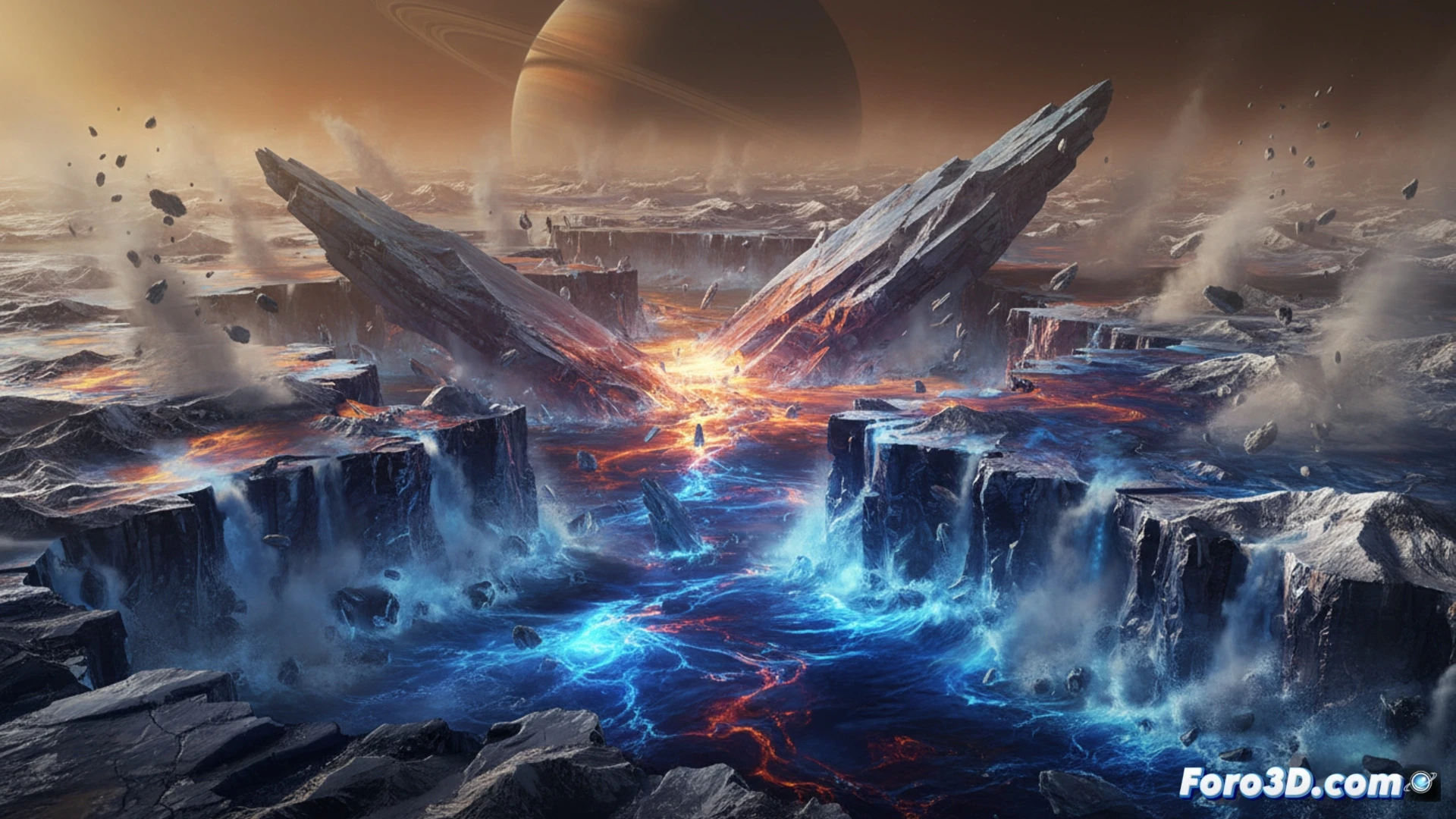
3D Modeling of Cryovolcanic Fractures and Landslides 🌌
3D simulation tools, such as Houdini or Blender with physics engines, allow recreating Titan's instability. The model focuses on two factors: tidal pressure exerted by Saturn and cryovolcanism of water and ammonia. By applying stress to a polygonal ice mesh, fracture patterns similar to those on Earth are observed, but with a brittle material at -180 degrees Celsius. The simulations show how landslides on Titan can reach hundreds of kilometers, without liquid friction, triggering methane clouds and abrupt atmospheric changes. This modeling is vital for understanding the evolution of its surface.
Lessons from Titan for Terrestrial Prevention 🛰️
Studying Titan's instability is not just an astronomical exercise. The fracture and landslide patterns observed in 3D simulations offer a natural laboratory for predicting disasters on Earth. For example, the way ice cracks under pressure helps model avalanches on glaciers or landslides on unstable slopes. Understanding these alien processes better prepares us to mitigate geological risks on our own planet.
What geophysical criteria and simulation parameters determine the point of no return in the structural collapse of Titan's icy crust under the influence of its internal liquid mantle?
(PS: Simulating catastrophes is fun until the computer crashes and you are the catastrophe.)