The Hospital San Juan de Dios in Tenerife has integrated 3D printing to create custom adaptations that make life easier for patients with ALS. From phone holders to eating utensils, these pieces are designed to fit each user. The project not only provides solutions but also trains patients and families so they can replicate them at home, reducing dependence on others.
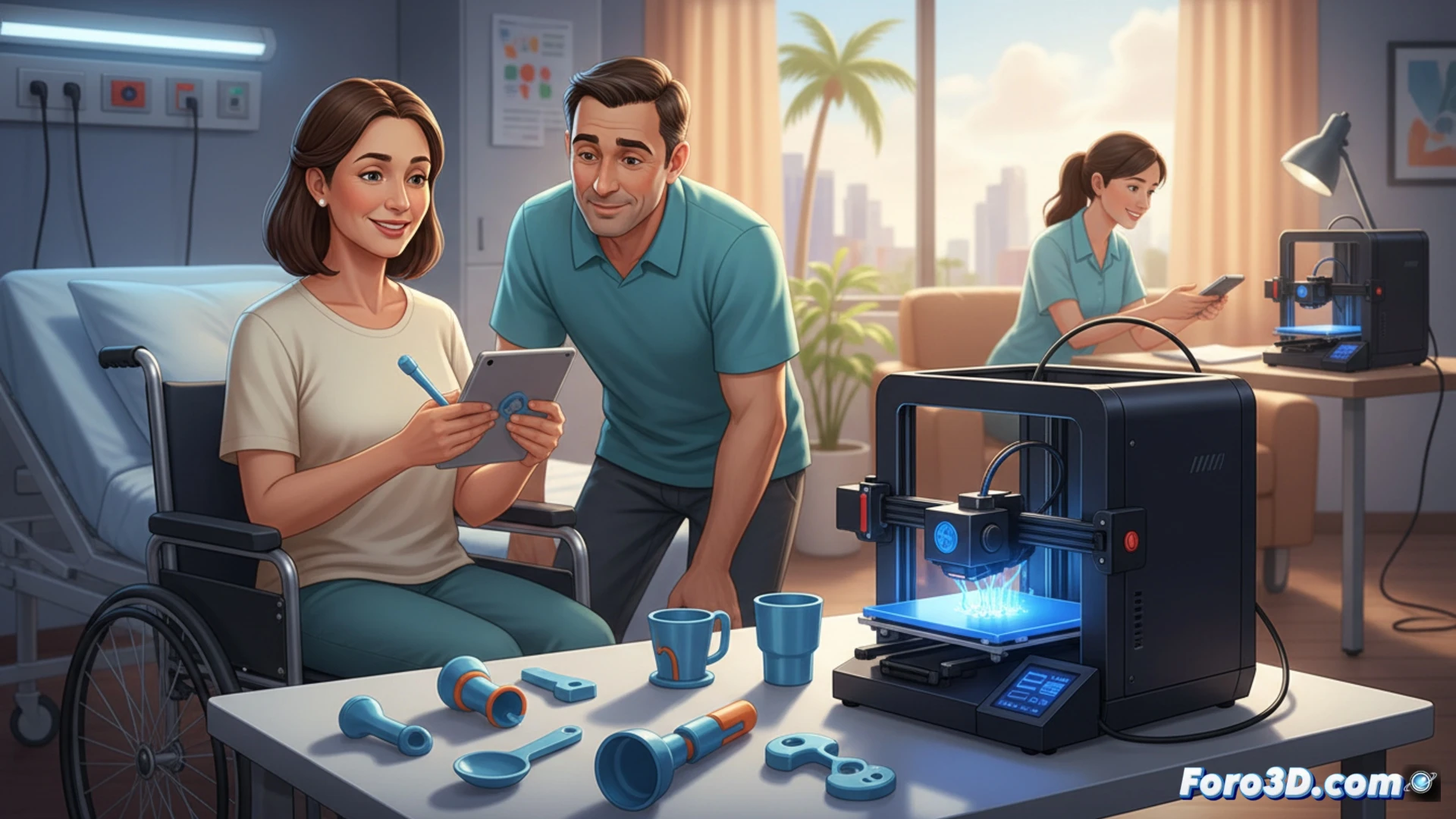
How additive manufacturing adapts to real needs 🛠️
The medical team designs the models in CAD software based on each patient's motor limitations. PLA or PETG filaments are used, which are accessible and durable materials for daily use. The files are shared with families, who can print them on their own home printers. This allows the design to be modified as the disease progresses, avoiding waiting lists and the high costs of inflexible commercial devices.
Goodbye to the generic spoon: now every bite is unique 🍴
Finally, technology focuses on what matters: that you can eat your soup without it looking like an aim contest. Forget about universal utensils that slip out of your hand. Now you have a handle printed to your exact grip, like a boxing glove but for holding a fork. Just be careful not to print one for every dish, or you'll have to move to a bigger house just to store the cutlery.