Multi-axis 3D printing is changing the game in home manufacturing. This technology allows creating objects from multiple angles, eliminating the typical weaknesses of flat layers. For the average citizen, this translates into stronger parts for repairing appliances, furniture, or even manufacturing custom prosthetics. The result is real savings by avoiding costly replacements and greater durability in what we produce at home.
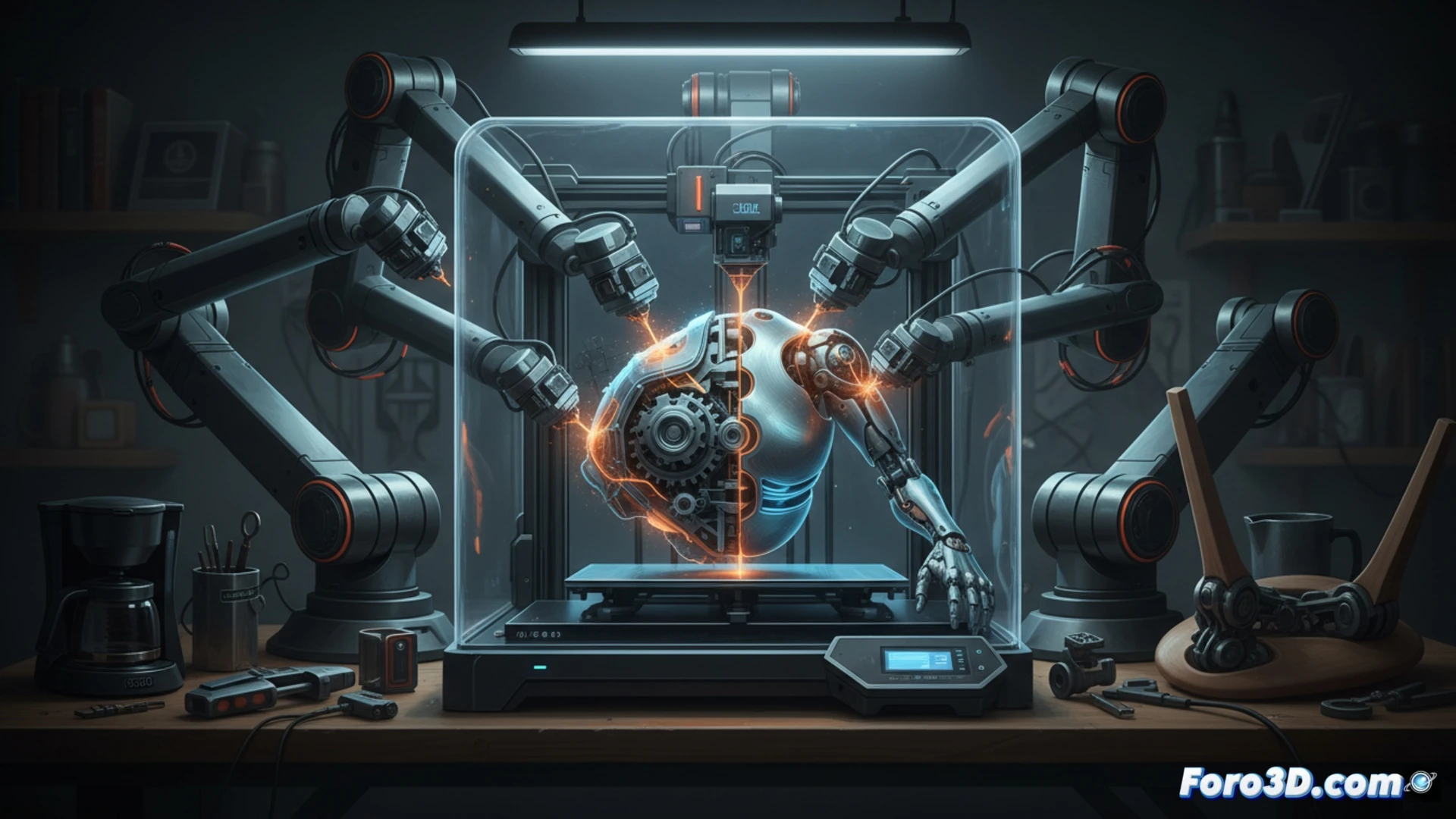
How multi-axis manufacturing works 🛠️
Unlike traditional printers that only move in three axes (X, Y, Z), multi-axis systems add rotations and angular displacements. This allows the nozzle to deposit material in non-orthogonal directions, optimizing structural strength in stress zones. In practice, objects with complex geometries can be created without internal supports, reducing filament waste. Although the slicing software is more complex, advances in controllers and firmware are making this technology accessible to advanced enthusiasts.
Goodbye to parts that break on the third use 💪
You will finally be able to print that shelf bracket without fear of it shattering into a thousand pieces when you put a book on it. Multi-axis printing promises parts that can withstand even a Sunday morning bad mood. And the best part: when your partner asks why you have a printer that looks like a mechanical octopus, you can proudly answer that it's to save money. Although, let's be honest, you'll use it to make action figures that stay firmly on the shelf.