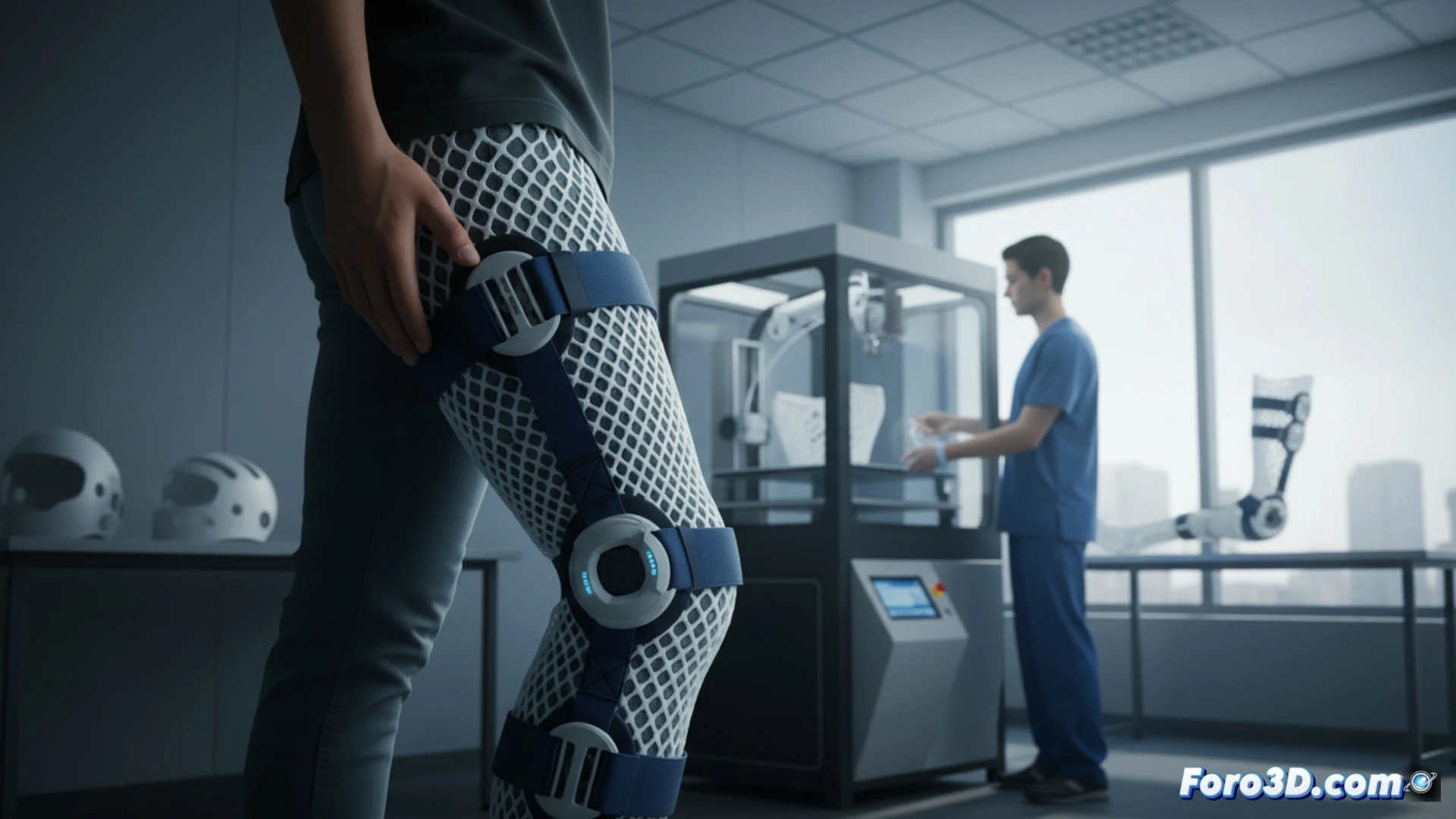
The company Invent Medical uses 3D printing to manufacture custom medical devices, such as cranial orthoses for babies and leg supports. These pieces are lighter, more breathable, and more adjustable than traditional plastic ones, improving patient comfort. For the public, this translates into more effective treatments and shorter recovery times.
Digital precision: how 3D modeling optimizes each support 🦾
The process begins with a three-dimensional scan of the area to be treated, eliminating uncomfortable plaster casts. With that data, a lattice structure is designed that reduces weight and allows ventilation. Printing with materials like nylon or TPU offers controlled flexibility. Each piece is adjusted to the patient's anatomy, distributing pressure evenly. This speeds up adaptation and reduces adjustment visits, something traditional methods could not achieve effectively.
Goodbye to hard plastic: your leg will no longer look like a Tupperware 🚀
Before, wearing a splint was like sticking your limb in a plastic container. You would sweat, itch, and couldn't scratch. Now, with printed orthoses, they look like they came out of a spaceship. They are ventilated, lightweight, and you might even forget you're wearing them. Of course, they don't make them in red yet so it looks like an Iron Man armor, but everything in due time.