The organization Ayúdame3D has found a practical way to apply 3D printing to the world of children's mobility. Instead of relying on expensive traditional models with long waiting lists, they can now manufacture customized wheelchairs for children. Each chair is adapted to the specific needs of the child, adjusting weight, size, and support. The result is a more agile process that reduces costs and prevents children from outgrowing their chair before receiving it.
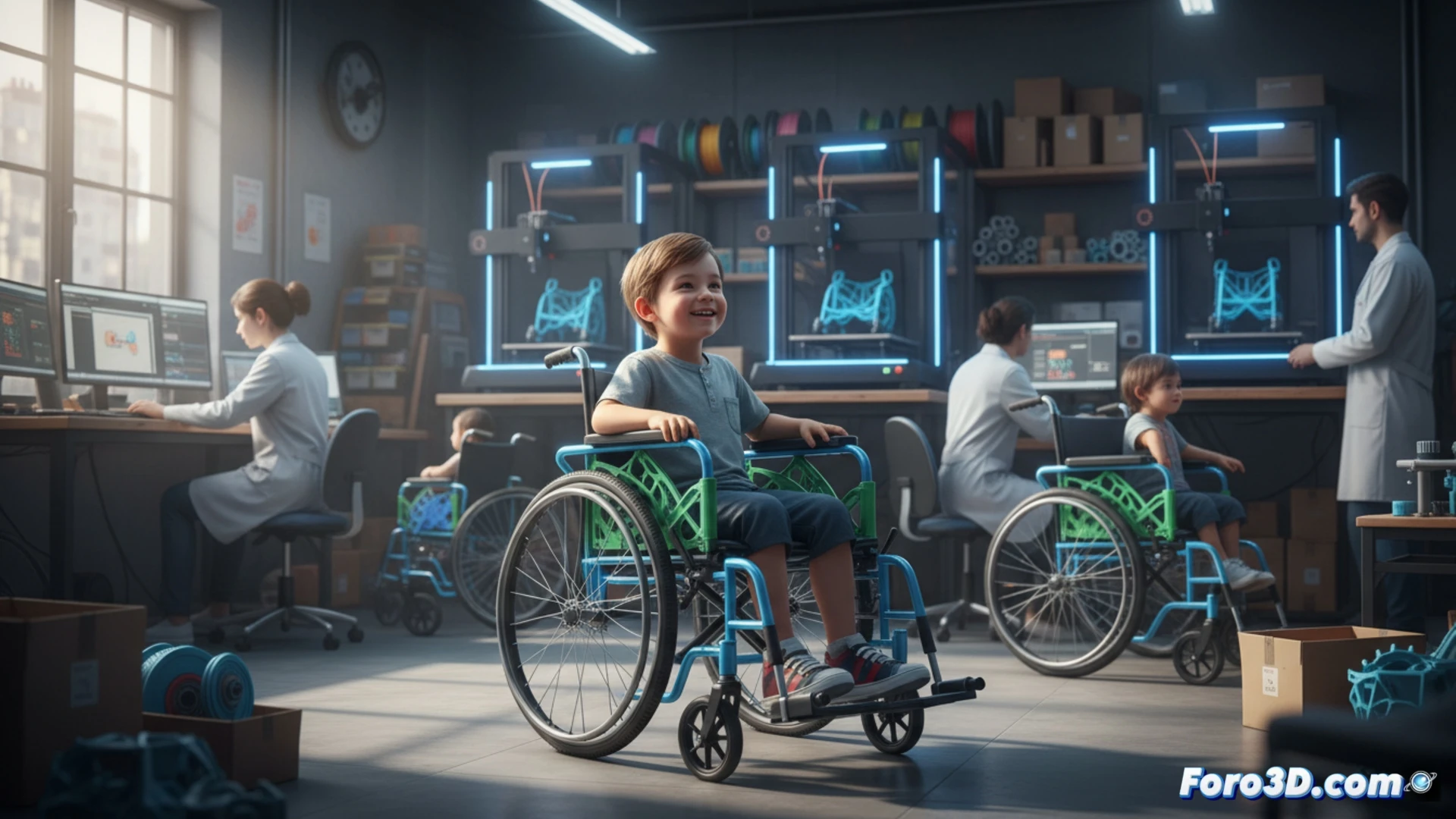
How the chairs are manufactured with parametric design 🖨️
The technical process begins with a 3D scan of the child's body to obtain precise measurements. With this data, Ayúdame3D engineers modify a parametric model in CAD software, adjusting the backrest, footrest, and seat angle. Then, the structure is printed in PETG or reinforced PLA filament, materials that offer strength without being heavy. The parts are assembled with standard components such as wheels and cushions, achieving a functional chair in less than a week. This contrasts with the months that industrial models can take.
The chair your child will use before you finish the tutorial 🚀
While traditional manufacturers are still deciding what color of plastic to use, Ayúdame3D already has the chair ready and the child zipping down the hallway. The best part is, if the little one has a growth spurt, you don't have to sell a kidney to buy another one: a new part is printed and that's it. Of course, don't try to order a chair with chrome armrests or leather upholstery. Here, the luxury is that it arrives before the child starts crawling, not that it looks like a king's throne.