The Gregorio Marañón Hospital in Madrid has achieved a milestone by using 3D printing to manufacture custom prosthetics and surgical models. This technique allows surgeons to plan complex operations with greater precision, reducing risks and speeding up patient recovery. For citizens, it means access to cutting-edge treatments without needing to travel abroad, improving public health with safer and more accessible procedures.
Prosthetics made to your measure (and your bone) 🦴
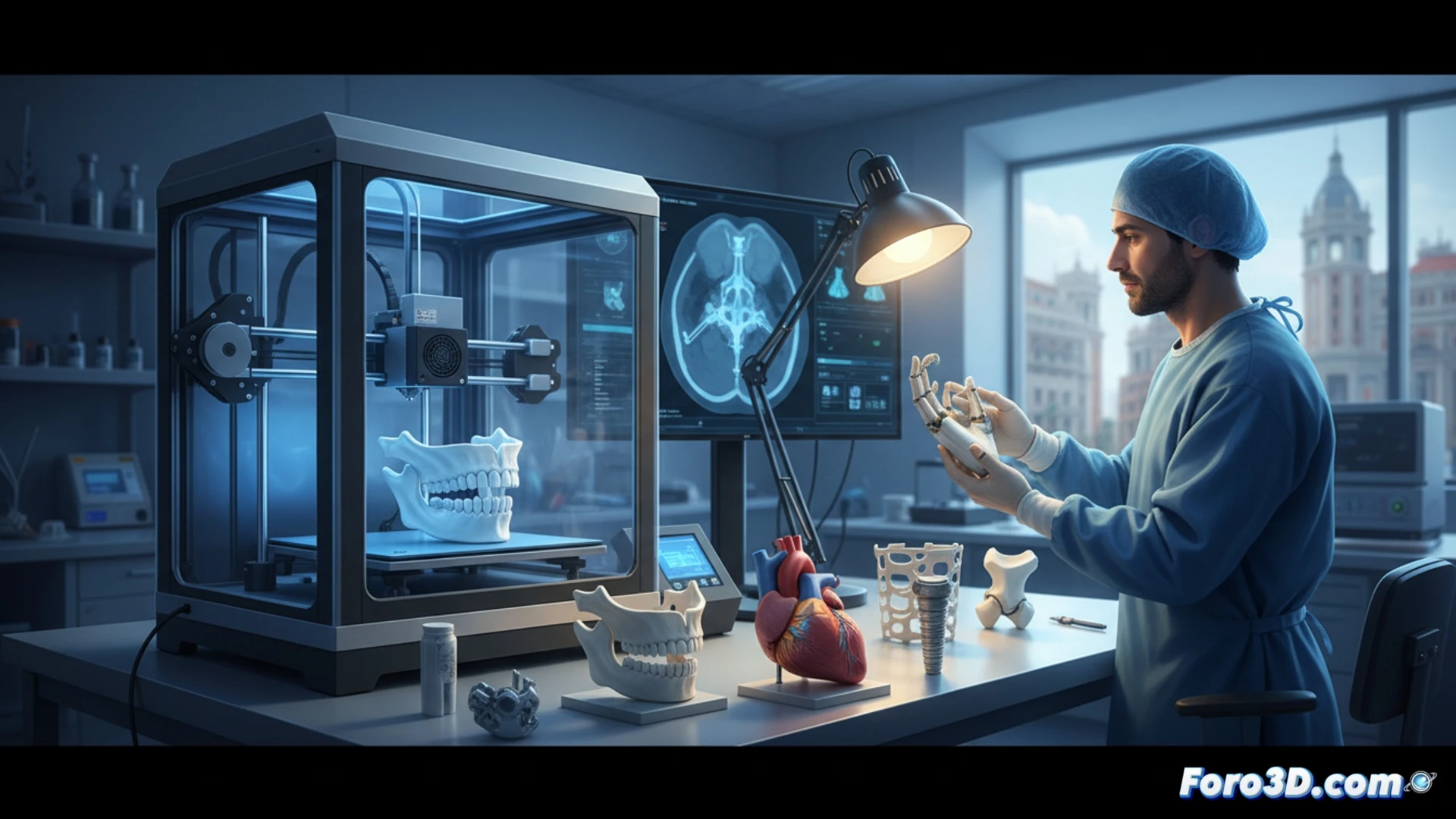
The key lies in tomography: they scan the patient's body and generate an exact digital model. Using a resin or metal 3D printer, they manufacture replicas of organs or specific implants. Surgeons rehearse the operation on these models, anticipating cuts and adjustments. This reduces surgery time by up to 30% and minimizes errors. The result is a prosthetic that fits like a glove, without the need for adjustments during the procedure.
Goodbye to generic screws from the surgical Ikea 🔧
It seems the days of one-size-fits-all implants are over. Now, instead of the surgeon struggling with a standard prosthetic like someone assembling Swedish furniture, they receive a piece designed for the specific bone in question. Of course, let's hope they don't start printing spare organs in pastel colors, because then there will be queues in the ER for discontinued parts. Customization is good, but don't try to sell us the complete package.