The term Aquatic Server Implosion describes a catastrophic event where the hydrostatic pressure of the ocean overcomes the structural resistance of a submerged data center. In this article, we analyze the collapse through 3D simulation, modeling external forces, composite material fatigue, and the failure sequence. The goal is to visualize the process to understand the technical causes and risks in critical underwater infrastructures, a key tool for technological disaster prevention.
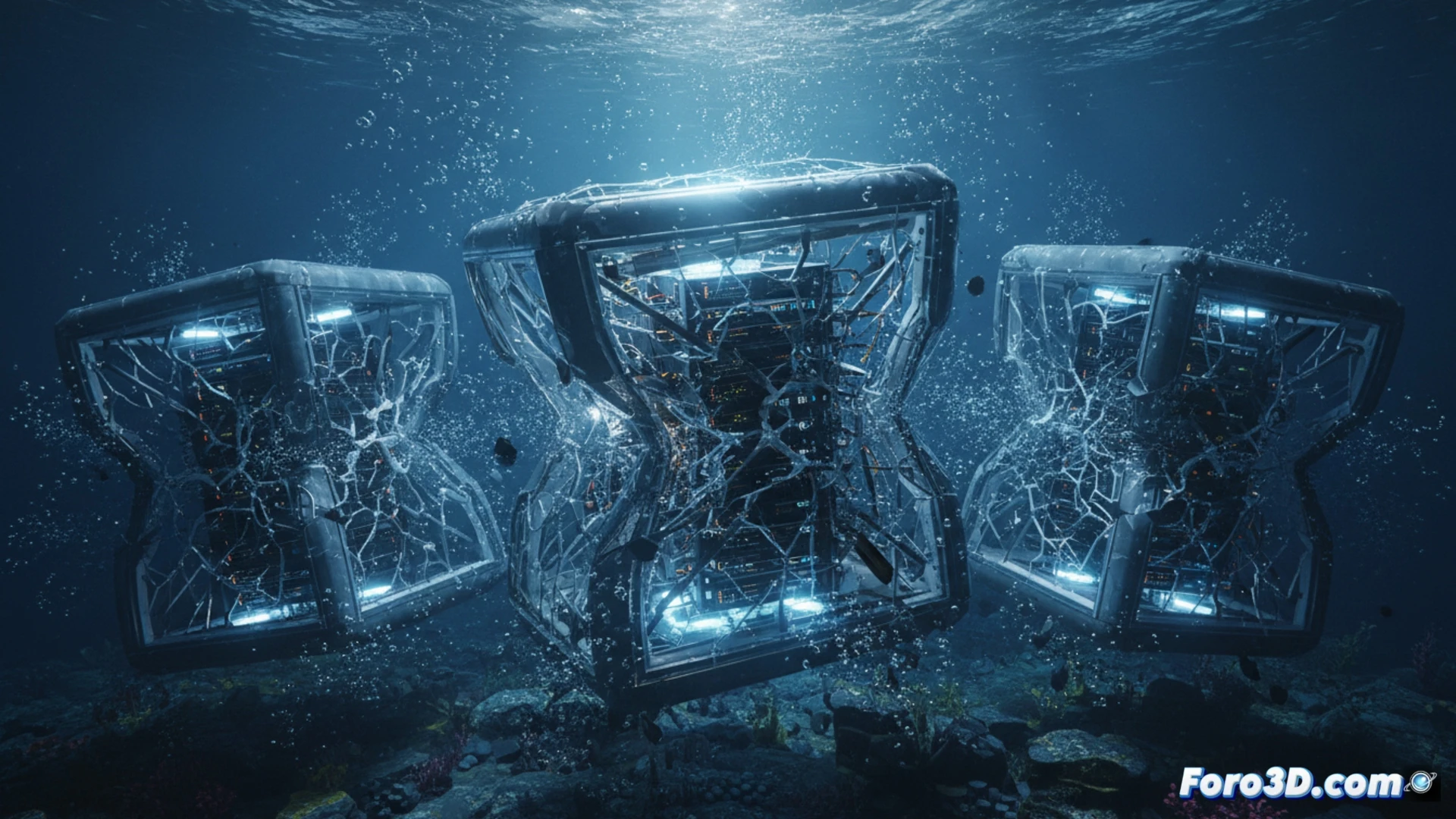
Modeling Hydrostatic Forces and Material Fatigue 🌊
For the simulation, a finite element model of a cylindrical aquatic server was built, using aluminum alloy and titanium joints. An incremental hydrostatic pressure from 0 to 30 MPa was applied, equivalent to a depth of 3000 meters. The results show that the critical failure point is located at the welded joints, where cyclic fatigue from ocean currents accelerates microfracturing. At 22 MPa, a sudden elastic instability occurs: the casing collapses inward at 150 m/s. The 3D visualization reveals an internal shockwave that fragments the servers in milliseconds, validating the theory of implosion by hydrostatic buckling.
Reflection on Submerged Technological Vulnerability 🤔
This simulation exposes an uncomfortable truth: the technology driving our global connectivity is fragile under extreme pressure. A single error in the casing design or ballast protocols can trigger an implosion that not only destroys data but also contaminates the seabed with debris and coolant fluids. For disaster prevention, it is vital to implement real-time fatigue sensors and structural redundancy. The 3D visualization not only teaches how a server fails but also how we must rethink the resilience of our critical infrastructures against a relentless ocean.
Is it possible to accurately recreate in a 3D simulation engine the fracture and collapse sequence of an aquatic server under extreme hydrostatic pressure, considering the interaction between the metal structure and the turbulent water flow?
(PS: Simulating catastrophes is fun until the computer melts down and you are the catastrophe.)