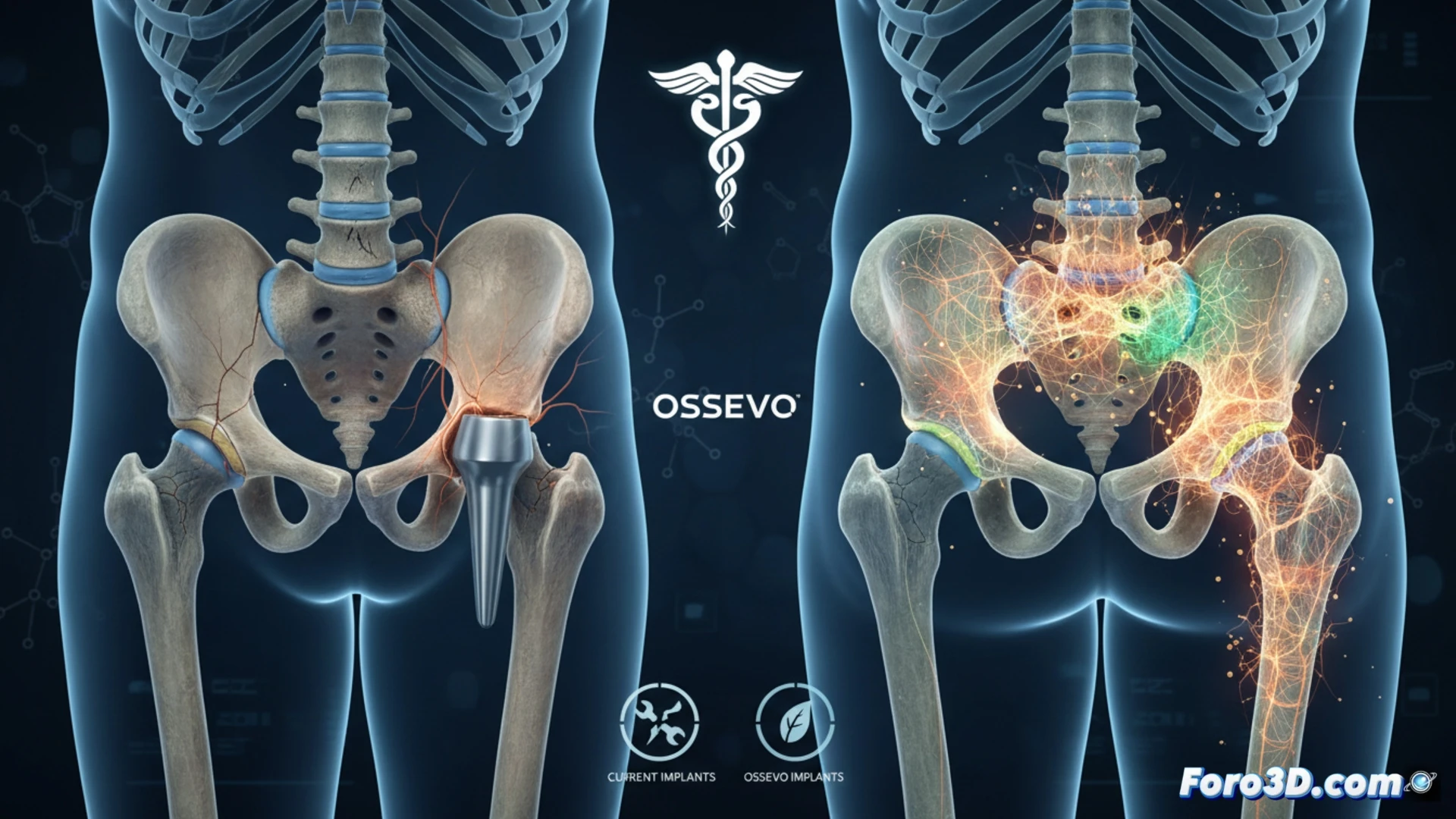
Current orthopedic implants have a fundamental problem: they are stiffer than real bone. This mechanical difference causes premature wear, pain, and in many cases, the need for revision surgeries. The Ossevo platform addresses this flaw with a nature-inspired approach, designing prosthetics that replicate bone structure to better integrate into the body.
How bioinspiration changes the game 🧬
Ossevo develops implants with a porous and flexible structure that mimics the trabeculae of cancellous bone. This architecture allows the implant to distribute loads similarly to natural tissue, reducing stress concentration at the interface. The result is more stable fixation and fewer micromovements that cause wear. The technology aims to extend the lifespan of the prosthesis and prevent the patient from returning to the operating room every few years.
The synthetic bone that doesn't need a visit to the orthopedist 🦴
It turns out the solution wasn't to add more hard metal, but to copy the spongy architecture we already had inside. Ossevo has managed to make an implant behave almost like real bone. Almost. Because, unlike the original, this one doesn't need calcium or complain about the cold in winter. However, it promises to last longer than a patient's patience in a waiting room. Fewer revisions, more free time for the surgeon.