The growing dependence on space infrastructure for terrestrial logistics has created a critical blind spot in modern geopolitics. An orbital impact, whether from space debris, a meteorite, or an anti-satellite (ASAT) attack, does not just destroy an asset in the sky; it triggers a domino effect that can paralyze ports, air routes, and payment systems within minutes. We analyze how a collision in low Earth orbit (LEO) can reconfigure global supply chains and escalate tensions between powers.
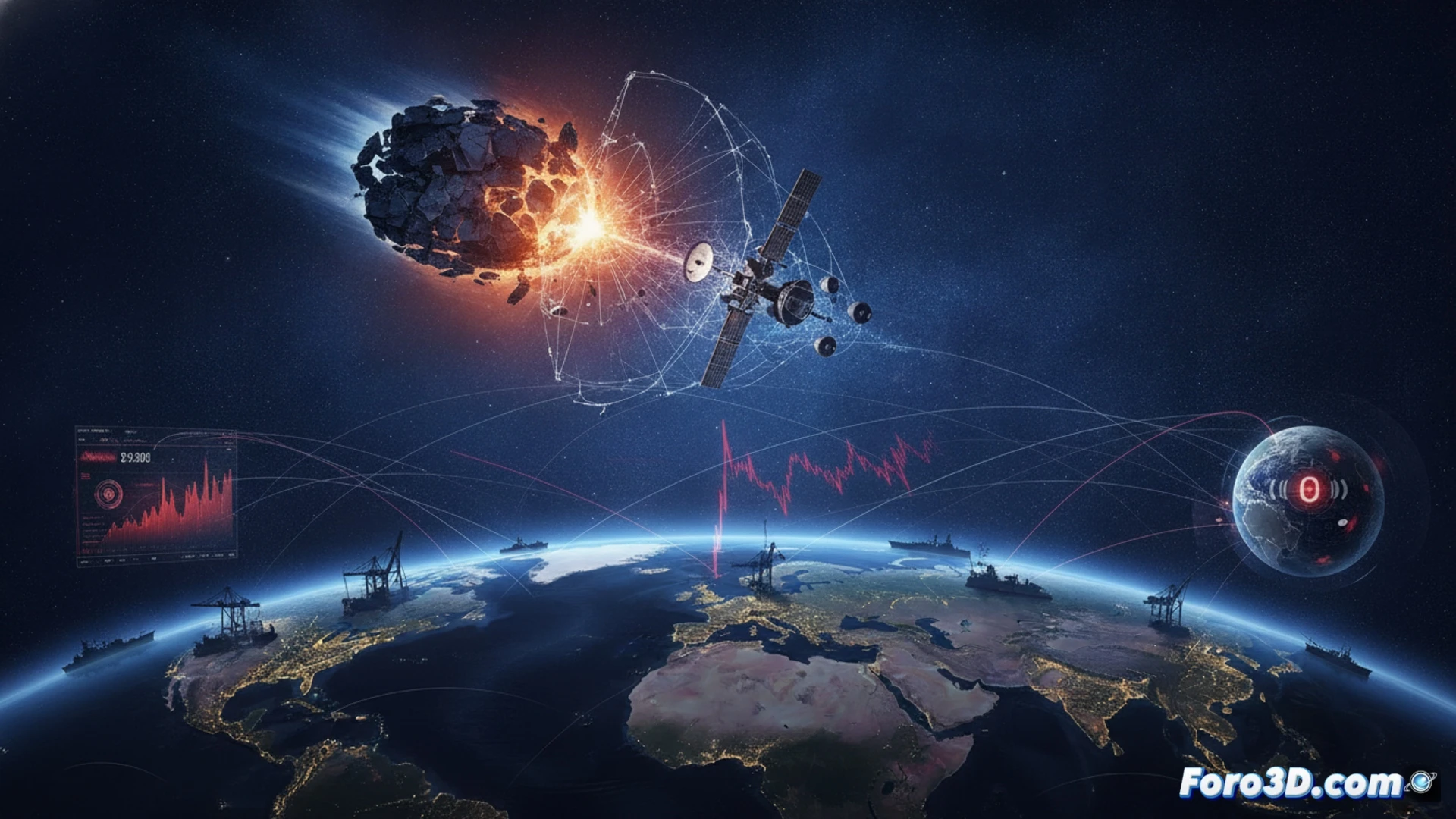
3D Simulation of Risk Zones and Signal Degradation 🛰️
To model the impact, we use 3D visualizations that map the constellation of communications and navigation satellites (Iridium, Starlink, GPS). A collision scenario generates an expanding debris cloud which, through propagation simulations, shows the progressive signal degradation in key logistics corridors such as the Strait of Malacca or the Suez Canal. The tool reveals how the loss of a single satellite node forces maritime shipping routes to resort to obsolete inertial navigation protocols, increasing transit times by up to 40% and exponentially raising freight costs.
The Geopolitics of Debris: When the Sky Becomes a Minefield ⚠️
An orbital impact is not a neutral accident; it is a geopolitical event. The ability to track and attribute the source of the impact (a Russian missile, a Chinese fragment, or an American rocket) becomes a diplomatic weapon. Nations with greater dependence on commercial satellites (the United States, Europe) are exposed to coercion from powers that dominate active space debris removal technology. The question is no longer whether an impact will occur, but which supply chain will break first and who will control the narrative of the resulting orbital chaos.
To what extent could the militarization of space and the potential destruction of key communications and navigation satellites paralyze global trade and redefine the geopolitical balance of power in the next decade?
(PS: geopolitical risk maps are like the weather: there is always a storm somewhere)