Cold tests of the ID Cross confirm that its batteries withstand extreme temperatures, a necessary technical achievement. However, the SUV ignores a growing problem: emotional obsolescence. A design that does not evolve, that does not respond to the environment, risks becoming static and cold, precisely when the user seeks a more lively connection with their vehicle.
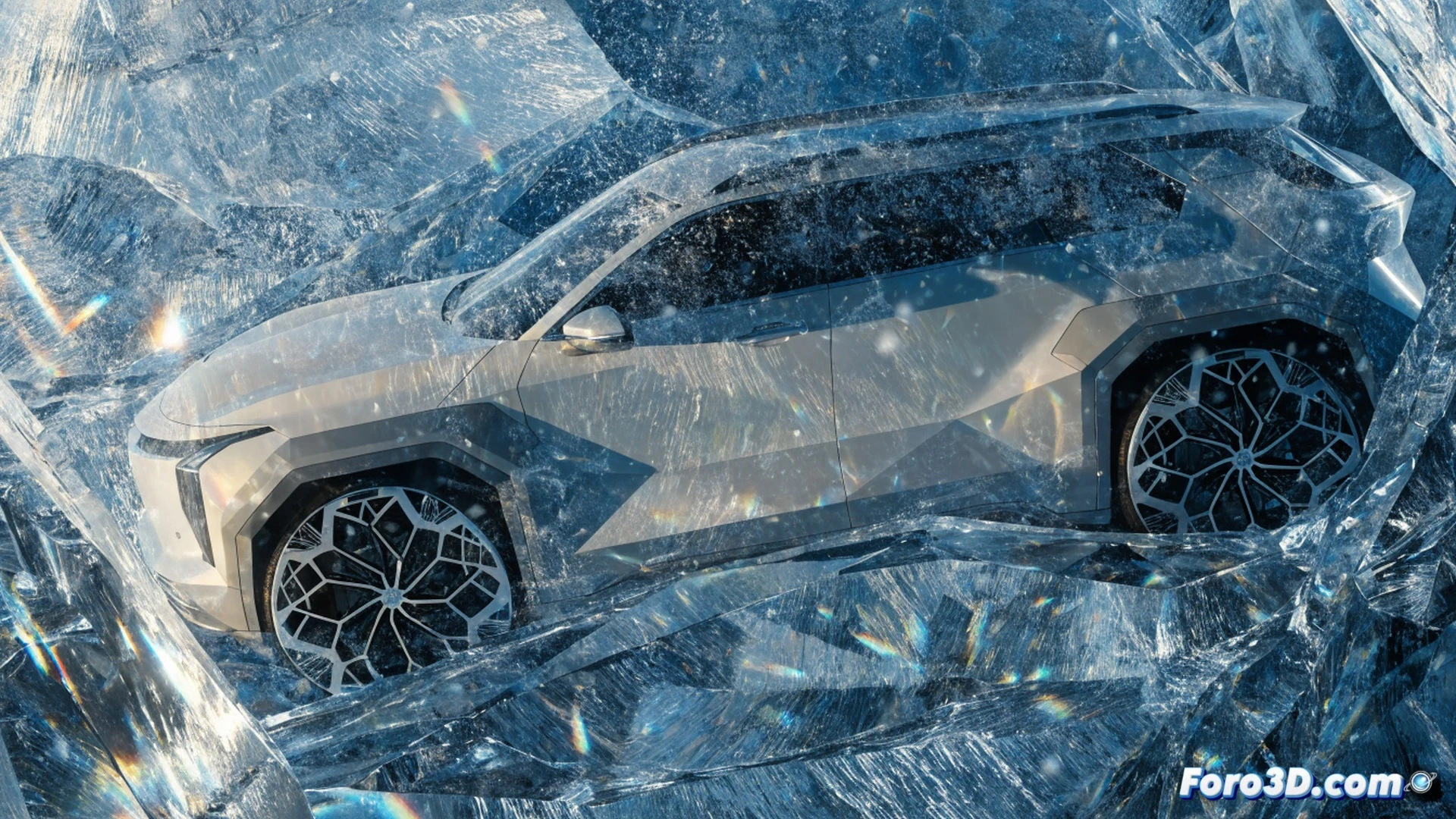
Reactive materials: the skin that feels the weather 🧊
The proposal is to integrate thermochromic polymers and shape memory alloys into exterior and interior panels. When the temperature drops, these materials would change color or texture, offering a visual and tactile response to the cold. It is not about a screen displaying data, but about a surface that turns deep blue or generates anti-slip micro-reliefs. This technology already exists in laboratory prototypes and its production cost is becoming viable for limited series. The ID Cross could go from being a functional block to an object that dialogues with the winter landscape.
The SUV that blushes with ice (literally) ❄️
Imagine arriving at the car on a January morning and the hood turns intense red, as if the vehicle were also cold. Or the dashboard acquiring an orange hue when the thermometer drops below zero, warning of ice on the road without the need for an annoying beep. It would be a car that not only takes you to work, but also tells you how it feels. A pity that, for now, engineers are still more concerned about the degrees the battery can withstand than the chromatic drama of an SUV in January.