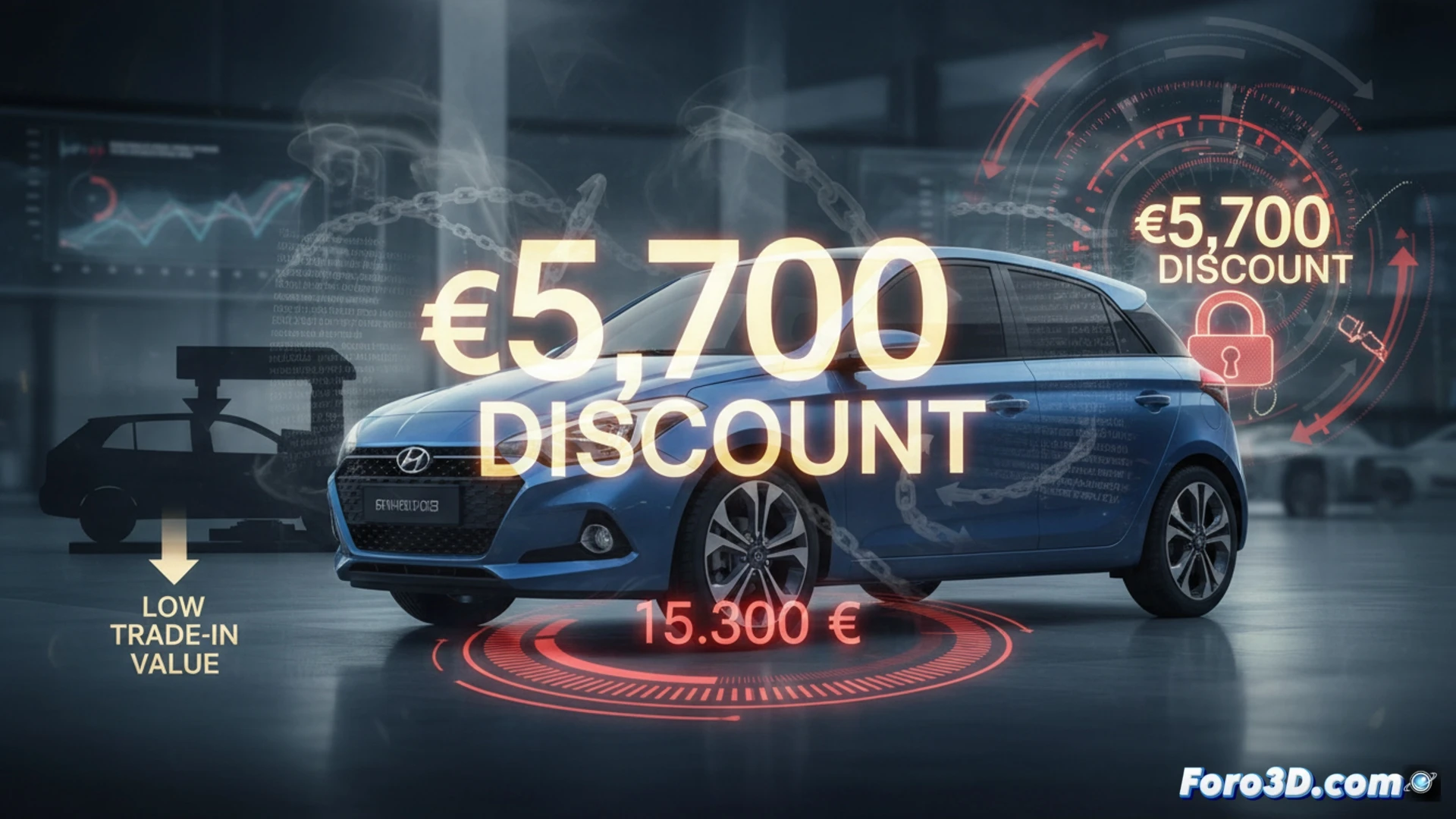
Hyundai launches a €5,700 offer on the i20, bringing the price down to around €15,300. It includes a turbo engine, air conditioning, rear camera, and safety assistants. It seems like an opportunity to access a modern car at a competitive price, surpassing the Dacia Sandero. However, the real discount only applies if you finance with the brand and trade in your used car, which is undervalued. The bargain fades when interest and conditions are added up.
Turbo engine and consumption: the i20's technical trap 🛑
The Hyundai i20's turbo engine promises performance, but it consumes more fuel than the naturally aspirated Dacia Sandero. In the city, the difference is noticeable in weekly expenses. Additionally, i20 spare parts are more expensive, increasing maintenance costs. The advertised discount includes public subsidies that not all buyers can apply for, such as the MOVES Plan. Thus, the initial savings are diluted by recurring costs and opaque financial conditions.
The discount that sells you smoke and leaves you without a car 💨
The average person sees the €5,700 rebate and dreams of a new i20 for €15,300. But when signing, they discover the real price includes financing with high interest and a laughably low appraisal of their old car. Add two years of payments and value loss, and the result is paying the same as for a Sandero. Hyundai sells smoke and mirrors savings, but Dacia remains the king of price-quality ratio. The i20 is a good car, but it's not a bargain, it's a mirage.