Honda is in a waiting phase, but not due to a lack of work. The Japanese manufacturer has requested FIA homologation for certain improvements to its Formula 1 engine, aware that it still has a performance deficit compared to the benchmark engines. Although the bureaucratic process could delay timelines, Honda shows no concern. The reason is simple: they need several weeks to finish developing the parts, mainly focused on the combustion chamber. For the average fan, this is a distant technicality, but it highlights how administration can slow down technological evolution in motorsport.
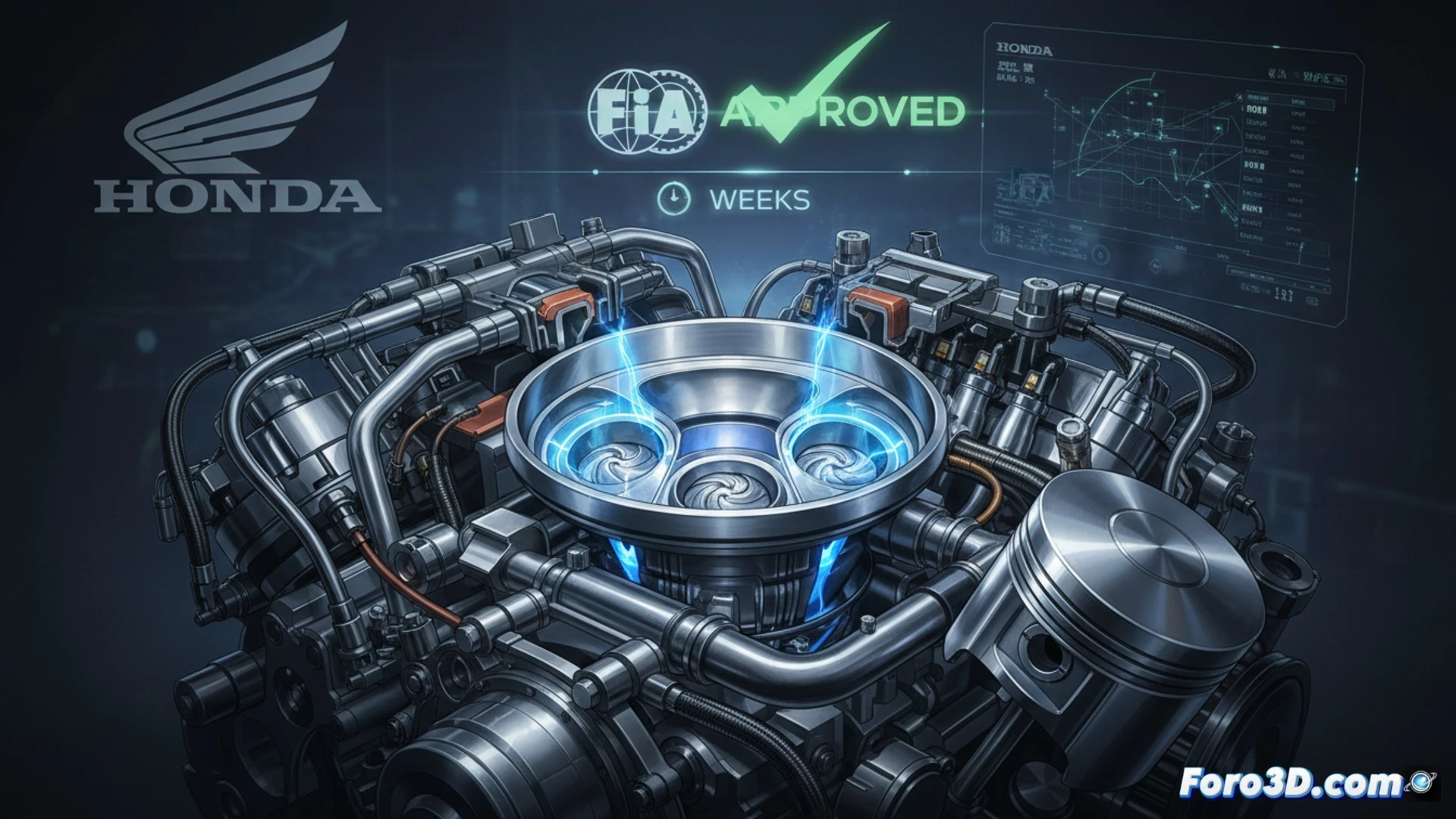
Combustion as the key development point 🔥
The improvements Honda has on the table are not cosmetic. The focus is on combustion, the heart of the power unit. The goal is to optimize chamber efficiency to extract more energy from each drop of fuel without compromising reliability. It is a precision job requiring simulations, bench tests, and fine adjustments to injection and ignition. The FIA must authorize any significant change to the engine specification, a process that can be slow but necessary to maintain technical parity. That is why Honda prefers to take its time and not rush into a half-baked solution.
Bureaucracy, the true rival on the track 📄
While engineers dream of horsepower, FIA bureaucrats review paperwork. Honda asks for permission to improve, but the paperwork moves at the pace of a safety car. The curious thing is that Honda does not mind the delay; they need that time for the technicians to finish fine-tuning the invention. So, while some wait for a stamp, others wait for the workshop coffee machine not to break down. In the end, the new engine will arrive in the summer, but without a specific date. Like home renovations: they promise it will be ready, but you never know when.