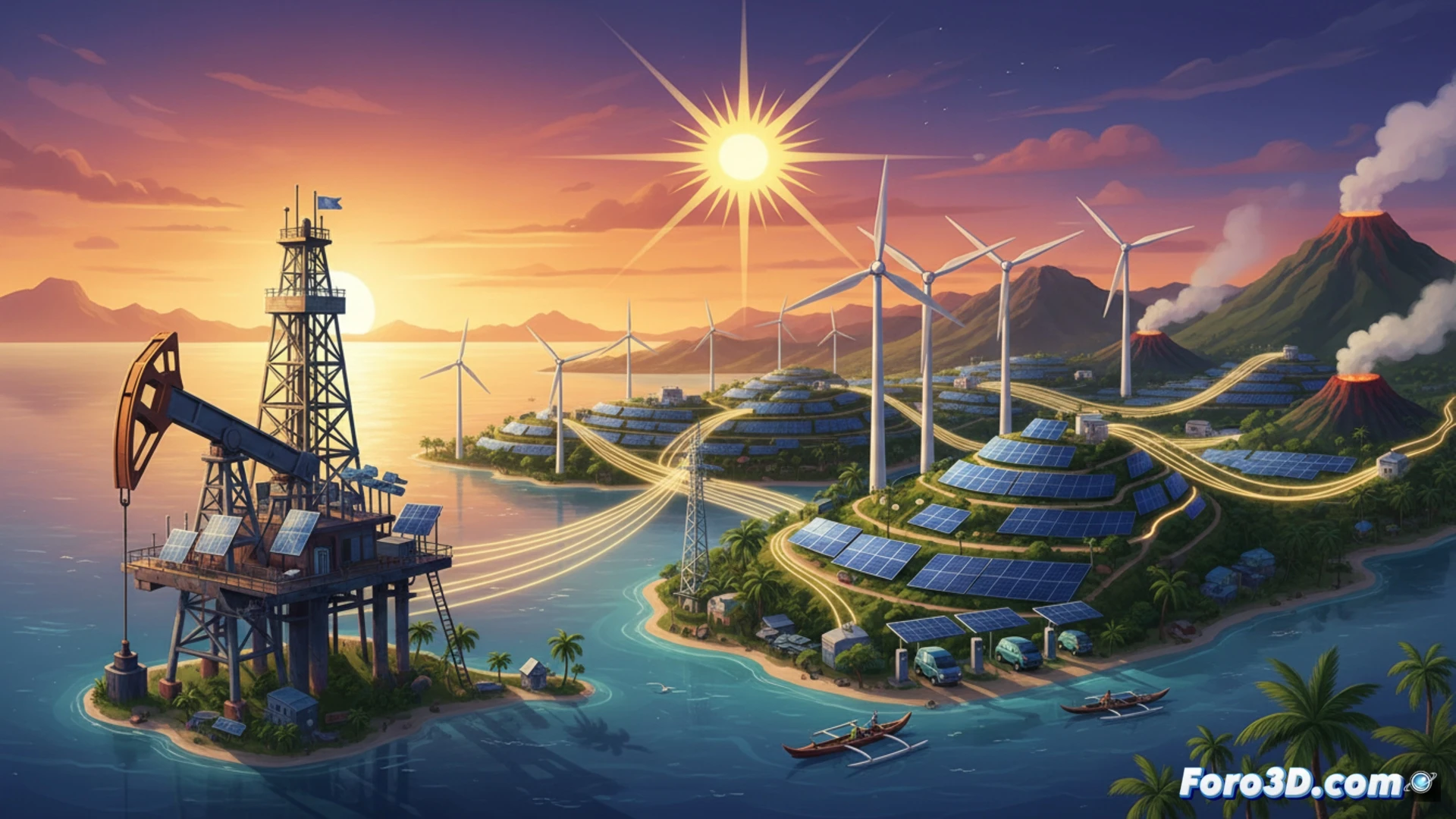
Hawaii, a paradise that burns imported oil to power its lights, cars, and tourists, has set itself a monumental challenge: to run solely on renewable electricity by 2045. The goal is ambitious, but it clashes with the reality of its islands, where the sun, wind, and earth's heat promise a cleaner future, though not without technical and logistical obstacles.
The power grid and engines: the technical challenges of the transition ⚡
To achieve the goal, Hawaii is promoting large-scale solar parks with batteries, wind turbines on its coasts, and geothermal plants on the Big Island. The problem is that the power grid, designed for fossil fuels, must become smart and stable in the face of the intermittency of sun and wind. Additionally, decarbonizing air and maritime transport, vital to its economy, requires synthetic fuels or green hydrogen, technologies that are still immature and expensive. Not to mention that ships and planes don't plug in at the beach.
The eco-tourist and their fossil fuel jet ✈️
While locals install solar panels on their rooftops, tourists arrive on planes burning kerosene as if there were no tomorrow. The irony is that Hawaii needs visitors to pay for the transition, but every flight undermines its goals. Perhaps the solution is for tourists to come paddling in solar canoes, although the journey from California would take them a month and they would arrive hungry and sunburned. At least they would have complied with the plan.