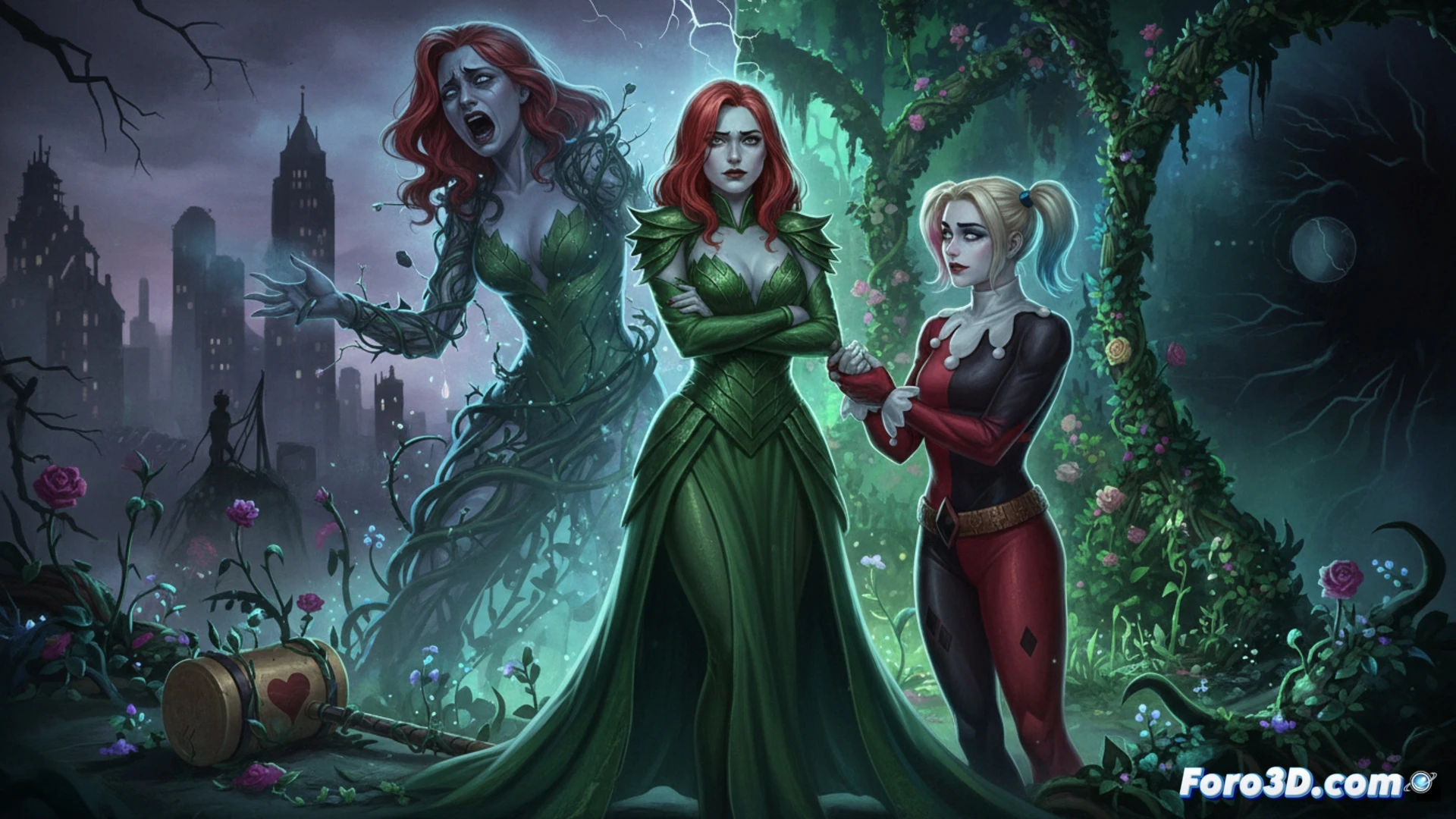
The animated series Harley Quinn has successfully explored the relationship between Harley and Poison Ivy, showcasing a dynamic where Ivy's support is constant. However, episodes like Harley Quinn Highway reveal a deeper layer: Ivy's panic at being alone. This emotional dependence, far from being a cliché, humanizes a character who always seems to be in control, adding nuance to her bond with Harley.
Animation as a mirror of emotional fragility 🌿
From a technical standpoint, the series uses visual resources to reflect Ivy's internal state. In key scenes, the color palette saturates and the shots close in on her face, emphasizing her anxiety. Digital animation, with a cartoonish yet expressive style, allows for quick transitions between action and moments of introspection. This visual contrast underscores how the fear of abandonment can break even the facade of an eco-villain, making the viewer connect with her vulnerability without the need for extensive dialogue.
Ivy and her master plan: don't let them abandon you before you plant a bomb 💣
Because of course, when you're a botanical terrorist with access to explosives, the logical thing is that your biggest fear is your girlfriend leaving to get a milkshake. Ivy, instead of therapy, chooses to kidnap a group of elderly people so that Harley doesn't have time to think about leaving. A most ecological plan: she recycles people. In the end, the series shows that even the deadliest villains need a hug, even if it's amidst explosions and bad jokes from a clown.