Dave Baker spent five years creating Halloween Boy, a process where the character's color changed from purple to orange and his ears became triangular. This case illustrates how constant experimentation, testing and adjusting details, can transform a project. It's not about a stroke of luck, but rather progressive work that any creator can apply to refine their works.
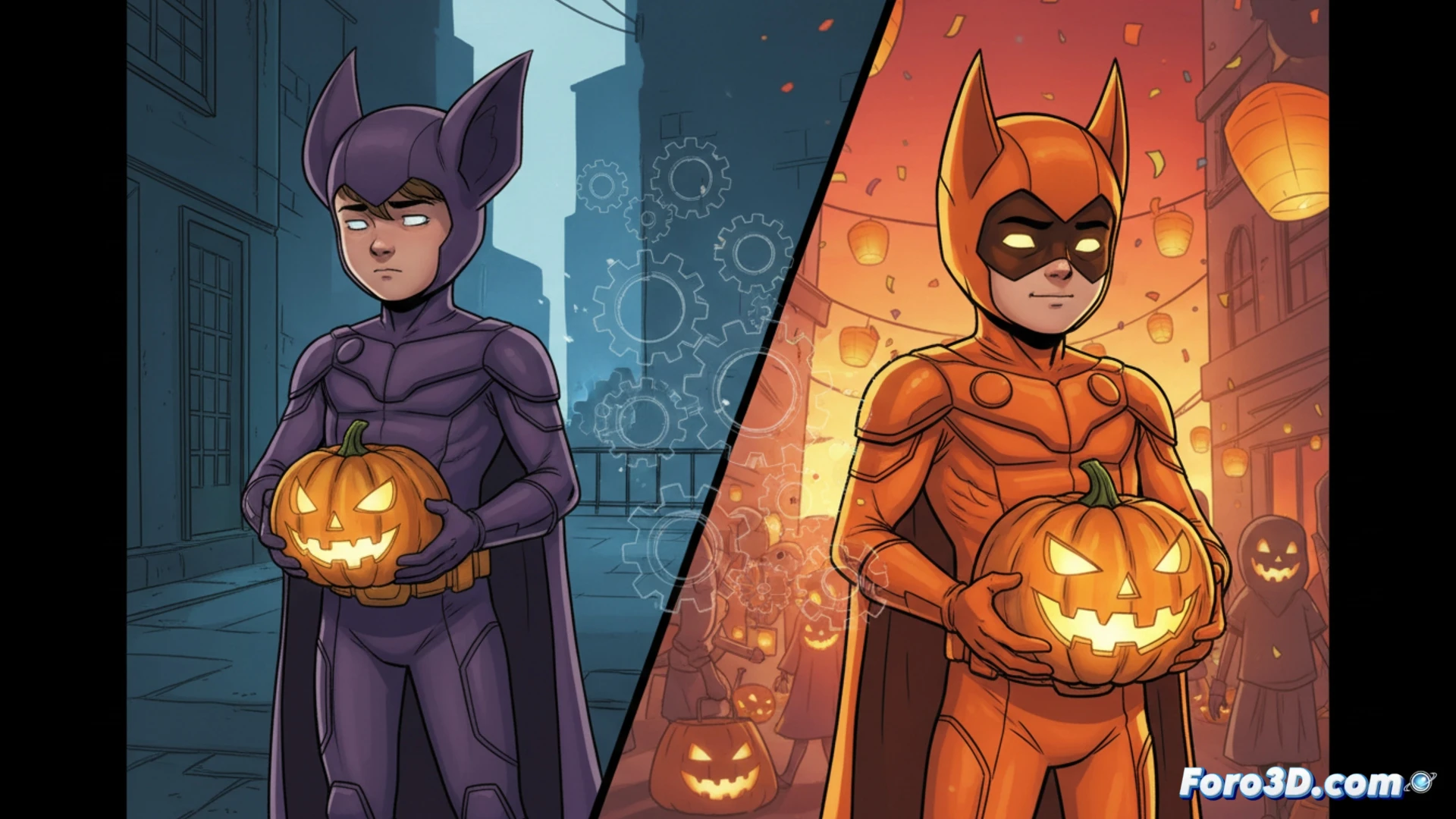
The trial-and-error cycle as a development engine 🛠️
In software or video game development, this iteration method is key. Baker did not plan the final design from the start; instead, he applied changes based on visual tests. As in a technical project, modifying an element (like a color or shape) can alter user perception. The practice of adjusting and validating allows detecting flaws and optimizing results, avoiding getting stuck on an initial idea. It's an approach that prioritizes action over theory.
When changing from purple to orange saves your project 🎨
Dave Baker could have saved four years if he had started with orange, but then he wouldn't have had time to debate whether triangular ears were a good idea. In the end, his comic demonstrates that even a color change can be an odyssey. Meanwhile, those who over-plan are still discussing the exact shade of an initial sketch. The moral: better to be wrong fast than perfect never.