A recent study confirms that layer thickness in 3D printing of dental crowns determines their fit and durability. However, the detail you won't see in the headlines is that many low-cost labs avoid thin layers because they lengthen production time. The patient pays less, but the crown loosens or fractures within months. This is funded by a scanner firm looking to sell more precise equipment, not to improve your oral health.
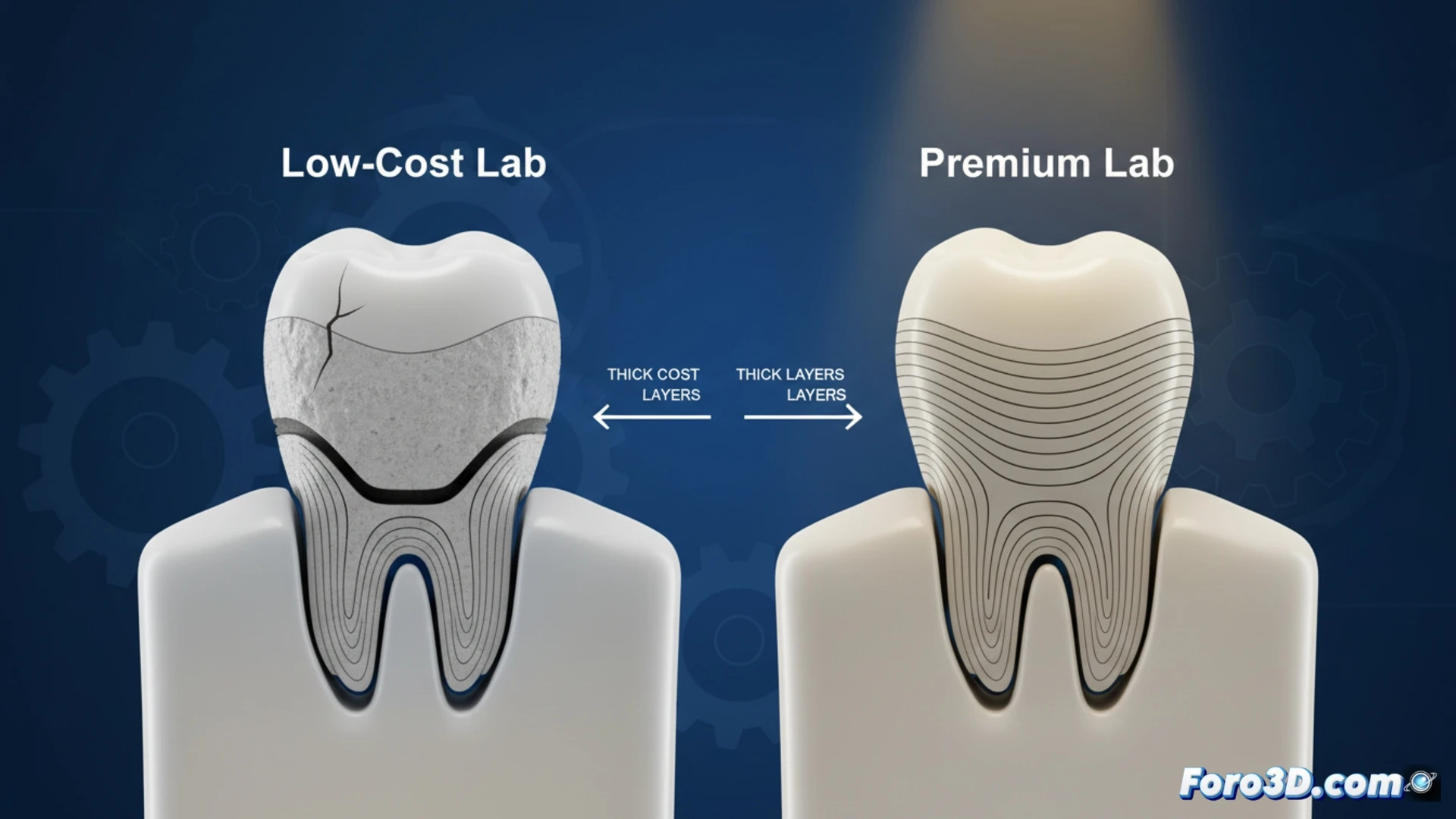
Technical precision vs. production speed 🦷
Most low-end dental 3D printers cannot achieve the optimal layer thickness (between 25 and 50 microns) without doubling print time. Labs competing on price opt for 100-micron layers, sacrificing marginal seal. The ISO 12836 standard for printed dental restorations is not enforced in many countries. The general dentist lacks the training to verify whether the printed crown meets this standard. Technology advances faster than regulation.
The low-cost crown: a season pass for your dentist 💸
The business plan is simple: offer printed crowns at half the price, which the patient happily receives. Twelve months later, the piece detaches or cracks. The patient returns to the clinic, pays again for a new crown (this time perhaps milled), and the cycle repeats. Like with particleboard furniture, cheap ends up expensive. But at least the lab saved seconds per layer. The patient's health is the hidden cost of just-in-time.