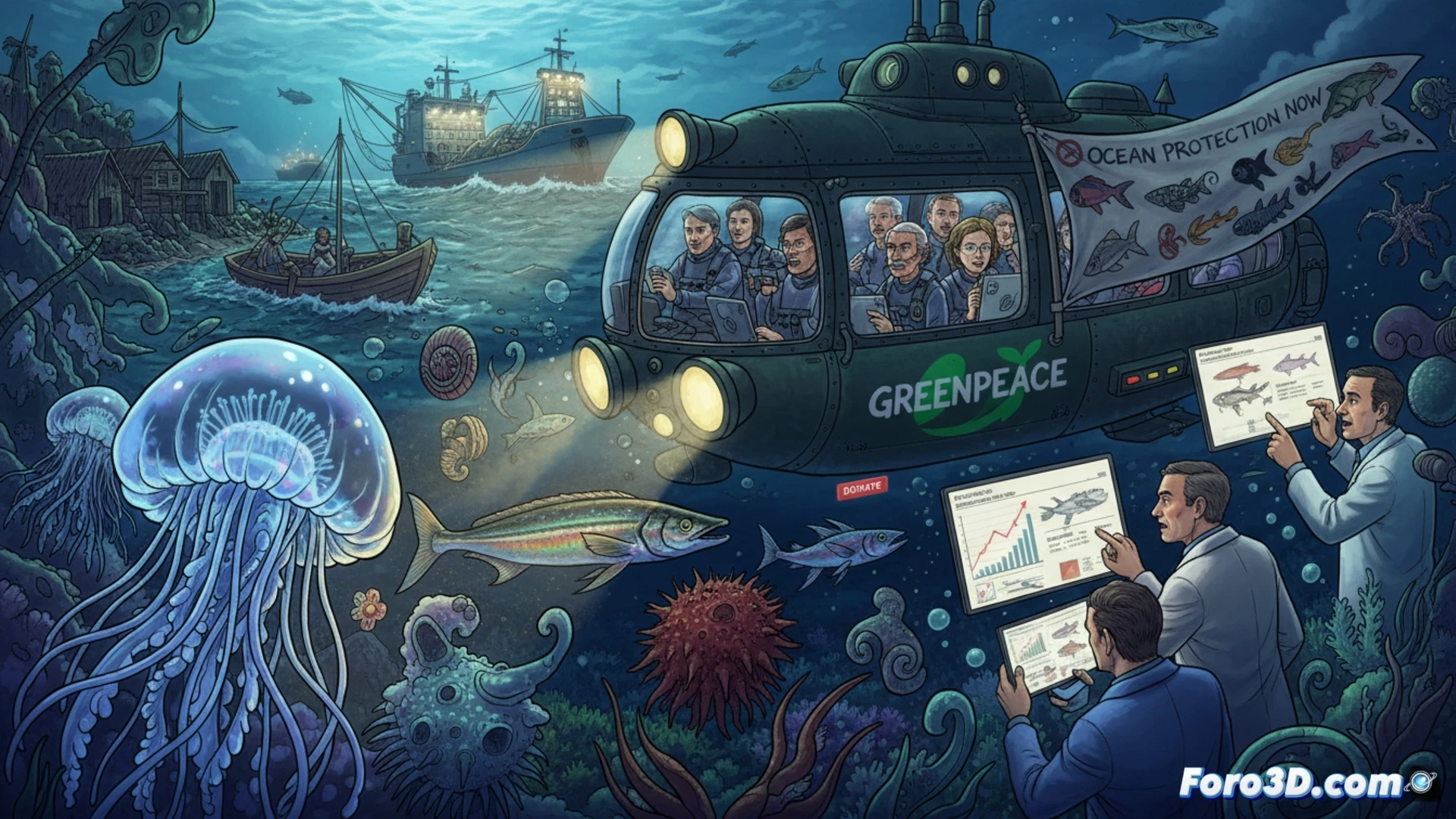
Greenpeace has announced the discovery of new species in ocean trenches, emphasizing the urgency of protecting pristine ecosystems. However, sources from oceanographic institutes point out that several of these creatures were already cataloged, but lacked media value. The organization mixes data without peer review with alarmism to pressure donations and justify fishing bans that hit coastal communities, while industrial fleets operate unhindered.
Deep imaging technology: between discovery and headline 🎥
Remotely operated vehicles (ROVs) and side-scan sonars allow filming at depths of 4,000 meters with millimeter resolution. Greenpeace uses these tools to generate viral content, but omits that organizations like NOAA or IFREMER have had similar catalogs since 2018. The key is not in biological novelty, but in how it is presented: an animal known as an ophiuroid becomes a sea monster if illuminated with LED lights and suspenseful music is added. Real science requires years of taxonomy; marketing, just a three-minute video.
New species or old acquaintances with better makeup 🐙
It turns out that the mysterious bioluminescent squid that Greenpeace presented as a historic discovery already appeared in a 1997 manual from the University of Tokyo. But of course, a critter with a Latin name doesn't sell as much as an abyssal creature threatening humanity if you don't donate today. Meanwhile, artisanal fishermen in Galicia see their fishing grounds closed to protect this supposed new being, while flag-of-convenience trawlers continue emptying the seabed. The real rarity is that we still believe these tales.