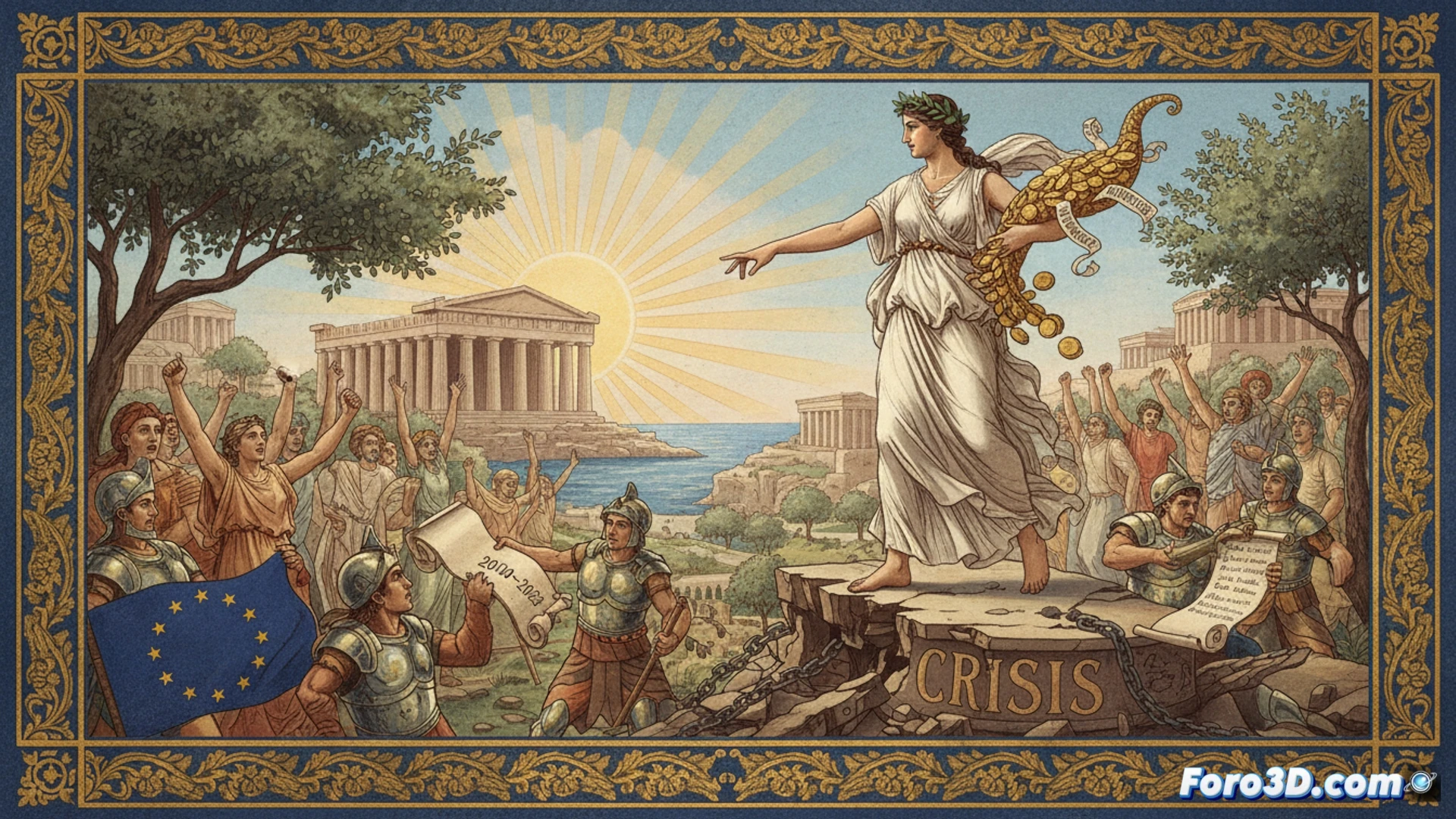
The European Union removed Greece from its economic crisis supervision list, as announced by Prime Minister Mitsotakis. This chapter closure began in 2010, when the country received financial bailouts and was on the verge of leaving the euro. For citizens, the end of the crisis means that surpluses will be used to raise salaries and pensions. Greece has overcome its greatest economic challenge.
Digital transition accelerates Greek recovery 🚀
During the crisis, Greece pushed for the digitalization of its public administration to optimize resources. Today, platforms like gov.gr allow citizens to complete procedures that previously required hours of waiting. The country also advanced in fiber optics and 5G, with coverage in rural areas. These technological developments, combined with fiscal reforms, have improved state efficiency and reduced bureaucracy. The local tech sector is growing, attracting foreign investment.
Goodbye to the crisis, hello to paying for coffee without drama ☕
After 16 years of austerity, Greeks can dream of a salary increase without the IMF knocking at the door. Sure, the digital bureaucracy works, but there are still queues to request a birth certificate. However, the existential drama will no longer be whether Greece leaves the euro, but whether coffee costs 4 euros. Life goes on, but at least the bailout is no longer the topic of conversation in the tavernas.