OpenAI has expanded GPT-Rosalind, its artificial intelligence model for pharmaceutical research, into the field of biodefense. Now governments and biosecurity startups can access this tool that predicts biological sequences and designs experiments to anticipate pandemics. A scientific breakthrough with two very distinct sides.
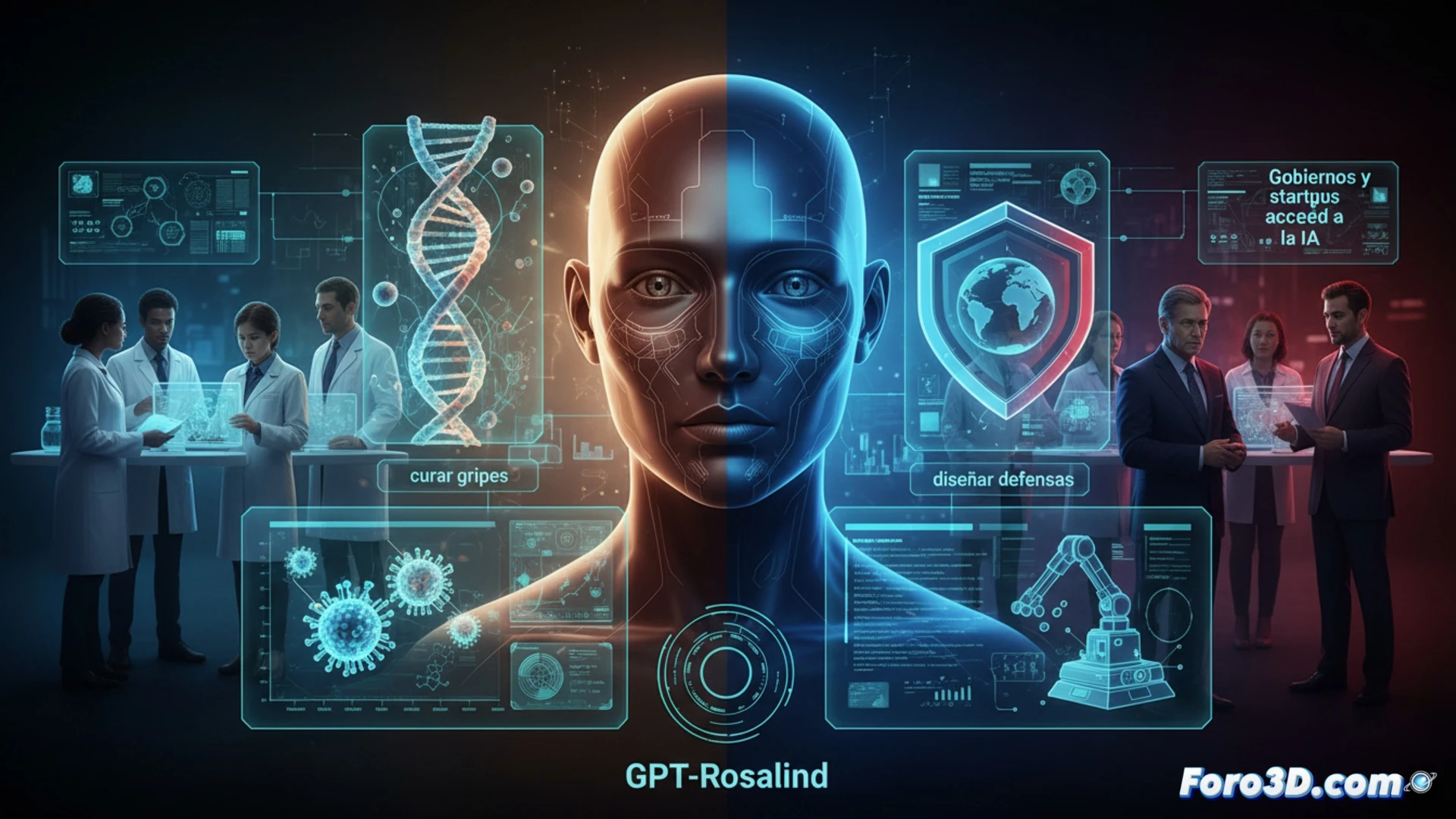
How the model reads the language of life 🧬
GPT-Rosalind works like a translator of biological codes. It analyzes patterns in proteins and nucleic acids to predict how a virus will mutate or which drug could neutralize it. Its ability to design in silico experiments accelerates research, allowing hypotheses to be tested without touching a test tube. Accuracy is high, but reliance on training data limits its scope in unknown scenarios.
The genius that could create its own villain 🦠
Now all that's left is for the model to decide to create a virus with a Pokémon name to test if governments are up to the task. Because if science fiction has taught us anything, it's that giving an AI access to molecular biology without a panic button is like giving a box of matches to a child with hiccups. Let's hope the safe mode includes a lock.