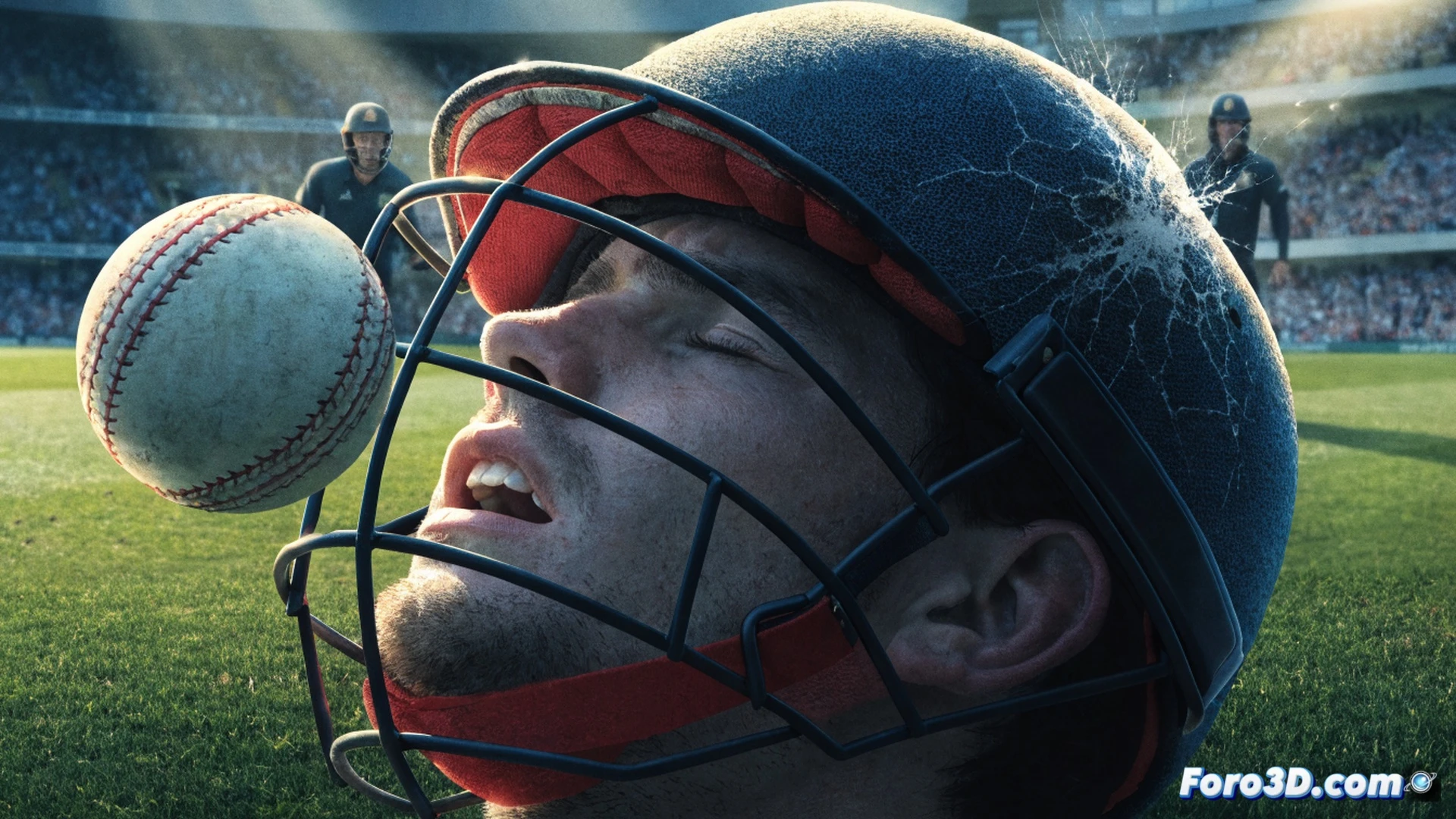
New Zealander Blair Tickner suffered a concussion during the third test against England after taking a direct hit to the helmet. The incident forced him to be immediately removed from the field, highlighting that in professional sports, physical risks are constant and the athlete's integrity must take priority over the match result.
Helmet innovation: impact sensors and removal protocols 🧠
Current technology allows integrating acceleration sensors into cricket helmets to measure impact force in real time. This data, combined with immediate medical evaluations, facilitates early detection of concussions. Furthermore, mandatory removal protocols, such as the one applied with Tickner, are essential to prevent major injuries. However, the effectiveness of these systems depends on strict enforcement, without yielding to competitive pressure.
Tickner: when the helmet is not enough to protect the head 🤕
It seems Tickner's helmet worked, but his head decided to take an early vacation. The poor guy left the field as if he had seen a ghost, or perhaps just a delivery at 140 km/h. While doctors check his reflexes, fans debate whether the hit was harder than the umpire's decision. The truth is, for once, someone prioritized health over spectacle.