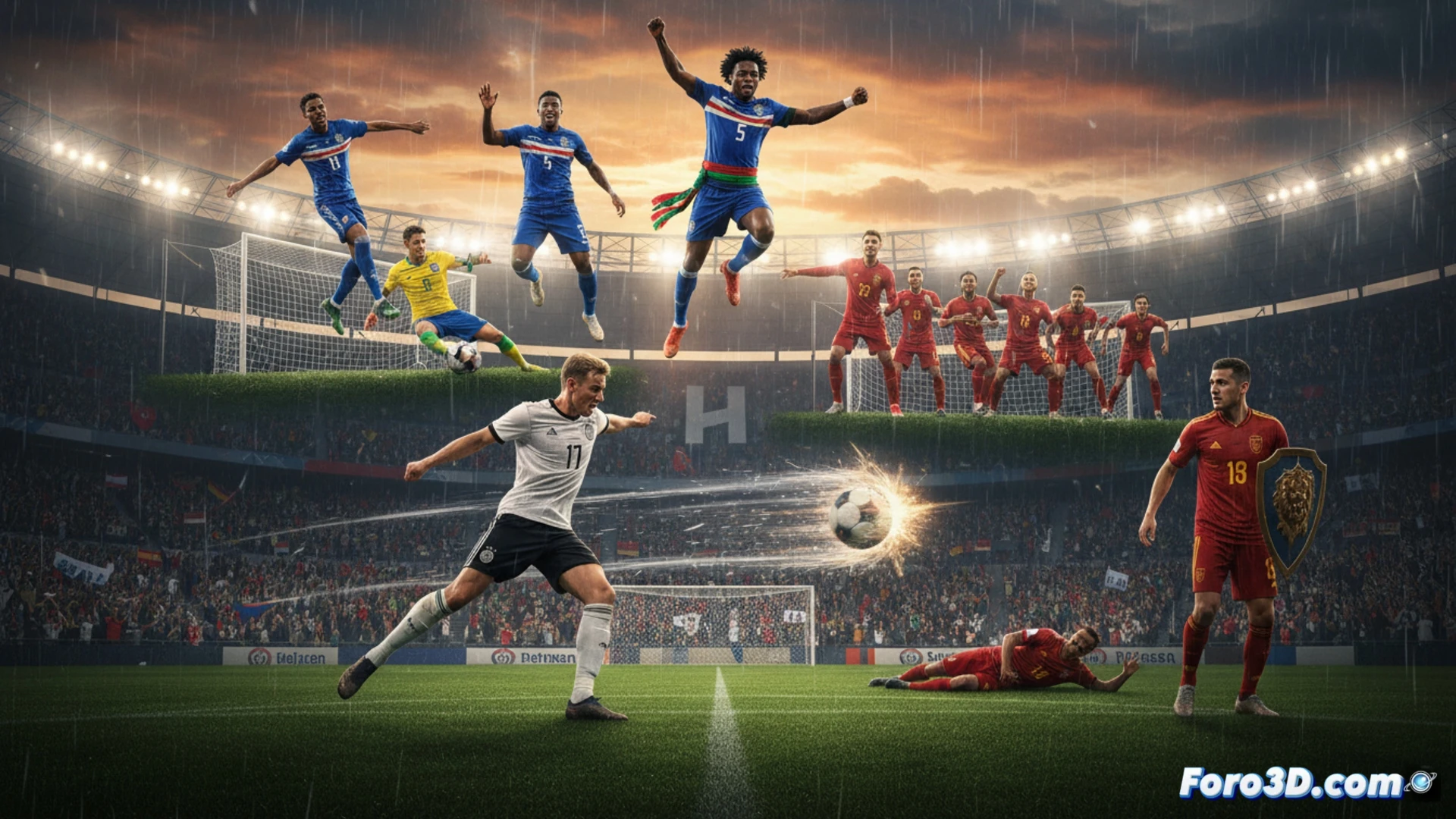
Germany and Brazil dominated their rivals in friendlies, showcasing offensive firepower and defensive solidity. But the surprise came from Cape Verde, who defeated Serbia. This result sets off alarm bells in Group H, where Spain will have to face an African team that has already proven it has the resources to compete at the highest level.
Tactical analysis: pressing and transition as keys to success ⚽
The teams that won big based their game on coordinated high pressing and quick transitions. Germany used a three-center-back build-up to free up wing-backs, while Brazil exploited the speed of their wingers. Cape Verde, for their part, employed a mid-block and precise counterattacks to dismantle Serbia. Spain will need to work on ball circulation against deep defenses and improve finishing if they want to overcome these schemes.
Cape Verde, the guest that arrives hungry and unannounced 🚨
That Serbia fell to Cape Verde is not an anecdote; it is a warning with a desire for trouble. While some were digesting the rout, the Cape Verdeans secured a victory that smells like a notice for Luis de la Fuente's squad. Spain, you'd better not get overconfident, because these visitors are not coming to sightsee or ask for autographs.