The recent collapse of a robotic shelving unit in an automated logistics center has brought a critical question to the forefront for Industry 4.0: can we predict structural failures before they occur? This incident, which paralyzed operations for weeks, is not just a mechanical engineering problem, but a clear example of where traditional monitoring falls short. 3D simulation, applied through digital twins, offers a tangible solution to avoid these disasters.
Material fatigue analysis and component stress 🛠️
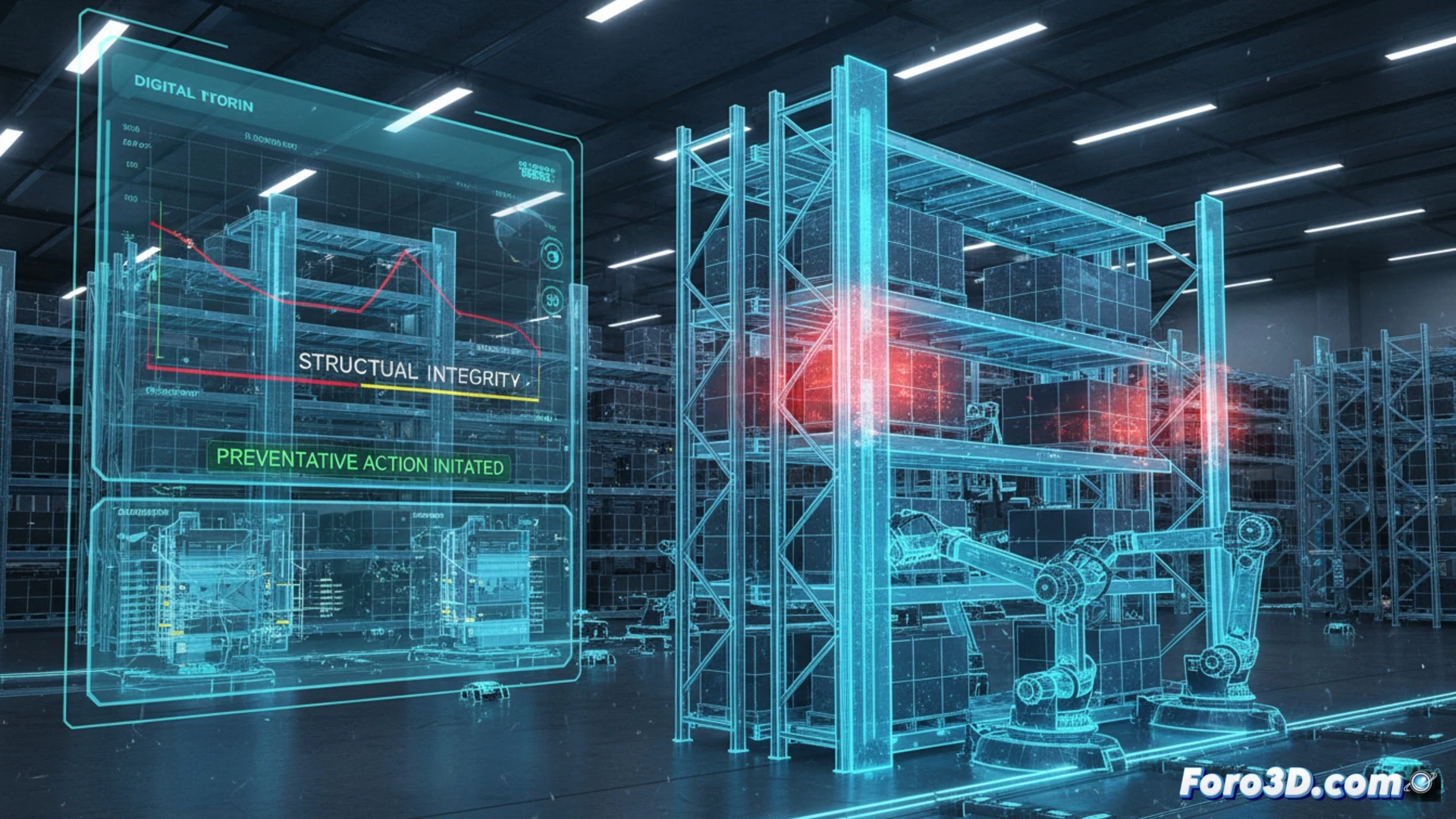
The key to preventing a collapse lies in dynamic load simulation. A digital twin not only replicates the geometry of the shelving but also integrates real-time data from IoT sensors. By modeling material behavior under repetitive load and unload cycles, simulation software can identify fatigue points that the human eye would miss. Visualizing heat maps of stress on connection nodes allows engineers to see exactly where tension is concentrated before the first cracks appear. This methodology turns an abstract risk into actionable visual data.
Simulating risk scenarios in automated warehouses ⚠️
Beyond static analysis, 3D simulation allows for running risk scenarios that are impossible to test in reality. We can model the impact of a sudden robot stop, the vibration of a conveyor belt, or even a low-intensity earthquake. By subjecting the digital twin to these events, an accurate prediction of imminent collapse is obtained. The conclusion is clear: integrating fatigue simulation into the design and maintenance phase is not a luxury, but a necessity for operational safety in industrial logistics.
What operational and safety advantages does the implementation of digital twins offer compared to traditional monitoring systems for predicting and preventing structural failures in high-density robotic shelving?
(PS: visualizing logistics flows is like watching ants... but with less order and more budget)