Valve boss Gabe Newell insists that Steam is not a monopoly because alternatives like Xbox, Epic Games, or other stores exist. However, court documents reveal clauses that prevent publishers from selling cheaper on other platforms. The excuse of competition becomes a mirage when the contract with Steam conditions the final price. The freedom to choose is just theory if the rules of the game are written by whoever dominates the market. 🔒
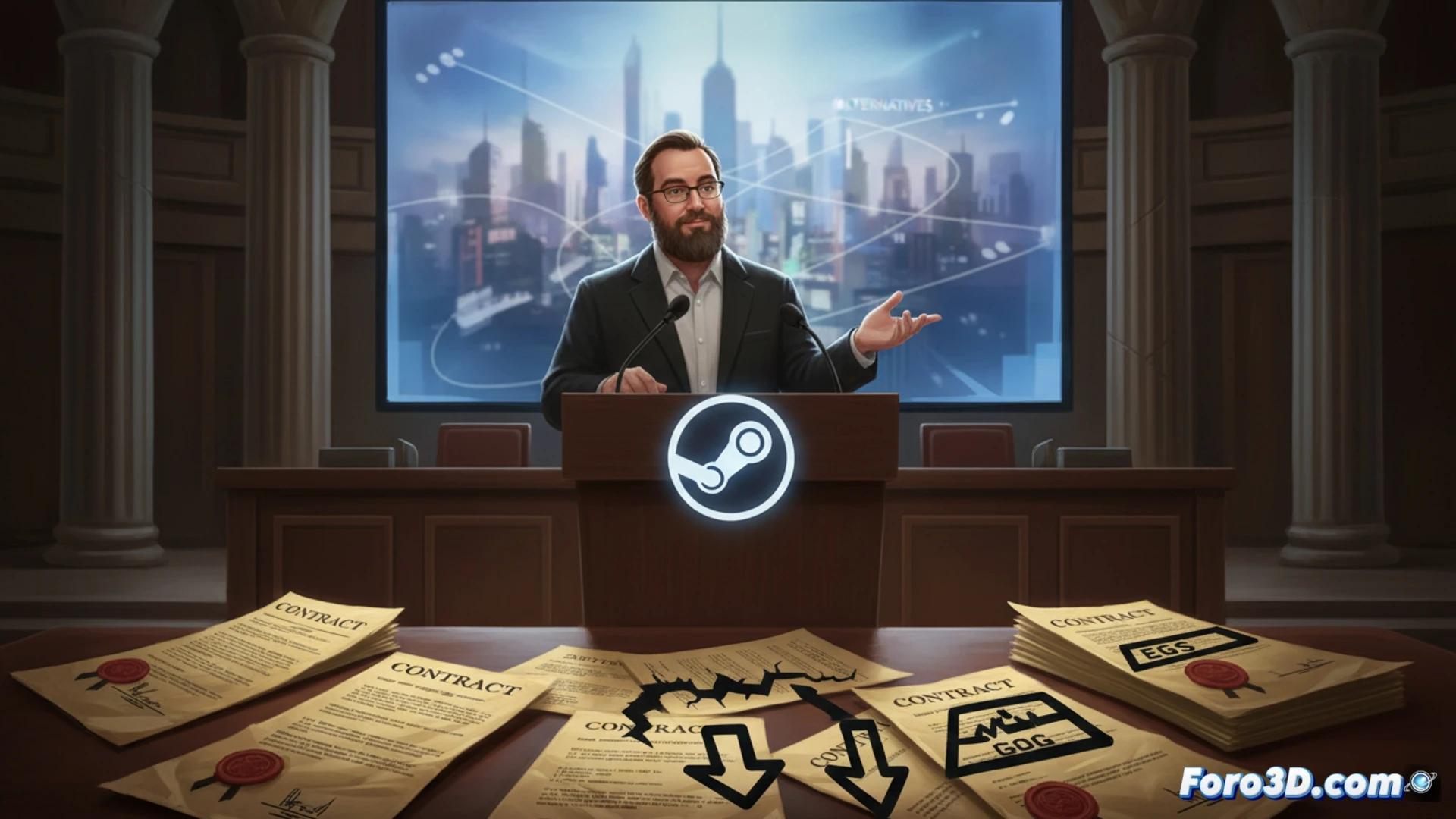
Price parity clauses: the invisible lock of the digital market 🔗
Valve includes in its contracts with developers the so-called price parity clause, which requires that the title not be sold cheaper on any other store. This effectively eliminates real price competition. Although the user can buy on Epic or Microsoft Store, the cost will be identical to Steam's. The technology behind these restrictions is not complex, but its effect is profound: it nullifies any incentive for other platforms to offer aggressive discounts. The market freezes and the player pays what Valve sets.
Freedom to choose: go to the other store, but pay the same 🌀
Gabe Newell says that if you don't like Steam, go to another store. Sure, you can go to Epic, GOG, or Microsoft Store. But when you get there, the game will cost exactly the same as on Steam. It's like your boss telling you that you're free to work for another company, but they all pay the same salary and under the same conditions. The freedom to move exists, yes, but only to move in circles. Meanwhile, we players keep paying the price we're given, without knowing if it's fair or inflated. And when we ask, we get marketing in response. Denying the monopoly is not proving it doesn't exist. It's not wanting it to be investigated. And that, in itself, says a lot.