Wētā FX demonstrated that fire can burn underwater without losing its dramatic essence. However, the industry has locked itself into an obsessive pursuit of perfect physical simulation, forgetting that visual emotion is born from controlled chaos. A shift in focus is urgently needed toward tools that prioritize narrative impact over millimeter precision.
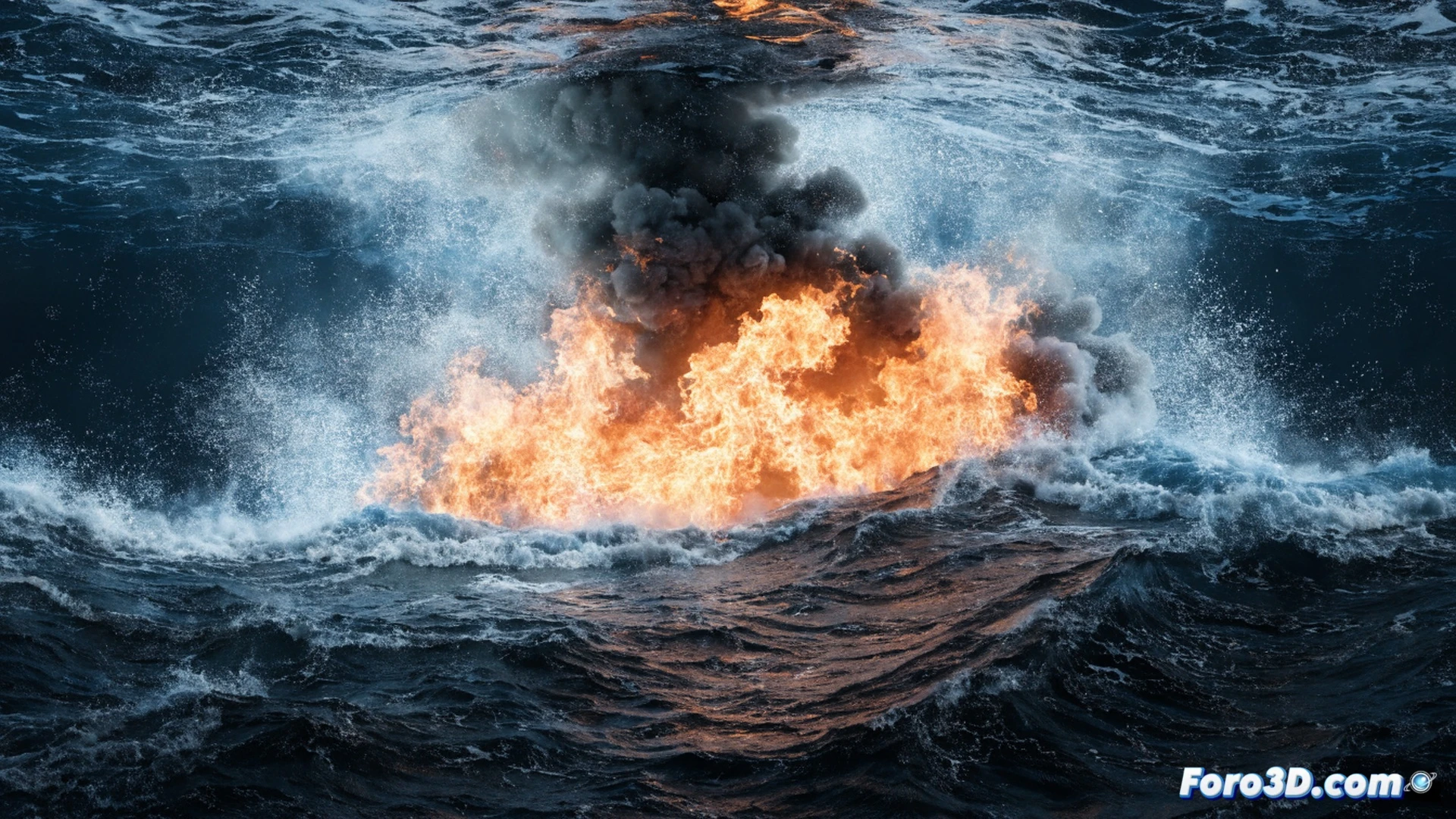
Simulators that understand the story, not just the physics 🔥
Current engines calculate every particle of smoke or bubble using Navier-Stokes equations, but ignore the scene's context. An underwater explosion must convey danger or awe, not just density and temperature. Tools like Houdini or EmberGen allow adjusting global parameters, but still require hours of tweaking to achieve organic chaos that serves the script. The goal is to develop solutions where the director can say more fury and the system interprets how to achieve it without breaking the illusion.
The day a render took itself more seriously than the actor 🎭
For years we've seen digital fires so perfect they look like chemistry textbook examples, but bore like a physics class. Meanwhile, Wētā's fire in The Hobbit burned with personality, because it understood it didn't need to be real, but believable for the story. Perhaps the next big breakthrough will be a button that says less realism and more drama, even if the engineers cry.