France has approved a regulation to reduce cadmium in fertilizers, but its implementation will not take effect until 2030. This toxic metal has been accumulating in agricultural soils for decades and passing into crops. While the chemical industry pressures and politicians give in, chronic patients will continue ingesting this poison that irreversibly damages kidneys. The measure comes late and with a timeline that seems like a sick joke.
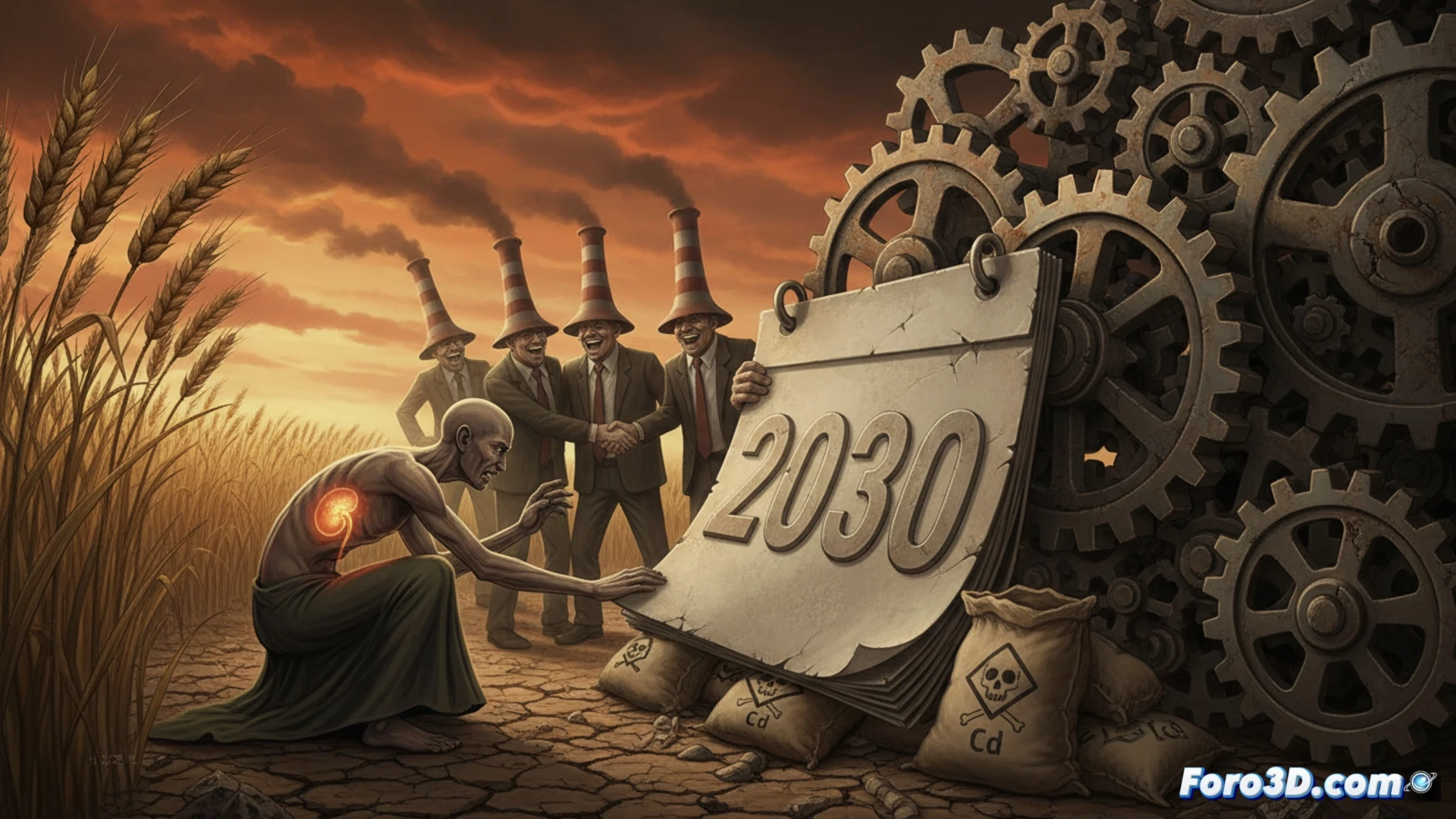
Cadmium in the food chain: a technical problem with no quick fix 🧪
Cadmium accumulates in soil through the use of phosphate fertilizers, which contain this metal as an impurity. Once in the ground, it is absorbed by plants such as wheat, rice, or potatoes. Remediation techniques, such as phytoremediation or soil washing, are costly and slow. The only real solution is to cut off the source at its origin: limit cadmium in fertilizers. But the industry argues it needs time to adapt its production processes. The five-year timeline is a political concession, not a technical one.
Brussels 2030: the year your kidneys will stop being the EU's filter 🫘
While bureaucrats debate whether 2030 is a reasonable date, your kidneys keep working overtime without pay. The good news is that by then, farmers will have perfected the art of growing spinach with cadmium. The bad news is that you will have already accumulated enough metal to make yourself a couple of rechargeable batteries. But don't worry: the industry promises that by 2029 it will launch an app that measures your intoxication level in real time. Of course, with ads.