The recent incident of a broken arm during remote surgery has raised alarms in the biomedical community. Although telesurgery promises global access to specialists, the lack of precise haptic feedback can lead to excessive forces on bone tissue. This case underscores the urgency of integrating 3D technologies not only for planning but also for real-time simulation of the patient's biomechanics.
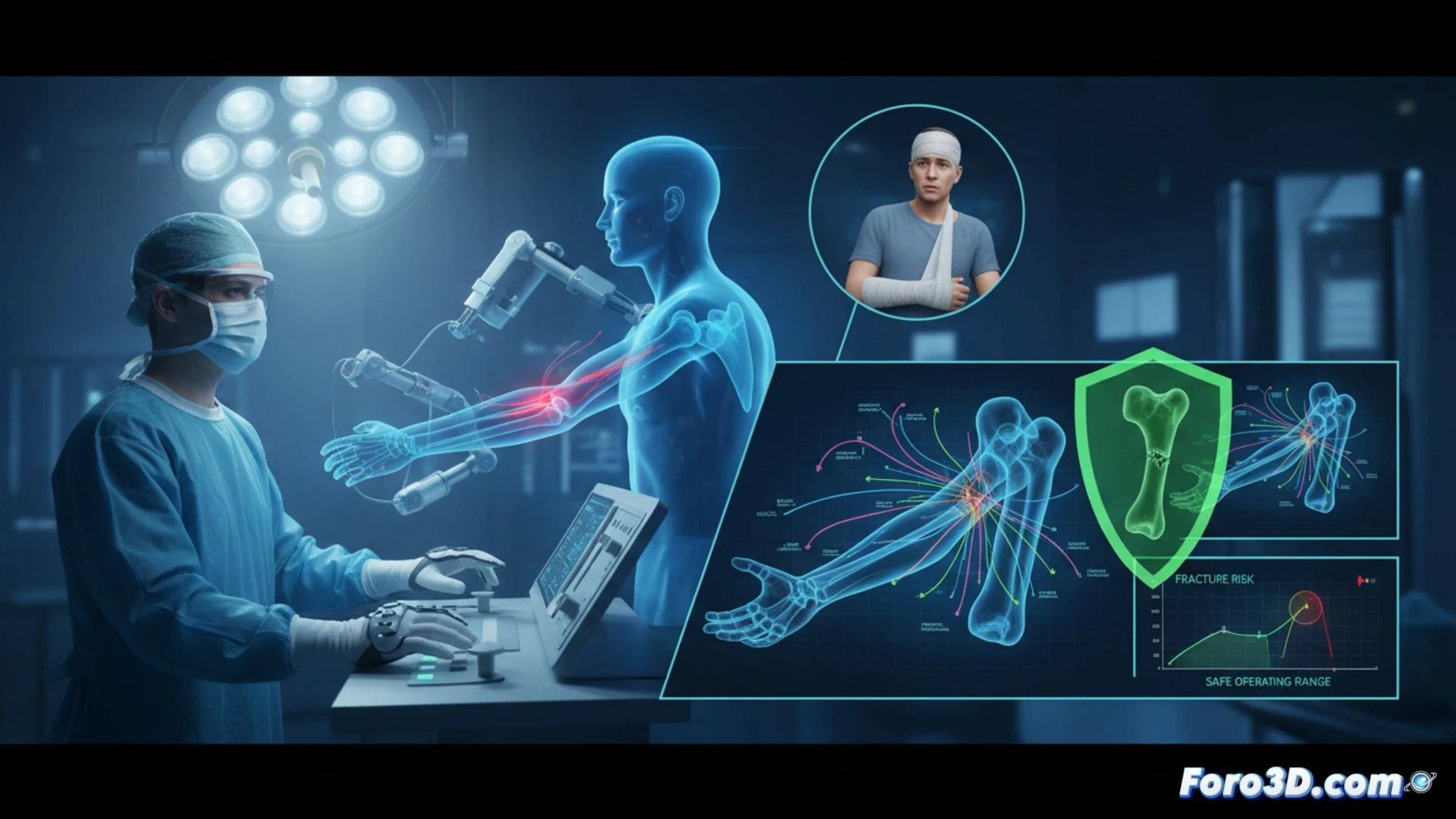
Digital twins and preoperative simulation with 3D printing 🦾
Creating a digital twin of the patient's arm, based on CT scans and MRIs, allows modeling bone density and cortical strength. Before any remote intervention, the surgeon can perform the maneuver on a 3D-printed replica using materials that mimic bone texture. This reveals points of fragility and the maximum bearable torque. Additionally, volumetric simulation in virtual reality allows rehearsing robotic arm movements, adjusting speed and applied force to avoid microfractures. However, the main limitation remains latency and the absence of real weight sensation, requiring more robust haptic compensation algorithms.
Towards safer remote surgery with volumetric visualization 🧠
The reported fracture should not be interpreted as a failure of telesurgery, but as a design lesson. Integrating 4D volumetric visualization (3D plus time) allows the surgeon to observe bone deformation under stress in real time, anticipating the breaking point. Combined with artificial intelligence algorithms that limit the robotic effector's force based on the modeled fracture threshold, the risk is drastically reduced. The future demands that each remote procedure includes a complete virtual trial on a 3D model of the patient, making prevention the safety standard.
How 3D modeling can simulate and prevent biomechanical failures in real time during telesurgery procedures.
(PS: and if the printed organ doesn't beat, you can always add a little motor... just kidding!)