Micro-needle fracture is a rare but critical complication in procedures such as deep acupuncture, image-guided biopsies, or intrathecal injections. When the tip of an ultra-fine gauge needle breaks off inside soft tissue, its exact location is nearly impossible to determine using conventional radiology. This is where 3D technology offers a radical solution: volumetric reconstruction of the fracture bed allows for extraction planning with millimeter precision, reducing collateral damage to nerves and blood vessels.
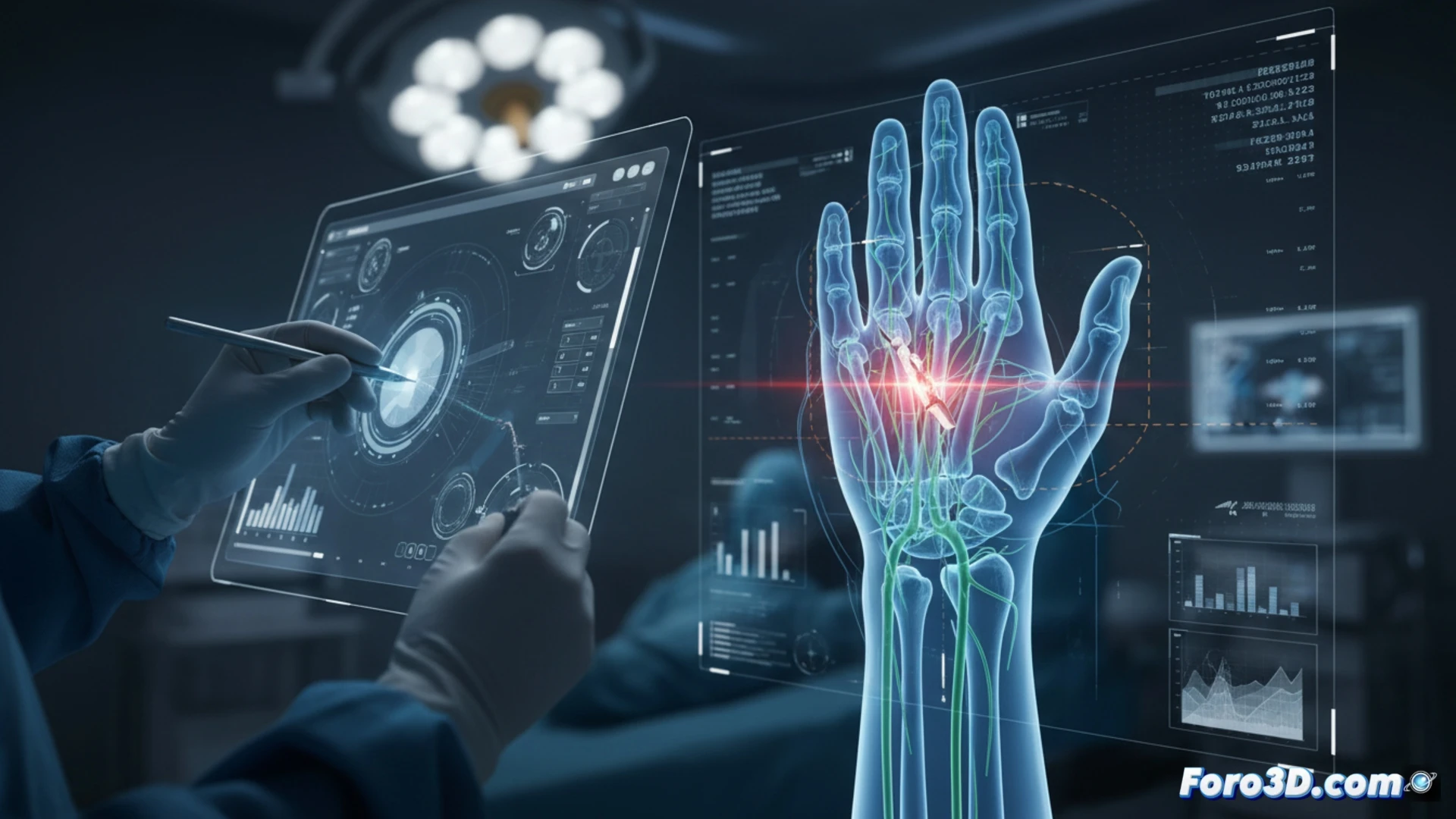
Three-Dimensional Reconstruction and Trajectory Simulation 🧠
The process begins with acquiring high-resolution Computed Tomography (CT) images or Magnetic Resonance Imaging (MRI) with susceptibility-weighted imaging (SWI) sequences, capable of detecting metal fragments as small as 0.1 mm. Using segmentation software such as Mimics or 3D Slicer, the needle fragment and surrounding anatomical structures are isolated. With this data, a finite element model is generated to simulate the mechanical interaction between the fractured needle and fibrous tissue. This simulation allows predicting fragment migration during surgical manipulation and designing an access trajectory that avoids areas of high neural density. 3D printing of a translucent anatomical model, made of flexible resin, serves as a physical test bench to validate the extraction route before the actual intervention.
Precision that Saves Healthy Tissue 🩺
The true revolution lies not just in finding the needle, but in how 3D technology changes the treatment philosophy. Previously, the surgeon operated blindly, opening large exploratory windows that caused more damage than the fracture itself. Today, with 3D-printed surgical guides that conform to the patient's anatomy, the incision is reduced to a 2 mm entry point. This approach minimizes trauma, accelerates recovery, and transforms a high-risk procedure into outpatient surgery. Micro-needle fracture ceases to be a surgeon's nightmare and becomes a technical challenge solvable with digital planning.
What advantages does 3D modeling offer over traditional imaging methods for predicting and managing micro-needle fracture in precision surgery?
(PS: If you 3D print a heart, make sure it beats... or at least doesn't cause copyright issues.)