The breakage of a sports mast during a competition not only interrupts the event but also raises critical questions about safety and design. We analyze this incident through 3D simulation to determine the exact causes: material fatigue, a point impact, or a possible manufacturing defect. The virtual reconstruction allows us to visualize stress points and propose structural improvements to prevent future catastrophic failures in the equipment.
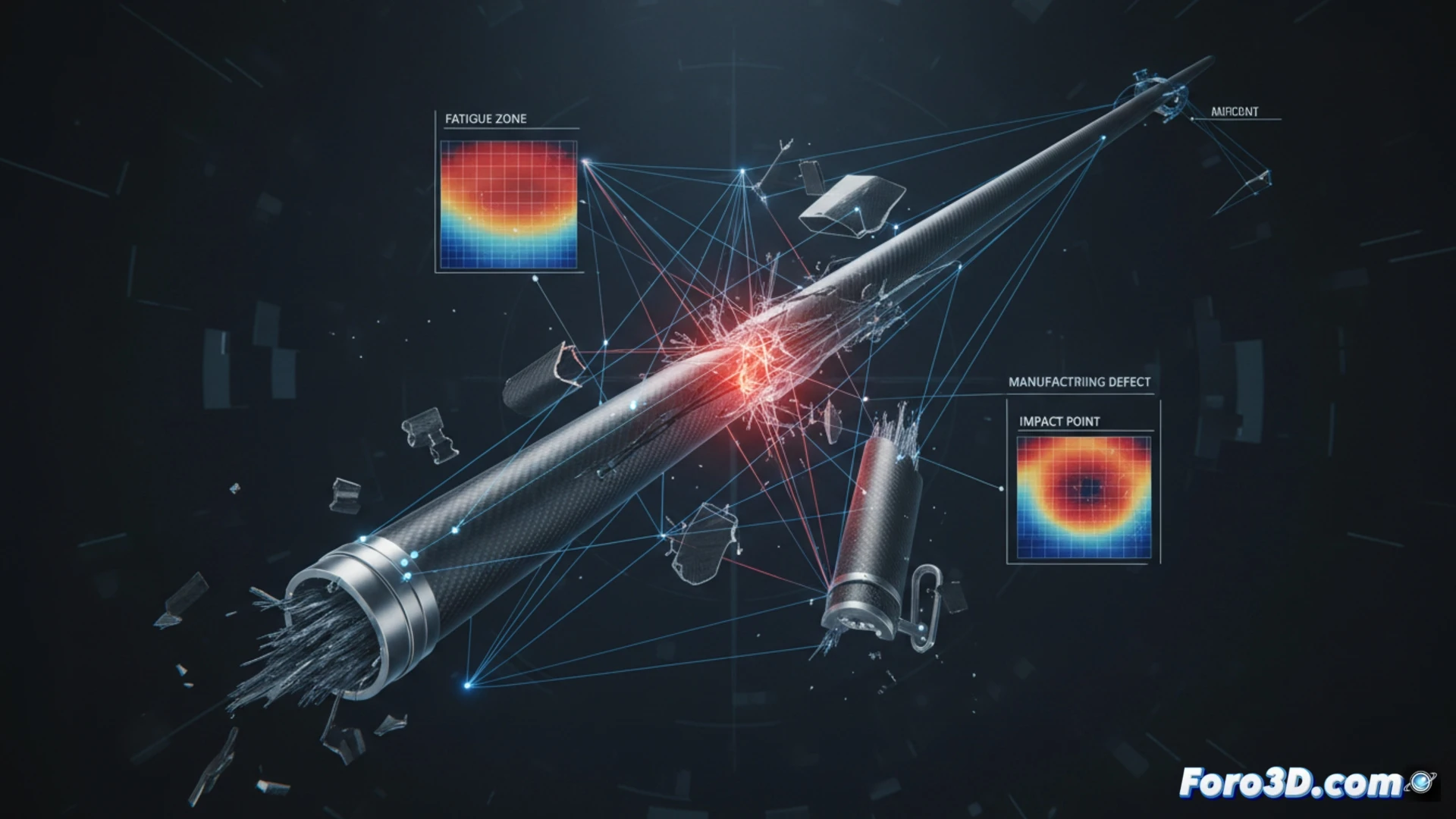
Virtual reconstruction and stress analysis 🔬
Using finite element software, we modeled the sports mast in 3D applying the typical load conditions of its use: cable tension, wind vibrations, and dynamic stresses during play. The simulation revealed a stress concentration in the fracture zone, exceeding the material's yield strength. We compared this scenario with a model that includes a micro-manufacturing defect (porosity or inclusion) and another with a history of cyclic fatigue. The results indicate that the combination of a microscopic defect and accumulated fatigue from load cycles was the main trigger of the breakage, ruling out a single excessive impact as the sole cause.
Lessons for future structural design 🛠️
3D simulation not only diagnoses the failure but also guides the solution. We propose redesigning the mast with a profile of greater torsional stiffness and a change in the material alloy to improve fatigue resistance. Additionally, periodic inspections using 3D scanning are recommended to detect microcracks before they compromise structural integrity. This approach raises safety standards in sports, turning an incident into an opportunity for technical innovation.
How can 3D finite element analysis predict critical fatigue points in a sports mast to prevent its fracture during competition?
(PS: reconstructing a goal in 3D is easy; the hard part is making it not look like it was scored with a Lego figure's leg)