Catheter fracture during an interventional procedure is an adverse event that can cause embolisms, internal bleeding, or the need for rescue surgery. From a forensic pipeline perspective, documenting this incident requires capturing the geometry of the retained fragment, the break point, and the conditions of the surgical environment with millimeter precision. Photogrammetry and 3D scanning offer a non-invasive methodology to preserve the scene and allow for deferred analysis of the applied mechanical stresses.
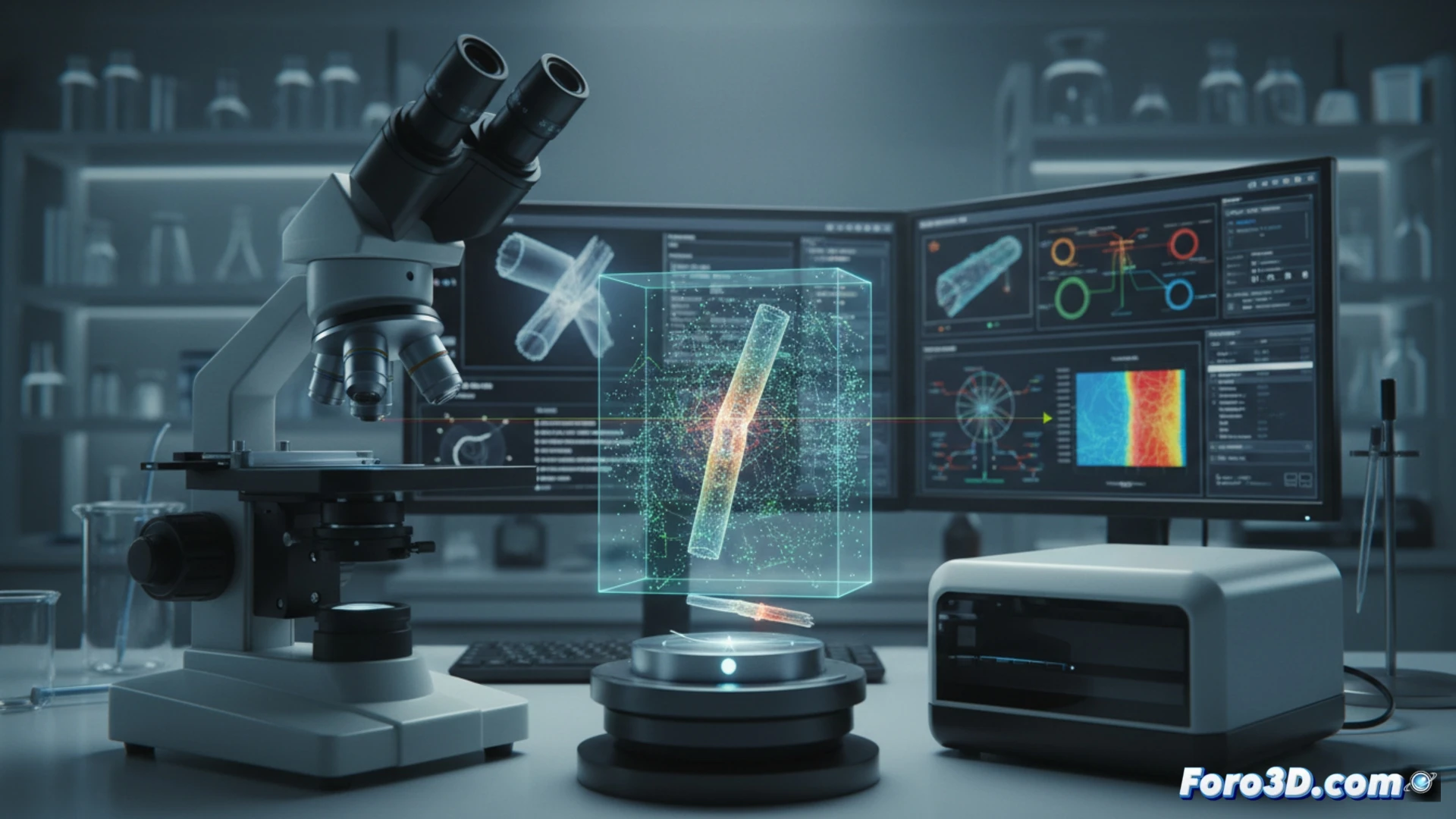
Virtual reconstruction and stress analysis on the fracture point 🔬
The forensic process begins with scanning the complete catheter and the fractured segment using a structured light scanner or high-resolution photogrammetry. A polygonal mesh is generated and aligned with the device's original CAD design. Visual inspection of the 3D surface allows for identifying shear marks, fatigue striations, or manufacturing defects such as bubbles or inclusions. Subsequently, a finite element analysis (FEA) is performed on the digital model to simulate the loads the catheter endured during insertion, torsion, or withdrawal. This data cross-reference determines whether the failure was due to user overload, material fatigue, or a pre-existing design defect.
The digital chain of custody as expert evidence ⚖️
The main advantage of this approach is the creation of an immutable digital chain of custody. Each 3D mesh is stored with its cryptographic hash and calibration metadata, guaranteeing its admissibility in court. Furthermore, the virtual reconstruction allows experts and the court to visualize the exact position of the catheter within the patient's anatomy or the surgical simulator. This transforms an abstract technical report into conclusive visual evidence for determining clinical responsibilities or manufacturer defects.
As a specialist in 3D reconstruction of mechanical failures, what are the most critical scanning artifacts that can invalidate a forensic analysis of catheter fracture, and how do they differ from actual material fatigue marks?
(PS: don't forget to calibrate the laser scanner before documenting the scene... or you might be modeling a ghost)