The recent news about the fracture of an artificial joint reopens the debate on material fatigue in biomedical prostheses. Although metallic and polymeric implants have evolved, mechanical failures remain a clinical risk. In this context, additive manufacturing positions itself as a key tool not only for production but also for the prior validation of designs through stress simulations and cyclic loads.
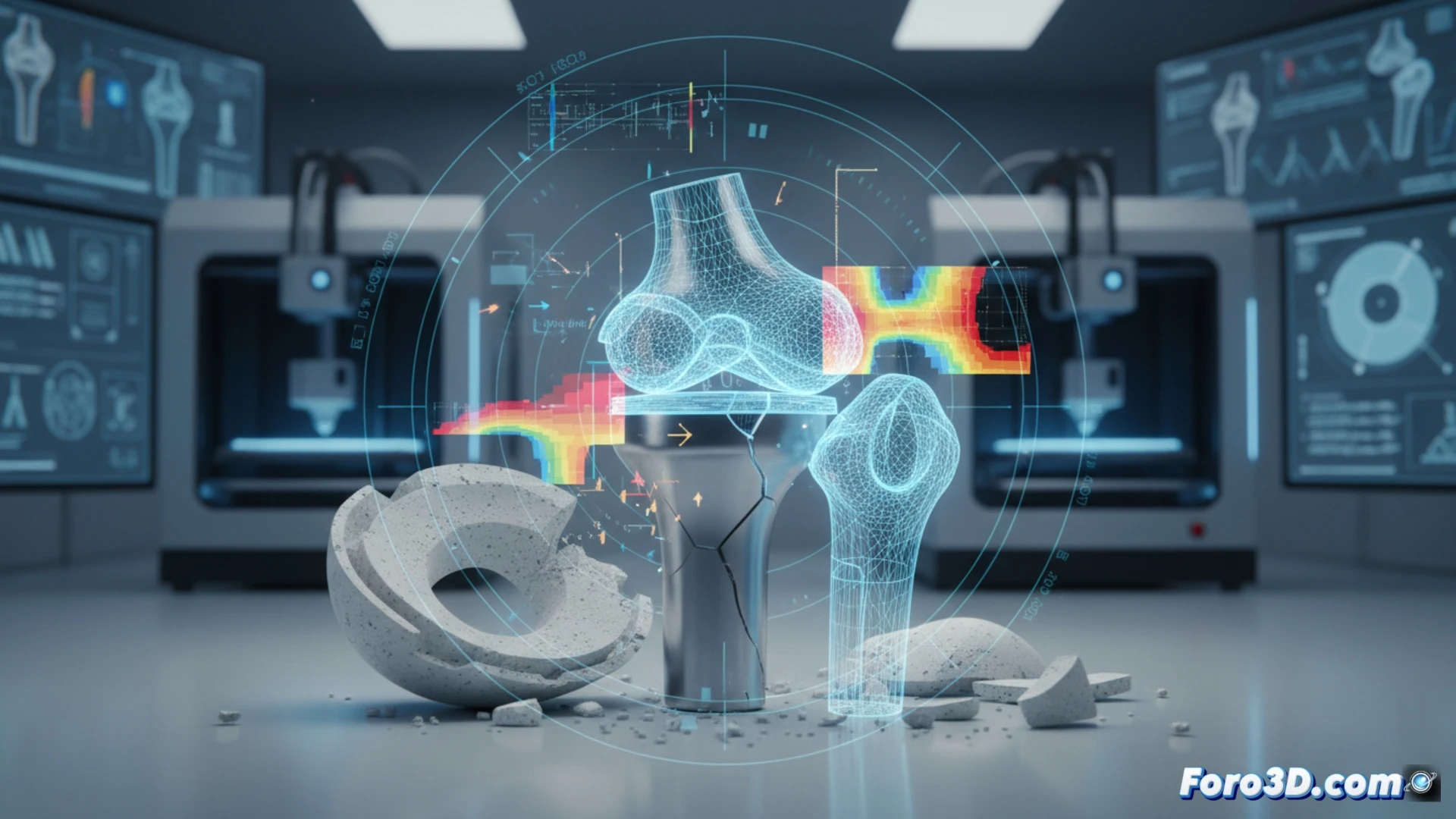
Biomechanical analysis and fatigue modeling in prostheses 🦴
3D printing allows creating exact replicas of bone and cartilage from CT scans, on which prototypes of artificial joints can be mounted. Using finite element software, engineers simulate repetitive movements such as knee or hip flexion. This helps identify stress concentration points that, over time, lead to microfractures. By iterating designs with porous titanium alloys or ultra-high molecular weight polyethylene, load distribution is optimized. The result is a drastic reduction in catastrophic in vivo failures, improving implant longevity.
Towards predictive and personalized surgery 🔬
The fracture of an artificial joint should not be seen merely as a clinical accident, but as feedback data for design. Each failure provides valuable information about the material's limits under real conditions. Integrating this data into 3D printing models allows predicting the lifespan of a prosthesis before implantation. The future of 3D biomedicine is not just about manufacturing, but simulating, failing on the computer, and correcting before the patient suffers the consequences.
Could the integration of smart sensors during the 3D printing of artificial joints predict and prevent material fatigue before a fracture occurs?
(PS: and if the printed organ doesn't beat, you can always add a little motor... just kidding!)