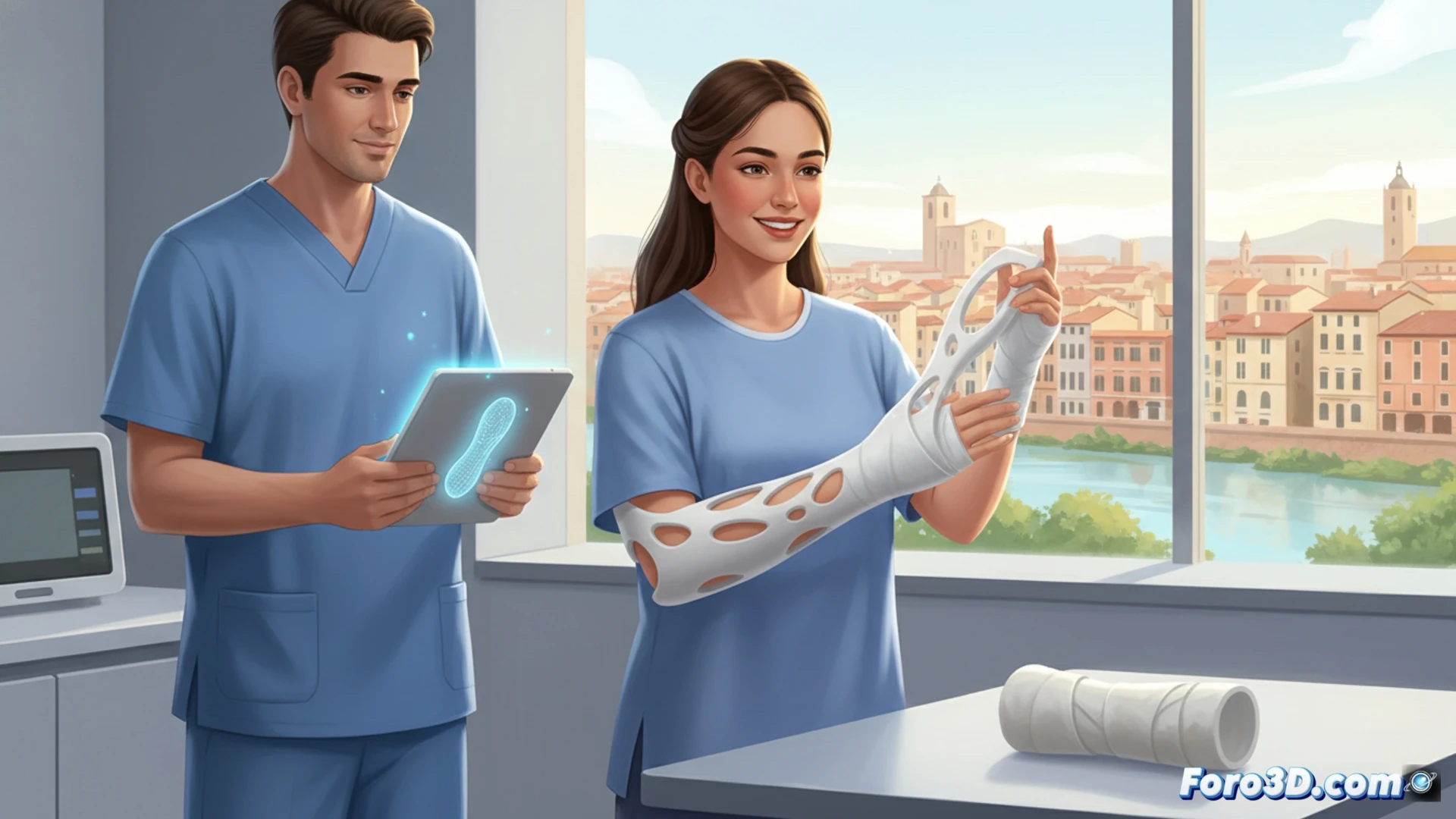
Hospitals in Girona have begun using splints manufactured with 3D printing to treat wrist fractures, leaving traditional plaster casts behind. These devices are lighter and adapt to each patient's anatomy. The main advantage for citizens is comfort: being removable for showering improves hygiene and reduces the typical discomforts of casting.
How 3D Printing Personalizes Immobilization 🖨️
The technology uses a digital scan of the limb to design a custom splint, manufactured with polymers such as PLA or nylon. This allows creating open structures that immobilize the fractured area without covering the entire arm, facilitating ventilation and preventing skin maceration. The production process takes hours, not days, and doctors can adjust the design to apply pressure only where needed, optimizing recovery.
Goodbye to the Cast Scratcher, Hello to the Bagless Shower 🚿
Anyone who has worn a cast knows that itching is a Chinese torture and that showering is a risky sport. With these 3D splints, the patient can remove it to wash without fear of the bandage falling apart. Of course, then it has to be put back on, which is not as easy as it seems if you only have one functional arm. At least, recovery smells better and leaves no plaster residue on the sofa.