The recent news about a water slide with a defective weld reminds us that the human eye does not always detect microcracks in recreational structures. In the world of material fatigue simulation, these failures are not surprises, but predictable points. 3D analysis allows us to visualize how the cyclic stress of water and the weight of users degrade a weld bead to the point of fracture, turning a water park into a risk scenario.
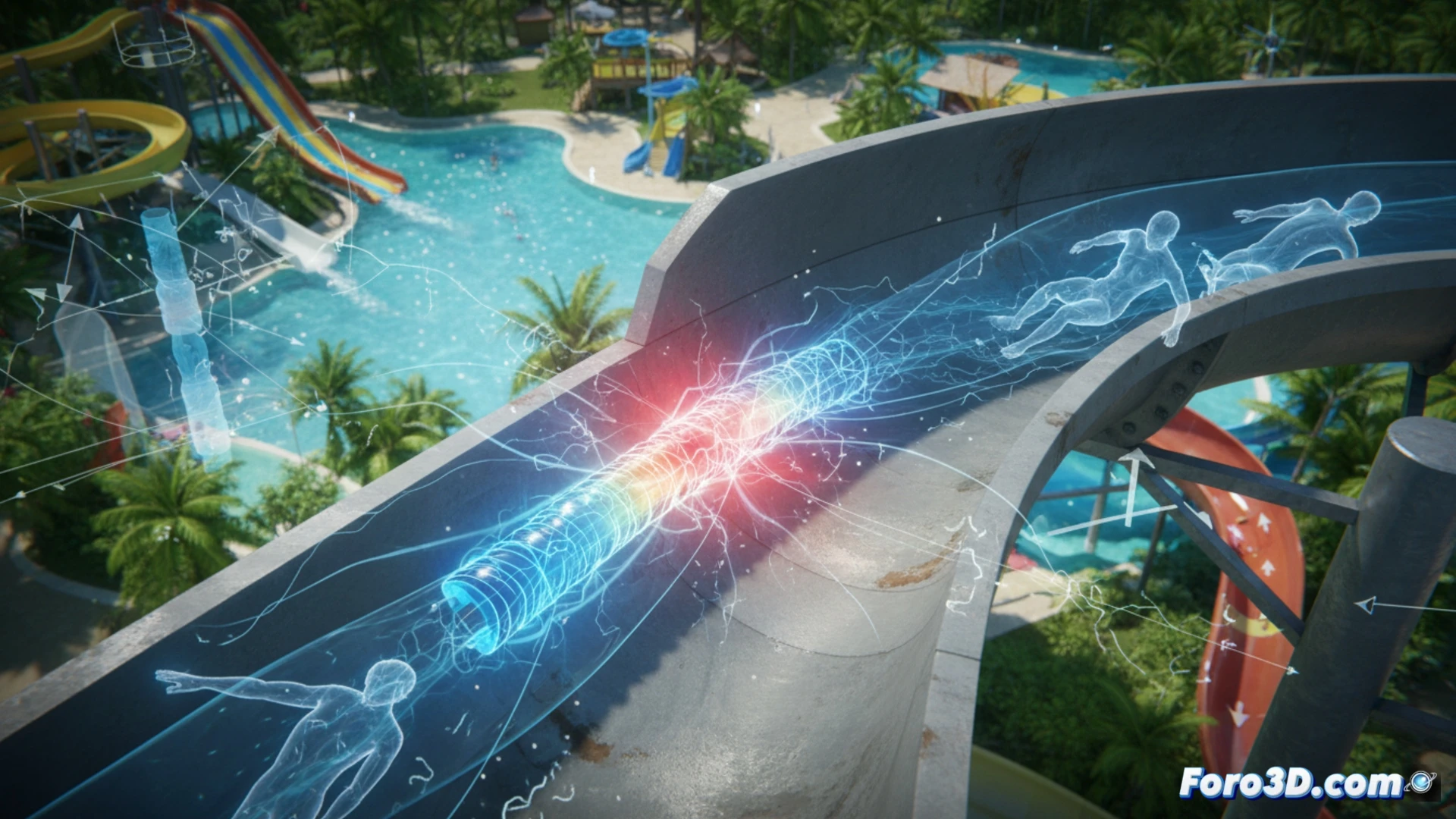
Visualization of stresses and crack propagation in welded joints 🔬
Using finite element method (FEM) software, engineers can model a slide and apply repetitive loads equivalent to thousands of rides. The simulation reveals heat maps that identify critical points at the panel joints. In a correct weld, stress lines are distributed evenly; in a defective one, they concentrate in a small area. 3D simulation allows animating crack propagation from that hot spot, showing the microscopic advance of the failure before it occurs in reality. This is vital for safety regulations and predictive maintenance.
Accident prevention through digital twins 🛟
The final reflection is clear: we should not wait for a weld to fail before acting. Creating digital twins of slides allows comparing ideal versus defective weld scenarios. By visualizing the remaining useful life of each joint in 3D, water parks can schedule repairs before material fatigue causes a collapse. Simulation not only saves lives but also optimizes maintenance costs, demonstrating that in recreational design, digital prevention is the best lifebuoy.
As an engineer, when simulating fatigue in a water slide weld, which cyclic loading parameters and boundary conditions do you consider most critical for accurately predicting a failure that the human eye would not detect in a visual inspection?
(PS: Material fatigue is like yours after 10 hours of simulation.)