The term Megayacht Fatigue is not a metaphor for crew exhaustion, but a serious engineering phenomenon. When a luxurious steel or aluminum hull sails, waves generate millions of stress cycles that deform the material. Over time, these micro-deformations accumulate, creating invisible cracks that can collapse the structure at sea. 3D material fatigue simulation is the only tool capable of predicting this wear before it becomes catastrophic.
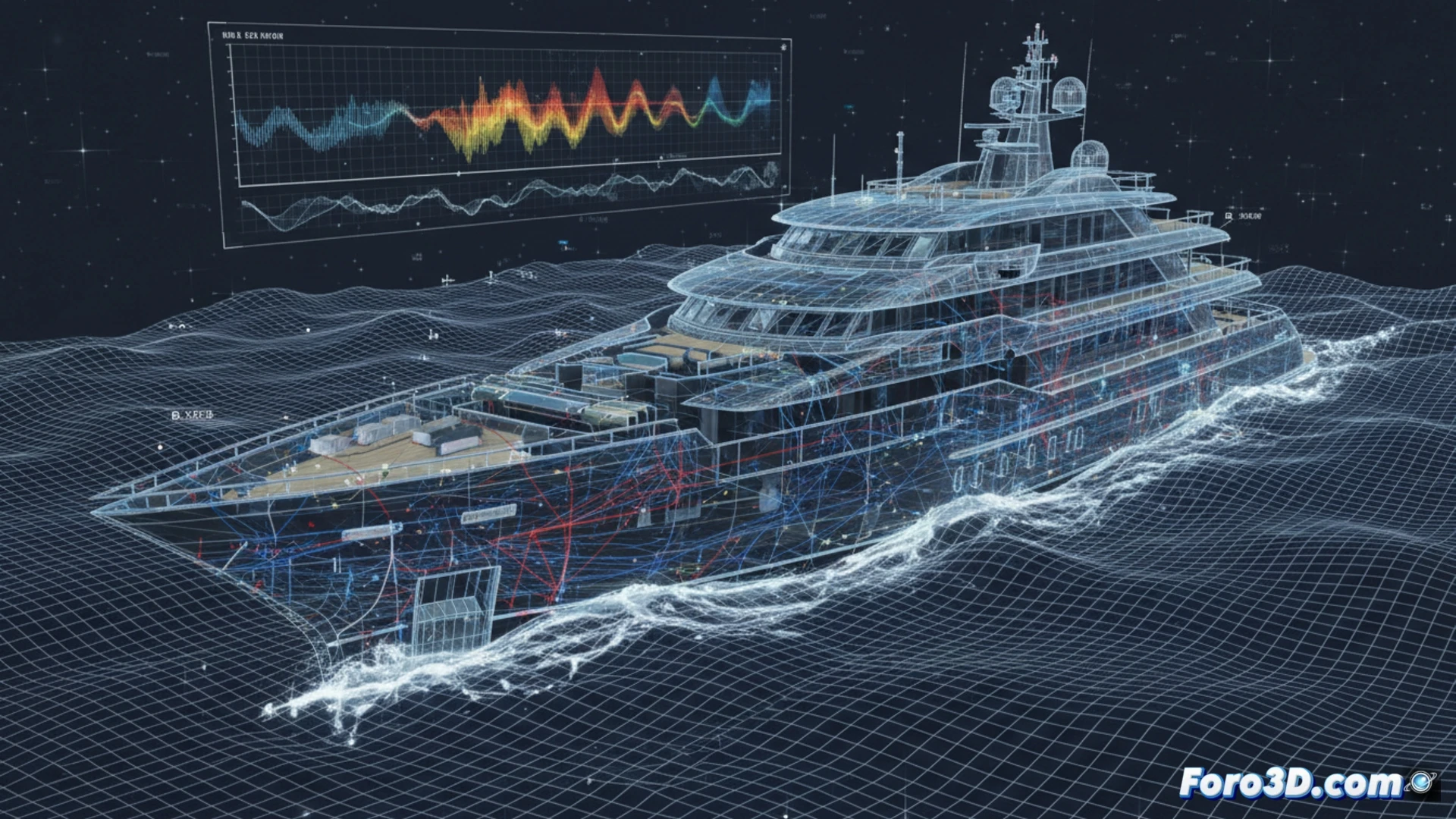
Hull Modeling and Finite Element Analysis ⚙️
The simulation begins with a digital twin of the megayacht, modeled in 3D with millimeter precision. Rendering engines apply realistic loading conditions: bow waves, torsion from oblique waves, and engine vibrations. Finite Element Analysis (FEA) software calculates Von Mises stress at each node of the mesh. Hot spots, where fatigue concentrates, are visualized in color maps ranging from blue (safe) to deep red (risk of fracture). This allows engineers to reinforce critical areas such as the joints between the hull and superstructure, or the water intakes of propulsion systems.
Catastrophe Prevention in the Nautical Industry 🛡️
Cases like that of the megayacht M/Y Amnesia, which suffered a keel fracture after 10 years of service, would have been avoided with fatigue simulations. Modern algorithms predict stress corrosion in aluminum alloys and delamination in carbon fiber composite materials. By visualizing the material's life cycle in 3D, shipyards can schedule preventive maintenance, replace panels before they fail, and, above all, ensure that luxury does not sail on the brink of disaster.
What 3D simulation techniques allow for more accurate prediction of critical fatigue failure zones in the welded joints of a megayacht hull?
(PS: Material fatigue is like yours after 10 hours of simulation.)