The counterfeiting of luxury mechanisms has found a dangerous ally in 3D technologies. With a high-resolution scanner and an additive printer, a counterfeiter can replicate Swiss watch gears or jewelry bezels with millimeter precision. This article analyzes the impact of these tools on intellectual property and proposes digital solutions to protect patents and designs.
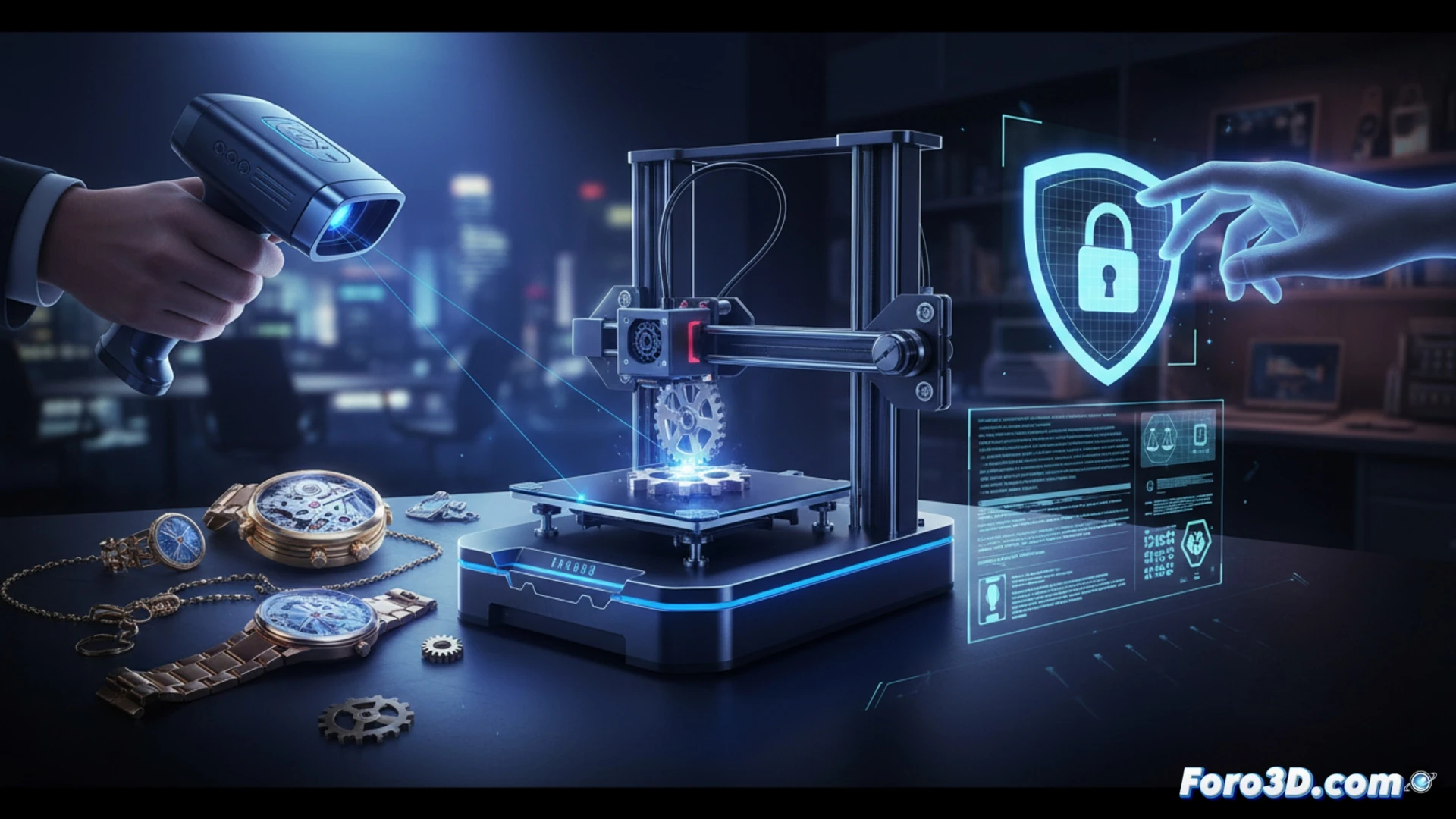
Scanning and Printing: The Achilles' Heel of Patents 🔐
The counterfeiting process begins with 3D scanning of the original mechanism. A high-end jeweler, for example, can see their patented clasp design copied within hours. 3D printing in metal or resin then allows the production of functional parts that evade traditional customs controls, as they require no molds or dies. For patent holders, the challenge is twofold: proving the digital copy and tracing the origin of the STL file. In the automotive sector, replicas of luxury brand suspension components have been detected that, while visually identical, fail in strength, jeopardizing the safety and reputation of the original brand.
3D Watermarks and Blockchain as a Legal Shield 🛡️
The solution for creators lies in digital verification. Incorporating imperceptible 3D watermarks into the CAD model makes it possible to identify an illegal copy even after multiple file conversions. Furthermore, registering each design on a public blockchain creates an immutable timestamp that proves authorship. In real cases, European courts have accepted this metadata as expert evidence. The recommendation for designers is clear: never share a print file without a registered hash and consider encrypting the internal layers of the model to prevent reverse scanning.
How can luxury brands adapt their intellectual property protection strategies to combat the counterfeiting of parts through scanning and 3D printing without hindering innovation in design and legal customization of their products?
(PS: at Foro3D we know that the only things that don't need copyright are STL files that don't print well)