The recent news about a critical flaw in a military bomb suit has reopened the debate on the safety of personal protective equipment. When a design or manufacturing failure compromises the integrity of the armor, the vulnerable group of active-duty soldiers is exposed to mortal risks. This incident demonstrates the urgency of adopting advanced verification technologies that can detect these anomalies before deployment in combat.
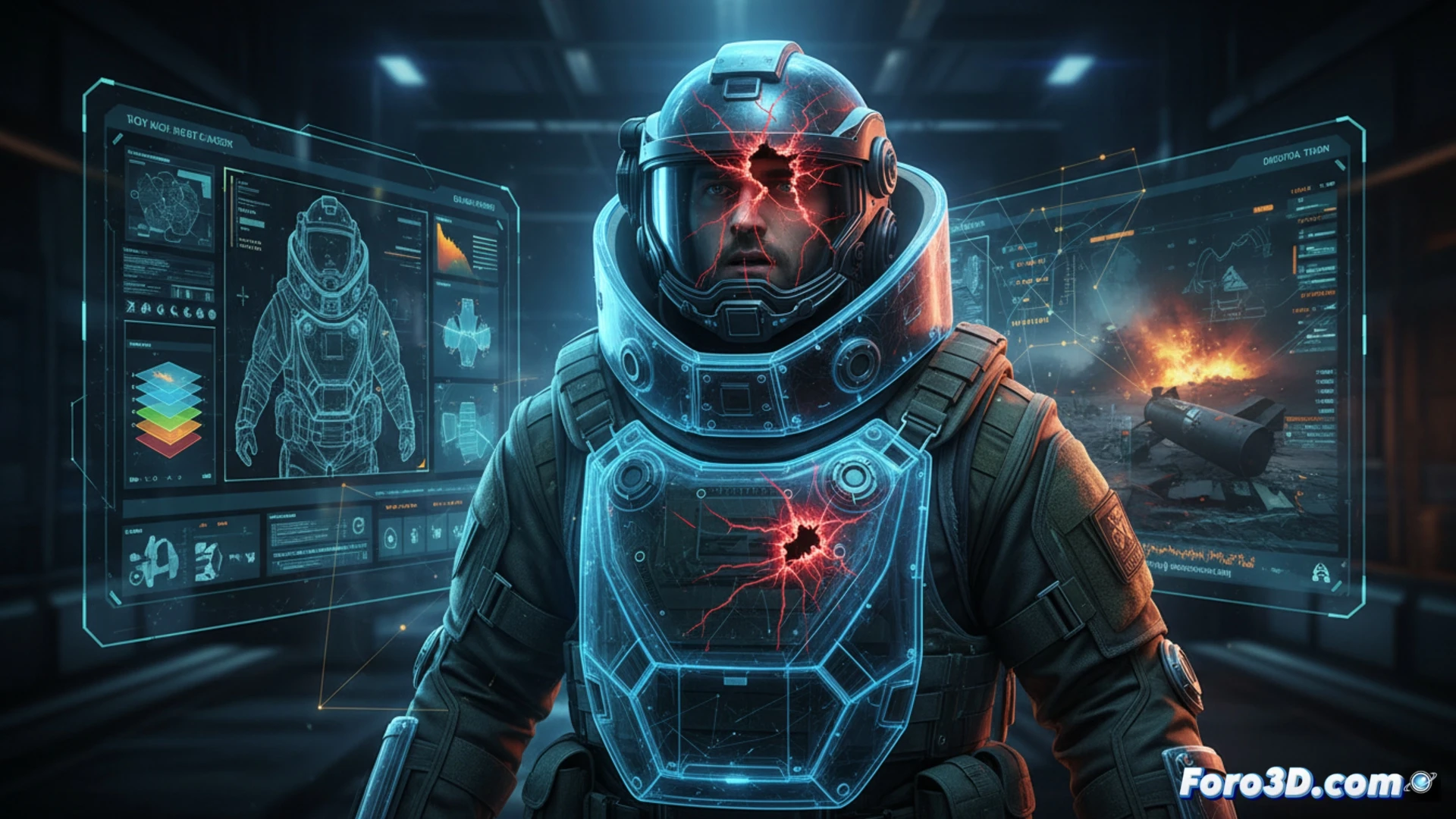
Digital twins and ballistic impact simulation 🛡️
The application of 3D technologies allows creating exact digital twins of the bomb suit. Through computer simulations, it is possible to subject the virtual model to ballistic impacts, blast waves, and material fatigue without risking a single life. Finite element method (FEM) tools can identify points of anomalous stress in ceramic plates or seams, replicating failure scenarios like the one reported. Additionally, 3D scanning of each manufactured unit allows comparing the real product with the original design, detecting bubbles, delaminations, or incorrect thicknesses that could lead to projectile penetration.
Preventing casualties with prior digital verification 💻
The lesson from this failure is clear: visual inspection or random physical tests are not enough to guarantee the protection of our military personnel. Implementing a digital verification protocol through 3D simulation for each production batch could have anticipated the weak point in the design. Investing in this technology not only saves lives but also strengthens confidence in tactical equipment, transforming the manufacturing of personal protection into a scientific and predictable process, not an act of faith.
What interfaces would you propose for verifiers to easily identify special cases?