Last Monday, a software failure in a next-generation neural implant caused episodes of disorientation and memory lapses in at least fifteen patients. The news, disseminated in neurotechnology forums, has sparked a global debate about the risks of delegating cognitive functions to artificial intelligence systems. The online community, far from downplaying the incident, has labeled it the biggest reputational error in the sector since the collapse of the first commercial brain-computer interfaces.
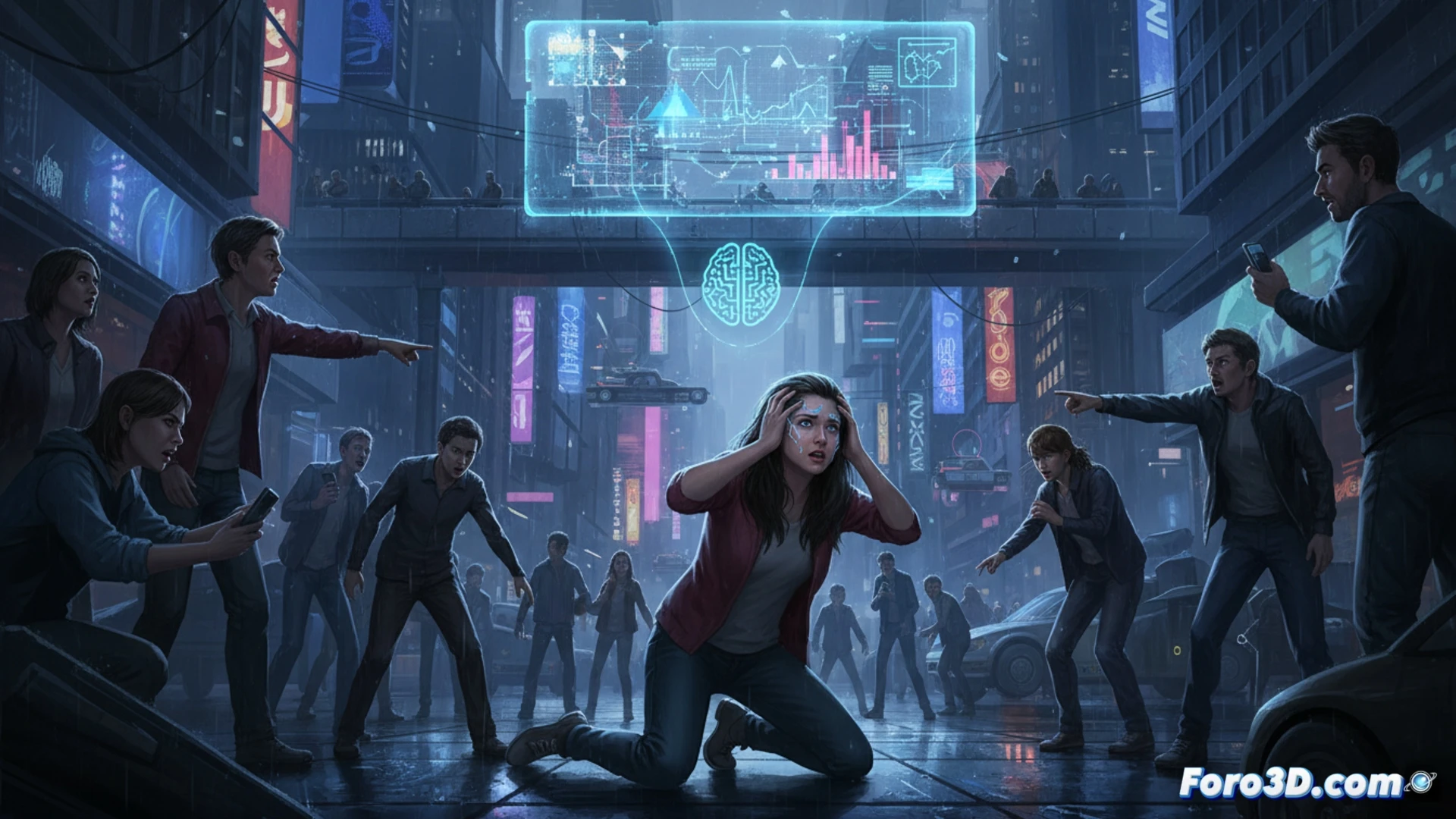
Architecture of the failure: critical latency and feedback loop 🧠
Preliminary technical reports point to an error in the neural signal compression algorithm. The system, designed to translate thoughts into digital commands, entered a feedback loop when it could not process a burst of sensory data. Latency, which should be less than 5 milliseconds, spiked to 200 milliseconds, generating a temporary disconnection between the user's intention and the implant's response. The 3D visualization of the device shows how the microelectrodes, upon saturation, emitted erratic impulses that simulate a short circuit in the synaptic interface, an effect that engineers had not anticipated in stress tests.
Lessons for an industry that cannot fail ⚠️
This incident demonstrates that public perception of AI is fragile. A single technical error, no matter how minor in terms of code, can destroy years of investment in trust. The developing company has activated a crisis protocol that includes the voluntary recall of the implants and the publication of all error logs. However, the online community demands more than transparency: it calls for a global safety standard for neurotechnology. The lesson is clear: in the implantable AI sector, a failure is not just a bug, it is a violation of human integrity.
Can a single technical failure in a neural implant cause an irreversible change in public perception regarding the integration of AI into the human body, or is trust a more resilient resource than we assume in the digital society?
(PS: trying to ban a nickname on the internet is like trying to cover the sun with a finger... but in digital)