A simulator failure is not just a screen freeze; it is the breaking of a fidelity contract between the machine and the operator. In industrial, flight, or driving training environments, these failures can generate incorrect habits or false senses of security. Analyzing their causes requires a technical perspective that combines the physics of modeling with user psychology.
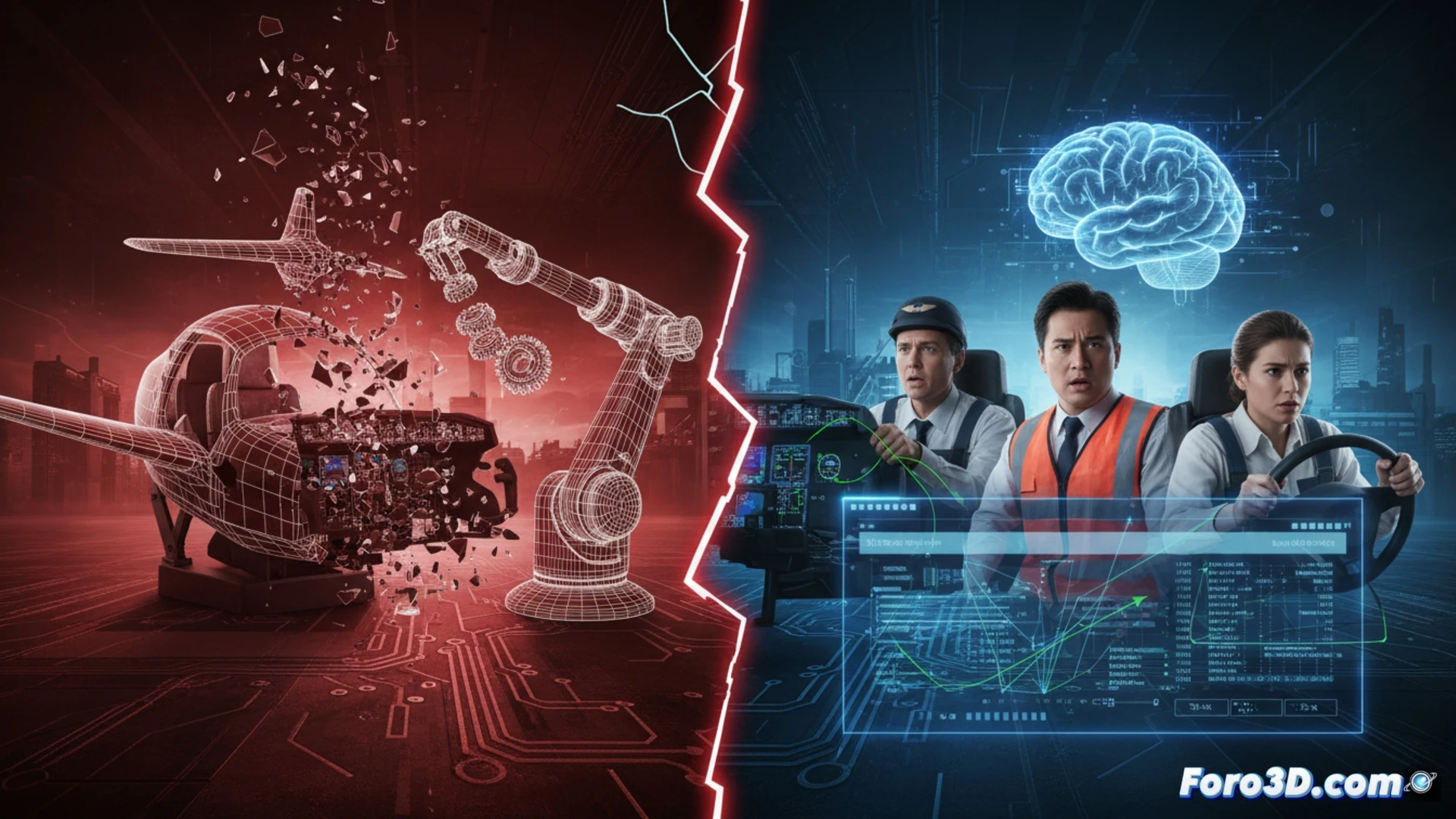
Failure Architecture: Physics, Render, and Latency 🛠️
Technical failures usually originate in three layers: the physics engine, the 3D rendering pipeline, and data synchronization. A common error is tunneling in collisions, where a virtual object passes through a surface due to an insufficient update frequency. To detect it, stress tests with extreme geometric loads are applied, and response latency is monitored. Correction involves readjusting numerical integration parameters or increasing the sampling rate of the physics solver, ensuring the 3D model reacts as a real object would under pressure.
Human Error as a System Variable 🧠
Not every failure is a bug. Often, the simulator crashes because the training model did not anticipate an extreme human decision. When documenting these incidents, it is discovered that the 3D interface or haptic response generated cognitive overload. Correcting this does not involve patching code, but rather redesigning the virtual scene to guide the operator's attention, reducing the probability of error in high-risk environments.
How can 3D modeling transform a simulator failure into an opportunity to improve the fidelity of operational training?
(PS: Simulating industrial processes is like watching an ant in a maze, but more expensive.)