The border between the real and the synthetic has become blurred thanks to generative artificial intelligence. However, deepfakes and advanced renders often present immersive reality flaws: perceptible gaps in the physics of light, geometry, or temporal coherence. This article analyzes how 3D modeling and computer vision techniques allow auditing digital content to identify these inconsistencies and distinguish a render from a real recording.
Technical Analysis: Lighting, Shadows, and Facial Geometry 🔍
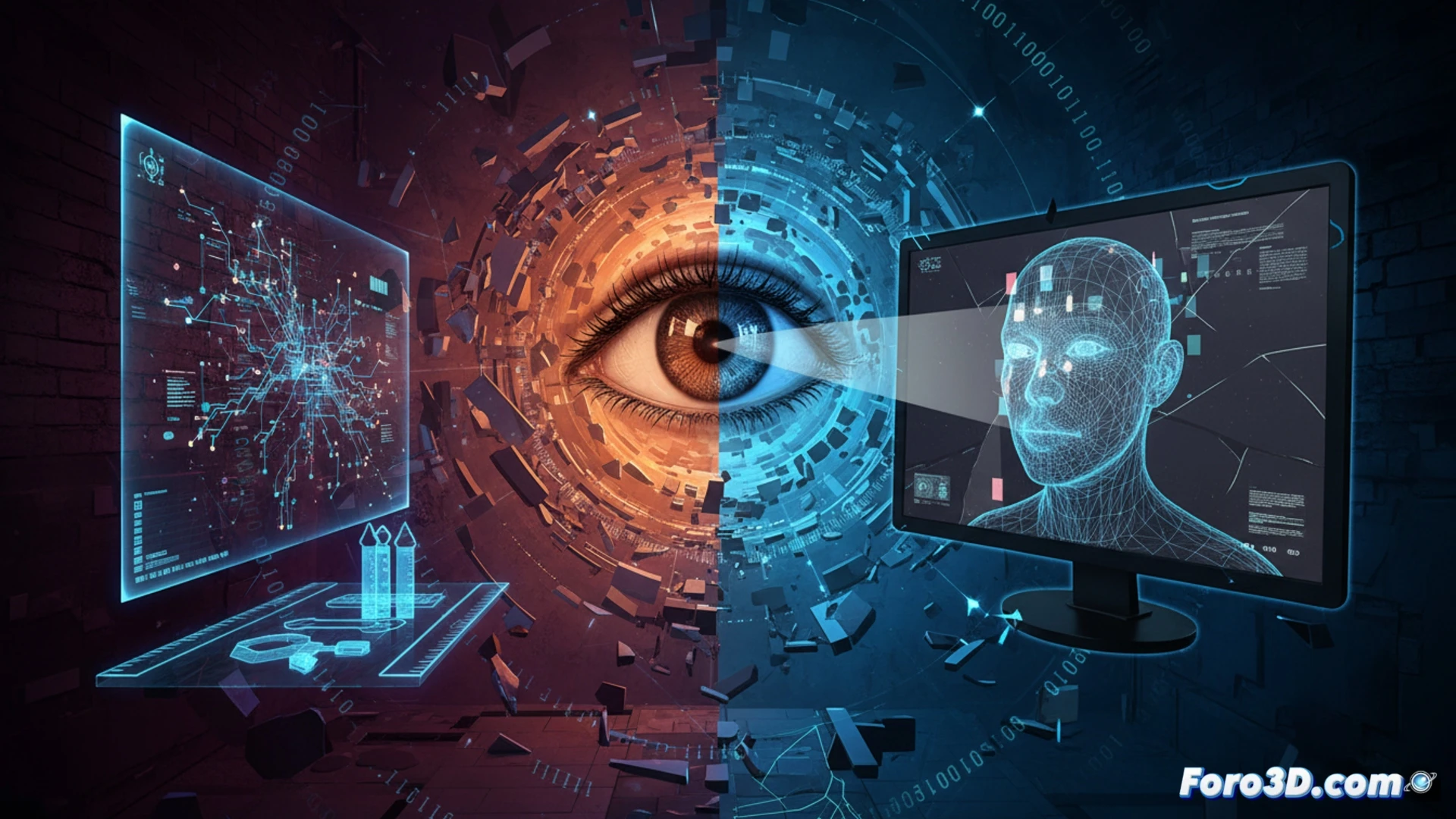
Deepfake auditing relies on principles of physical rendering. A first method is ambient lighting analysis: AI generators often fail to replicate the direction of the main light or to calculate cast shadows (shadows an object projects onto itself). For example, a facial deepfake may show a specular reflection in the eye that does not match the dominant light source in the scene. Additionally, facial geometry is key; computer vision tools can reconstruct a 3D model of the face and compare symmetry and proportions with standard biometric parameters. A distortion in the curvature of the nasal bridge or an unnatural asymmetry in the position of the ears often betrays manipulation.
Practical Cases: Detecting the Unreal in Viral Content 🕵️
In practice, these methods have exposed viral deepfakes. A famous case was a video of a politician gesticulating; analysis of jaw occlusion revealed that the chin shadow did not shift correctly with head movement, a typical flaw of AI video generators. Another example involved a hyper-realistic render of a product: the refraction of light in the object's glass was physically impossible for the modeled curvature. These audits demonstrate that, although AI advances, the laws of physics remain the best detector of immersive reality flaws.
How can 3D modeling be applied to detect geometric and lighting inconsistencies in deepfakes that are imperceptible to the human eye?
(PS: Detecting deepfakes is like playing Where's Waldo? but with suspicious pixels.)