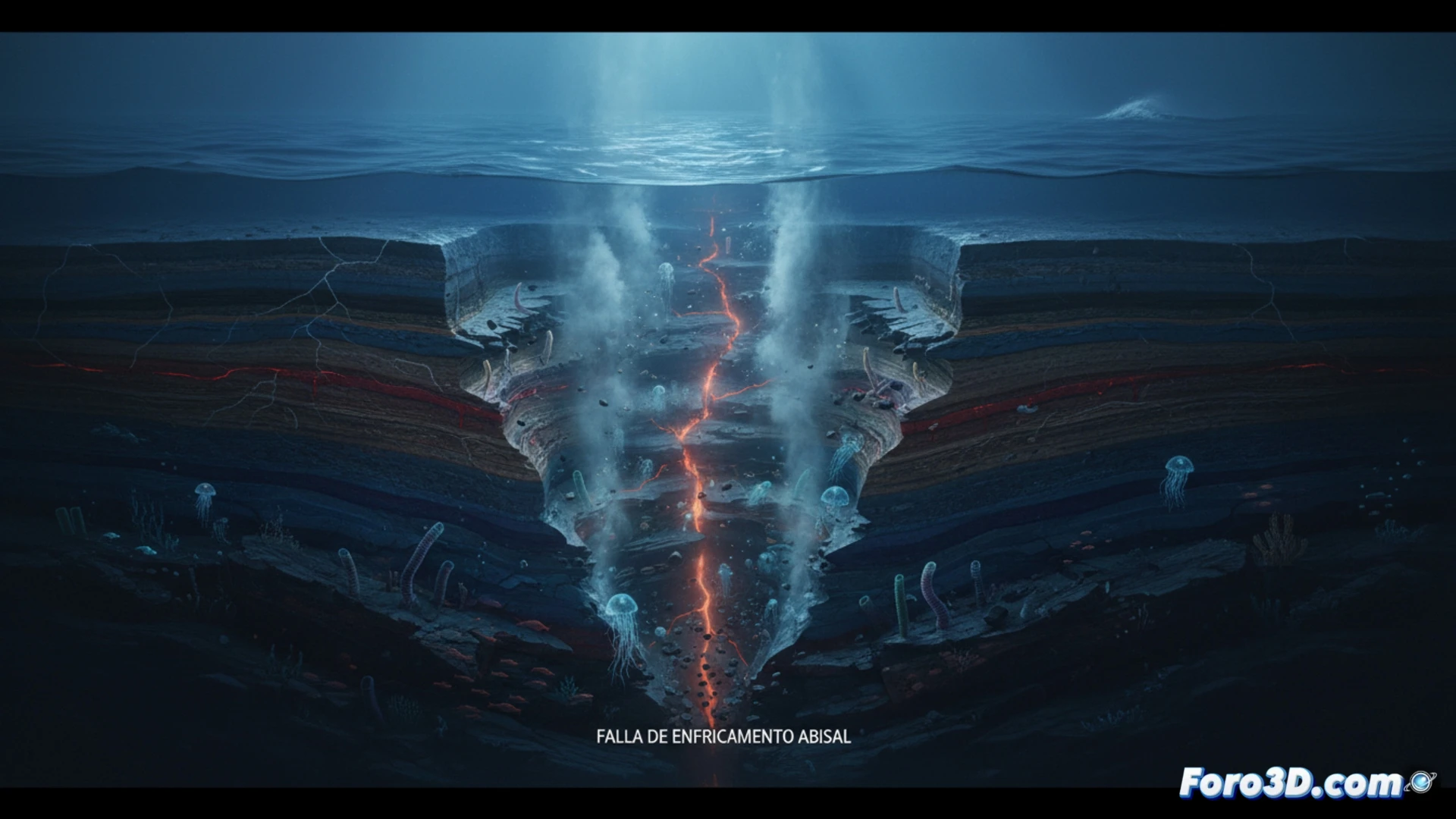
The seabed is not an inert plain; it is a dynamic system where the Earth's internal heat dissipates. An abyssal cooling fault originates when the oceanic lithosphere contracts and fractures as it loses temperature, generating enormous cracks in the crust. This process, although slow, accumulates colossal tension that can be released catastrophically, triggering deep earthquakes and far-reaching tsunamis.
3D Modeling of Tectonic Dynamics and Tsunami Propagation 🌊
To understand this phenomenon, 3D modeling is essential. We can simulate the oceanic plate as a solid block that cools and cracks in the abyssal zone. By applying thermal contraction parameters, geological simulation software shows how normal and tear faults form. The visualization allows us to observe the vertical displacement of the seafloor, which is the main mechanism for tsunami generation. By animating the energy release, we see how a pressure wave rises from the fault and travels at supersonic speeds through the water. The coastal impact simulation reveals how the wave height magnifies upon reaching the continental shelf, flooding cities within minutes. These models are vital for predicting risk zones and designing resilient infrastructure.
The Depth Paradox: A Forgotten Risk ⚠️
We often focus our attention on surface or subduction faults, but the abyssal cooling fault represents a more stealthy danger. Its origin in the depths makes earthquakes less perceptible on land, but the tsunami they generate can be devastating. The final reflection is that the Earth not only breaks at its edges, but also in its own oceanic heart. Ignoring these fractures is to deny the cyclical nature of our planet, where the simple act of cooling can unleash a global catastrophe.
Could a sudden collapse in the thermal dissipation capacity of an abyssal cooling fault trigger a global catastrophe by altering deep ocean circulation and releasing methane trapped in sediments?
(PS: Simulating catastrophes is fun until the computer melts down and you are the catastrophe.)