The Sea Comet Fault is a geological term describing a massive fracture in the ocean floor, characterized by its elongated, curved shape resembling a comet's tail. This type of submarine fault can generate large-magnitude earthquakes and trigger devastating tsunamis by suddenly displacing enormous volumes of water. Understanding its structure is vital for preventing coastal catastrophes.
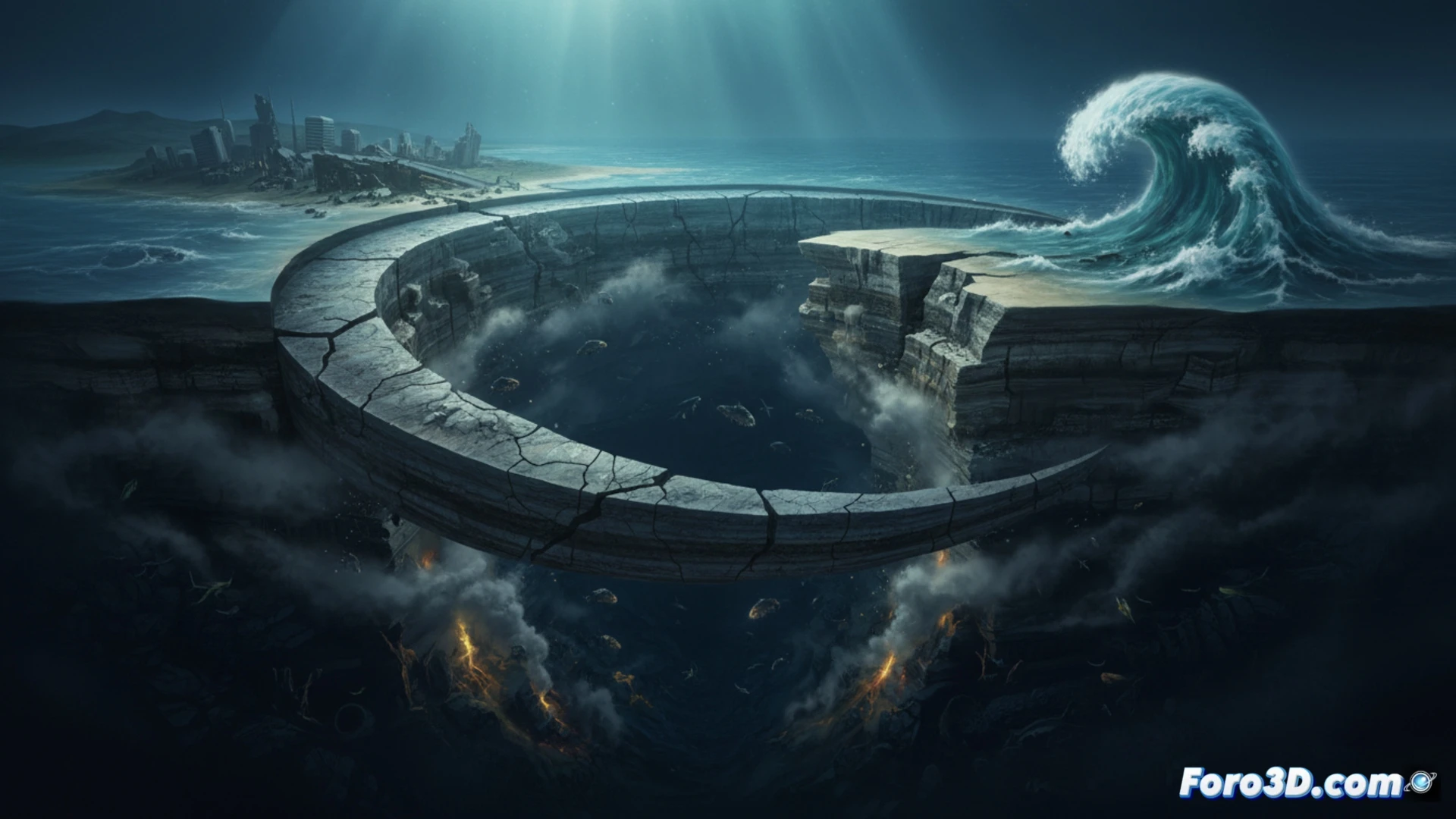
3D Modeling of Rupture Dynamics and Propagation 🌊
To simulate the Sea Comet Fault in 3D, high-resolution bathymetric data is used to recreate the seafloor topography. The modeling focuses on three phases: the fault geometry (curved rupture plane), the release of seismic energy (vertical and horizontal displacement of the ocean floor), and the wave generation. Animations show how the rupture progresses along the fault, lifting the water and forming a wave train traveling at high speed. Risk maps are generated by interpolating this data to identify potential flood zones.
Visualization as a Tool for Prevention and Outreach 🛡️
3D visualizations of the Sea Comet Fault transform complex data into images understandable for the public and emergency managers. By observing the animation of the rupture process and tsunami propagation, coastal communities can better understand evacuation zones. This approach not only educates but also saves lives by visually demonstrating the real danger of a phenomenon occurring in the invisible depths of the ocean.
What is the greatest technical challenge in 3D modeling the scale and topography of a submarine fault like the Sea Comet Fault to achieve precise geological realism in disaster simulation environments?
(PS: Simulating catastrophes is fun until the computer crashes and you are the catastrophe.)