The promise of quantum computing lies in its ability to solve problems intractable for classical computers, but this power comes with an inherent fragility. The term Quantum Coverage Failure describes a critical scenario where a quantum system loses its operational integrity due to unwanted interaction with its environment. Far from being a simple technical glitch, it represents a fundamental vulnerability that exposes the limits of quantum security and redefines risk in the digital age. 🔬
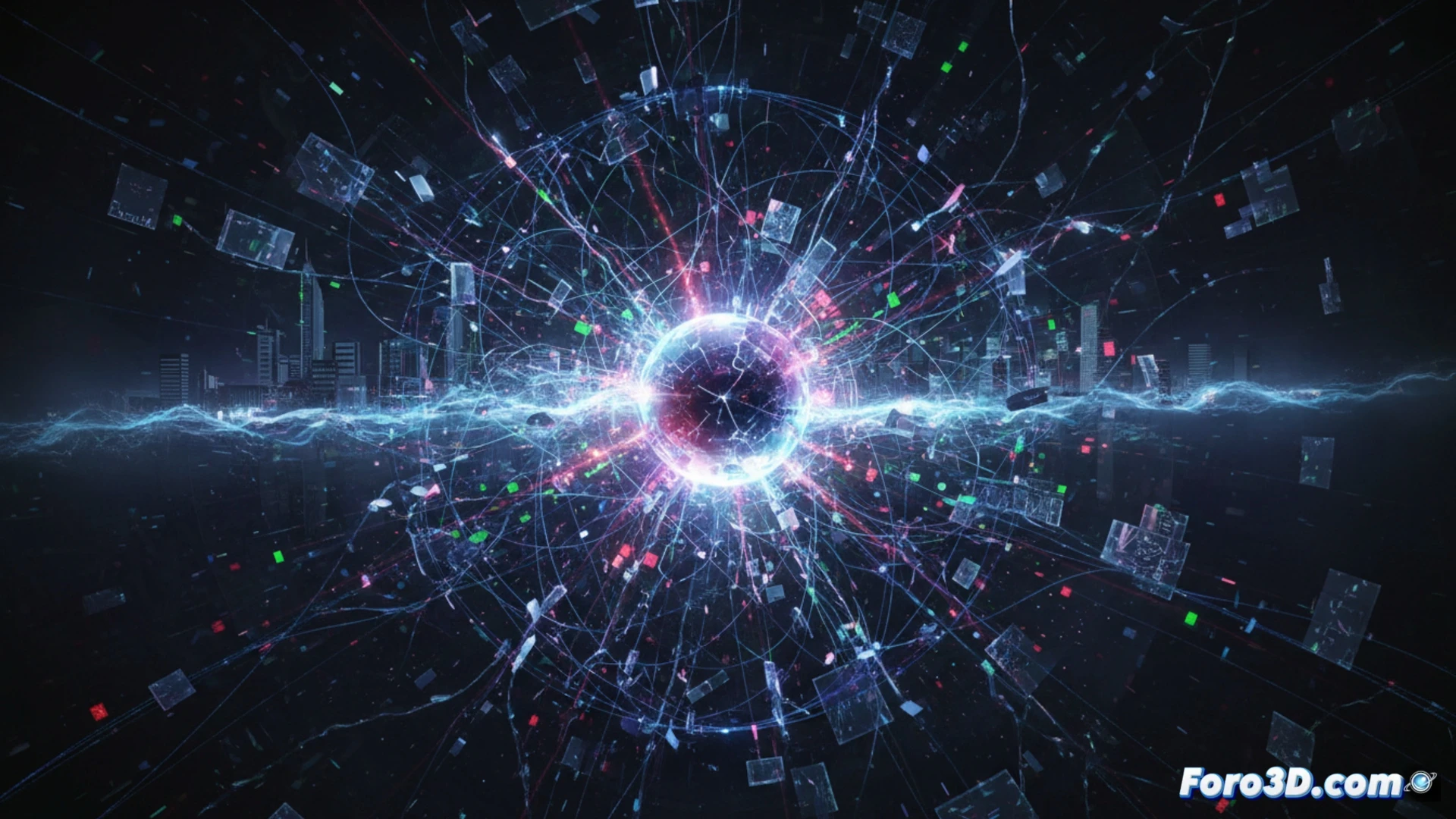
Decoherence and Environmental Interference: Anatomy of a Failure ⚛️
To understand quantum coverage failure, we must examine its physical causes. The main enemy is decoherence, a process where qubits lose their superimposed quantum state by interacting with photons, magnetic fields, or thermal vibrations. Added to this is environmental interference, which introduces noise into the control system. In a quantum communication network, a coverage failure implies that the transmission channel, based on entanglement, breaks. This not only corrupts the data but also nullifies the detection of spies that quantum cryptography promises to detect, leaving communication exposed and vulnerable to classical attacks.
Public Perception and the Quantum Trust Crisis 🧠
Disclosing these failures is a major reputational challenge. The general public, bombarded with promises of quantum invulnerability, perceives these failures as a technological betrayal. Crisis management requires technical transparency without falling into alarmism. Here, the 3D modeling community plays a crucial role. Visualizing decoherence as a network of qubits unraveling or as a shield of particles cracking allows the public to understand the complexity of the problem. A good simulation transforms fear of the unknown into a tangible understanding of the limits of physics, fostering a more mature social debate about the real risks of the next computing revolution.
How could the so-called quantum coverage failure expose critical vulnerabilities in global digital infrastructures, and what implications would it have for the security of everyday transactions and communications in a hyperconnected society?
(PS: tech nicknames are like children: you name them, but the community decides what to call them)