The Steam Barrier Failure is a critical phenomenon in nuclear reactors where the primary containment degrades, allowing high-pressure radioactive steam to escape into the atmosphere. This event, often triggered by loss of coolant or overheating, represents a point of no return in the accident sequence. Understanding it is vital to avoid catastrophes, as it marks the transition from a controllable incident to a massive release of radioactive material.
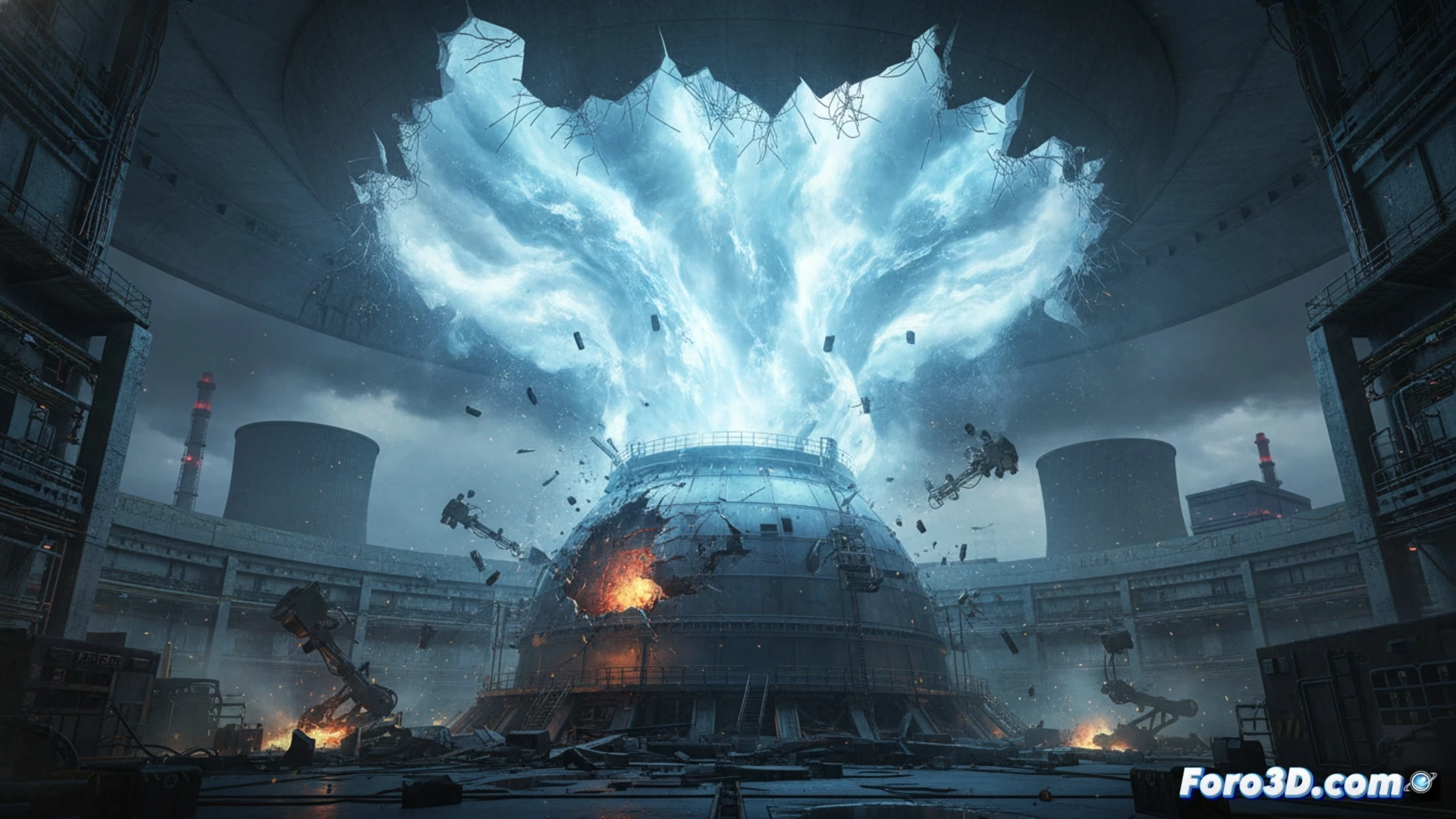
3D Visualization of the Containment Failure Mechanism 🛠️
Using detailed 3D models, we can simulate the progression of the failure. First, we observe stress corrosion cracking in vessel welds or the rupture of relief valves. Then, superheated steam, laden with isotopes, erodes the secondary containment seals. The simulation reveals how differential pressure collapses the reinforcement rings, creating microcracks that expand in seconds. This technical analysis replicates conditions similar to those seen in Fukushima, where the barrier failed after the loss of backup power, and in Chernobyl, where the initial explosion vaporized the containment. The model allows engineers to identify weak points and redesign emergency ventilation systems.
Lessons Learned for the Future of Atomic Energy ⚛️
The Steam Barrier Failure forces us to reflect on the fragility of the technology we consider safe. Each 3D simulation of this phenomenon is a reminder that prevention depends not only on technical redundancy but on the human capacity to anticipate the unpredictable. By disseminating these models, we seek to help the public understand the real risks, fostering an informed debate about nuclear energy and the need for unwavering safety standards. It is not about alarming, but about learning from mistakes so that radioactive steam never again becomes the herald of a catastrophe.
What real-time monitoring strategies could be implemented to detect steam barrier degradation before it compromises the integrity of the nuclear reactor?
(PS: Simulating catastrophes is fun until the computer melts down and you are the catastrophe.)