The term Cryogenic Failure describes a structural or mechanical collapse in systems operating at temperatures below -150 degrees Celsius. Although less publicized than an earthquake, this phenomenon is a highly lethal technological disaster, capable of generating boiling liquid expanding vapor explosions (BLEVE) or massive leaks of liquefied gases such as LNG. Analyzing its mechanics is vital for industrial safety.
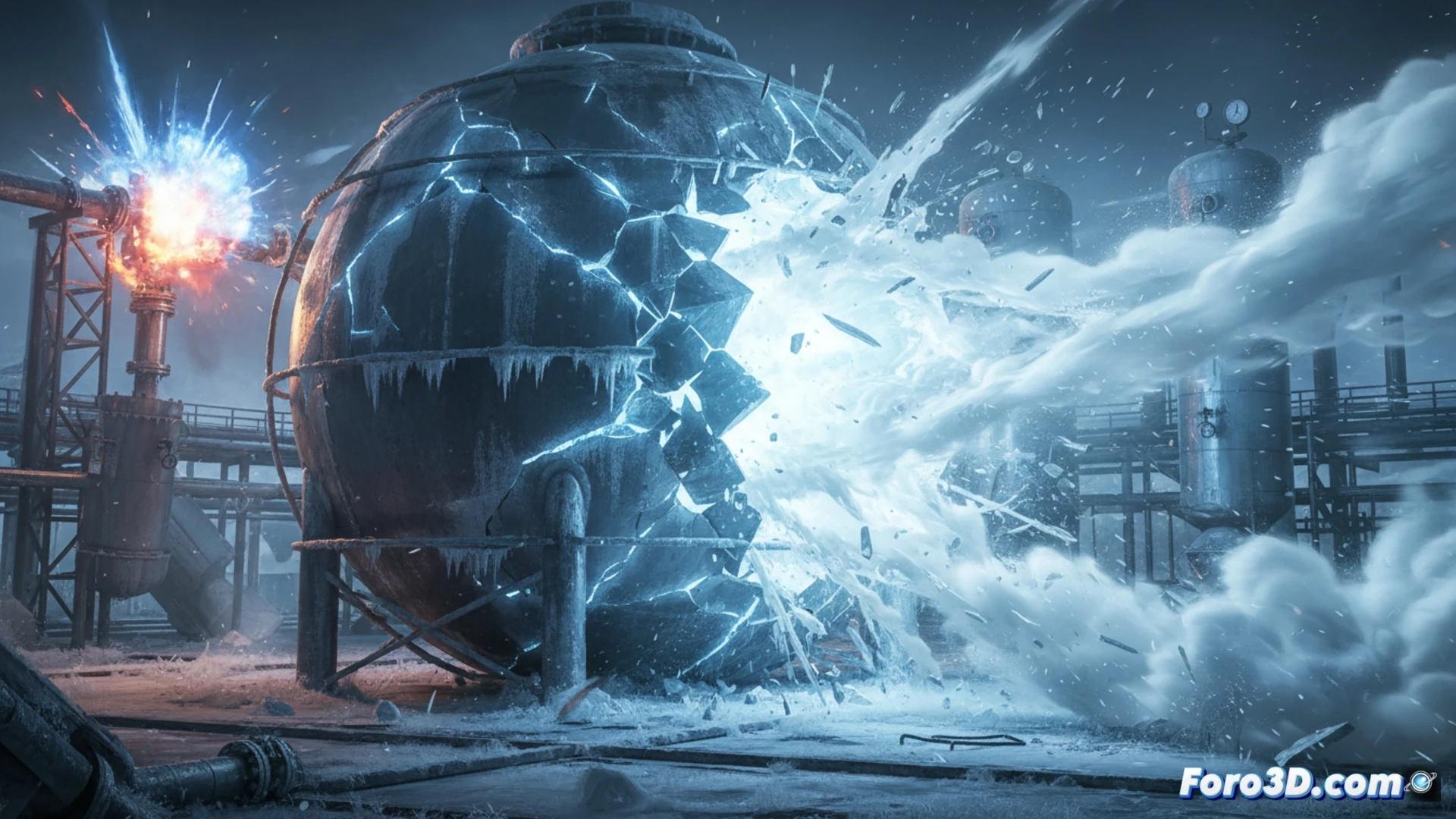
3D Modeling of Embrittlement and Leak Propagation 🧊
3D simulation allows for accurately recreating the embrittlement of metals such as carbon steel, which loses its ductility when exposed to extreme cold and fractures without warning. Using computational fluid dynamics (CFD), engineers can visualize the cryogenic gas cloud in contact with the atmosphere, model its evaporation, and predict the direction of the leak. These tools are essential for designing containment dikes and emergency ventilation systems, reducing the risk of asphyxiation or delayed ignition.
Lessons for Industrial Disaster Prevention ⚠️
Cryogenic failure reminds us that the most advanced technology is vulnerable to the limits of materials. Each virtual recreation of a BLEVE or a massive leak in a liquefaction plant serves as a warning. Prevention lies not only in better valves or sensors but in understanding that the nature of extreme cold is relentless and demands absolute respect for safety margins in the design of critical infrastructure.
Is it possible that a cryogenic failure in an LNG tank not only fractures the metal but also triggers a chain reaction capable of liquefying oxygen from the air and unleashing a secondary explosion?
(PS: Simulating catastrophes is fun until the computer crashes and you are the catastrophe.)